Pill of fence pierces body after falling from a height of 10m
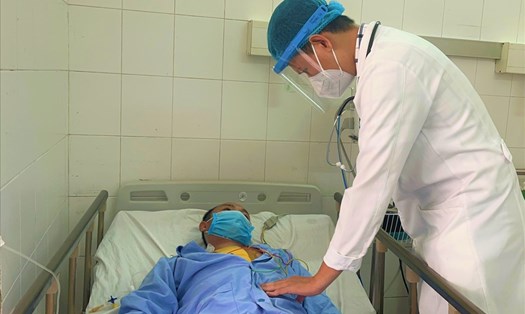
Viet Duc Friendship Hospital has just successfully rescued a 6-year-old boy in Hanoi suffering from particularly serious multiple injuries when a barrier stake pierced from the abdomen down to the perineum. The patient was admitted to the hospital in a state of blood loss shock, pulse and blood pressure could not be measured.
According to the family, patient N.H. M. K (6 years old, Hanoi) unfortunately had a domestic accident when he fell from a height of about 10 m and was pierced through the abdomen - perineum by a fence stake.
To take the child to the hospital, family members had to use a chainsaw to cut the fence, keep the iron stake lying in the body and take the patient to the emergency room.
Dr. Bui Thanh Phuc - Deputy Head of the Department of Emergency Gastrointestinal Surgery, Viet Duc Friendship Hospital, said that the patient's parents were not even calm enough to follow their child into the emergency room and had to ask relatives to take the child to the hospital.
Upon admission, doctors determined that this was a case of extremely severe multiple injuries. A large foreign object penetrating the abdomen - perineum is at risk of causing damage to many important organs such as the digestive tract, urinary system, blood vessels and skeletal muscle system.
The patient was in a state of blood loss shock, pulse and blood pressure could not be measured, posing a direct life-threatening risk.
Activate red alert, take the child straight to the operating room
Faced with a particularly critical condition, the on-duty team at Viet Duc Friendship Hospital immediately activated the intra-hospital red alert procedure. The patient was actively resuscitated and transferred straight to the emergency operating room, with almost no delay time.
Time is decisive. Every minute of delay can reduce the chance of survival. Minimizing the time from receipt to surgery is a decisive factor in saving the patient's life," Dr. Bui Thanh Phuc said.
In the operating room, the teams both continued resuscitation, assessed and controlled life-threatening injuries. The surgery lasted about 4 hours.
After removing the foreign object from the body, the surgeons successively treated many complex lesions such as suturing the small intestine wound, suturing the bladder neck, placing urethral drainage, opening the bladder, making an artificial anus, suturing to restore the external sphincter, and at the same time cleaning and draining the abdominal cavity.
After many hours of stressful surgery, the patient initially overcame the critical condition.
After surgery, the patient was transferred to the Intensive Care Unit to continue using a ventilator, resuscitation and close monitoring of organ function.
Assoc. Prof. Dr. Luu Quang Thuy - Director of the Surgical Resuscitation Center, Viet Duc Friendship Hospital said that resuscitation for children with multiple injuries is more complex than adults. All treatment indicators must be accurately calculated according to the child's weight, age and physiological characteristics. The patient also faces the risk of multiple organ failure, blood clotting disorders and infections, so they are closely monitored and timely adjusted treatment regimens.
After about 10 days of intensive treatment, the patient's condition improved significantly. The child was completely awake, had good contact, could answer doctor's questions and exercise normally.
Currently, the patient has been transferred to the Department of Pediatric and Neonatal Surgery to continue monitoring and evaluating the recovery process.