Increase allowances, improve policies to attract human resources
The Ministry of Health has just issued a document responding to the recommendations of voters in Hung Yen province after the First Session of the 16th National Assembly. Voters proposed special preferential policies to attract good doctors to the grassroots level, while improving the quality of facilities to meet the needs of medical examination and treatment.
According to the Ministry of Health, the Government has issued Decree 192/2026/ND-CP stipulating a number of specific allowances in the field of health and monthly support for village health workers, residential groups, and village midwives.
The Decree expands the beneficiaries of policies, including people working at forensic, forensic psychiatric, extrahospital emergency facilities and some other specialized facilities. Notably, the on-duty allowance increased by 182%, surgery and procedure allowances increased by 100% compared to before, based on the nature, intensity of labor and occupational risks.
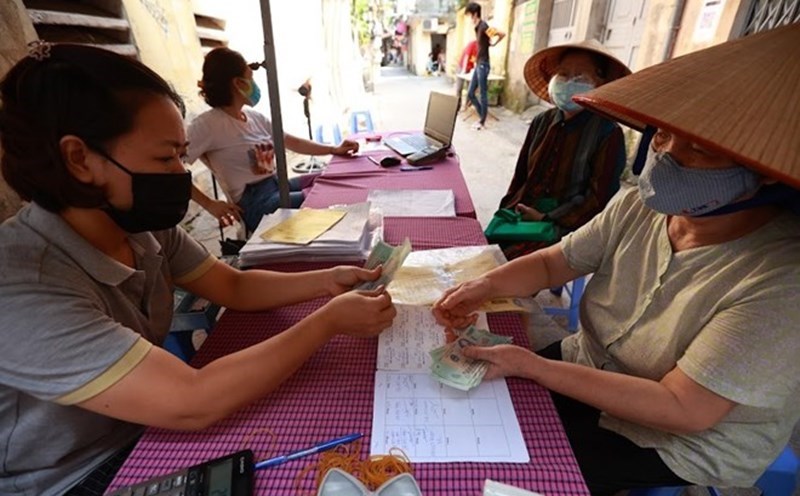
Health workers of residential groups, neighborhoods and village and hamlet midwives are also supplemented with monthly support, with a level of 0.7 times or 0.5 times the base salary depending on the area.
In addition, according to Resolution 261/2025/QH15, medical doctors, traditional medicine doctors, dentists, preventive medicine doctors and pharmacists are ranked from level 2 when recruited for corresponding professional titles.
The Ministry of Health is also submitting to the Government a draft decree on professional preferential allowances, which proposes a level of 80% for some groups of medical staff working in specialized, heavy, hazardous, dangerous fields or in difficult areas.
The proposed group includes staff directly examining, treating, testing, and caring for mental patients; forensic, forensic psychiatry; emergency, intensive care, anti-poison; pathology; and medical staff at commune-level health stations and preventive health facilities in difficult areas, border areas, and islands.
According to the Ministry of Health, these are areas with high professional and psychological pressures, difficult to attract and maintain human resources. The proposed level is to increase by 10% compared to the current level in order to gradually improve health human resources policies.
After having the preliminary results of salary policy reform, the Ministry of Health will continue to report to the Government on the implementation roadmap, in accordance with socio-economic conditions and budget balancing capacity.
Localities responsible for investing in grassroots healthcare
Regarding upgrading facilities and equipment at the grassroots level, the Ministry of Health said that according to regulations on budget decentralization and public investment, localities are responsible for investing in medical facilities under their management.
The People's Committees of provinces and cities are responsible for reviewing needs, prioritizing resource allocation in public investment plans and local budgets to repair and upgrade facilities, and supplement equipment for grassroots healthcare.
In addition to local resources, the National Assembly has approved the investment policy of the National Target Program on health care, population and development for the period 2026-2035, which includes the content of improving the capacity of the grassroots health network.
The Prime Minister also stipulates the principles, criteria, norms for allocating the central budget and the proportion of local counterpart funds to implement the program for the 2026-2030 period.
On that basis, localities proactively develop plans, investment portfolios, allocate counterpart funds, integrate programs and mobilize legitimate resources to develop grassroots healthcare.
The Ministry of Health said it will continue to coordinate with the Ministry of Finance and localities to implement the program, review investment needs, improve grassroots health capacity, contributing to better meeting the medical examination and treatment needs of the people.