
At the I Northern Interventional Gastrointestinal Endoscopy Conference - VIGES SAPA 2026 with the theme "Interventional gastrointestinal endoscopy in the new era: from standardization of procedures to advanced interventions" organized by the Vietnam Society of Interventional Gastrointestinal Endoscopy (VIGES) on July 25, Assoc. Prof. Dr. Nguyen Cong Long - Chairman of the Vietnam Society of Interventional Gastrointestinal Endoscopy - said that gastrointestinal cancer, especially stomach cancer and colorectal cancer, is still one of the leading medical burdens in the world as well as in Vietnam.
According to GLOBOCAN 2022, Vietnam records more than 16,835 new cases of colorectal cancer each year, accounting for 9.3% of the total number of cancer cases, along with more than 8,454 deaths. This is the 4th cancer in terms of incidence and 5th in terms of mortality rate in cancers.
It is noteworthy that most digestive tract cancers do not appear suddenly but often progress through a prolonged precancerous stage. This is considered a golden window for screening, early detection and timely intervention. If diagnosed and treated right from this stage, patients can significantly reduce the risk of developing cancer, while improving prognosis, reducing treatment costs and improving the quality of life.
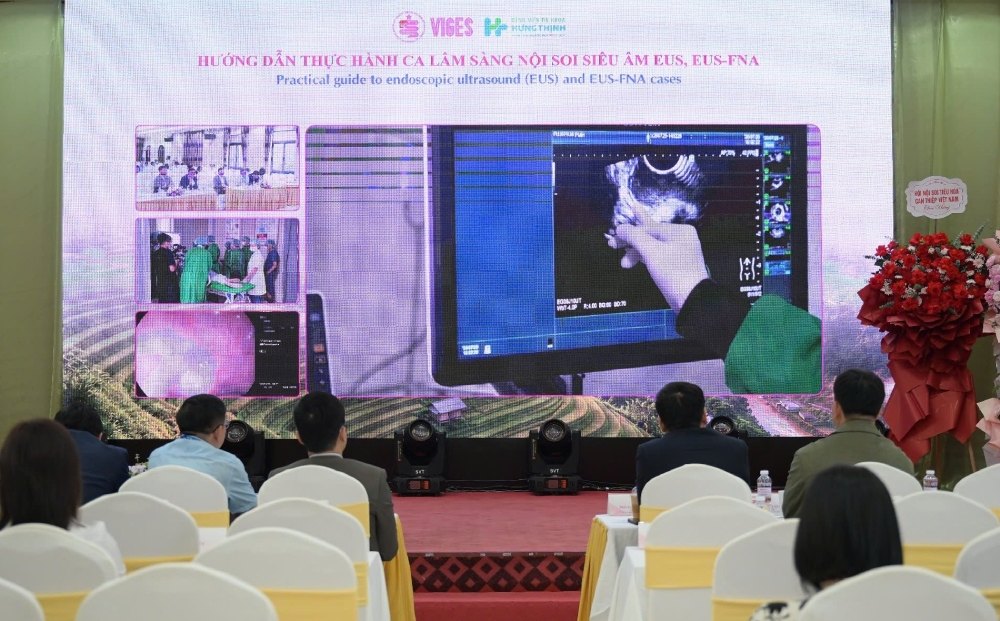
In recent years, interventional gastrointestinal endoscopy has developed strongly and become one of the spearhead fields of modern medicine. Many advanced techniques such as endoscopic mucosal resection, submucosal resection, interventional endoscopic ultrasound and retrograde pancreatic endoscopy... have contributed to improving treatment effectiveness, especially in early detection and treatment of gastrointestinal cancer, helping to reduce complications and shorten recovery time for patients," Assoc. Prof. Dr. Nguyen Cong Long said.
However, according to Assoc. Prof. Dr. Nguyen Cong Long, the gap in professional qualifications, equipment and practice procedures between medical facilities is still a major challenge. This makes it difficult for people in many localities, especially in areas far from major medical centers, to access in-depth endoscopic techniques.
The goal of the conference is to support lower-level medical facilities to gradually access professional standards, thereby contributing to narrowing the gap in quality of medical examination and treatment between regions. The highlight of the program is direct clinical practice sessions with modern techniques to help doctors observe the actual process, update new techniques and improve the applicability in medical examination and treatment.


