
According to Da Nang City People's Committee, from June 5 to 7, 2026, the city organized a periodic health check-up and free screening for people in some communes and wards in the area, attracting 3,101 participants, reaching a rate of 51.8% of the people invited for examination.
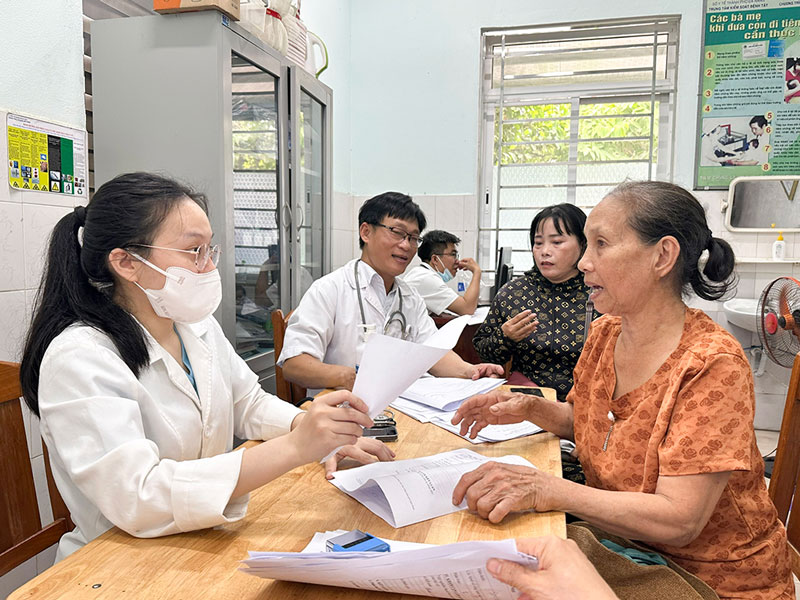
This is the first phase of implementing the program of periodic health check-ups or free screening for people under the direction of the Central Government, the Government and the city.
In the first phase of periodic health check-ups and free screening for people, localities that have been implemented include Hoa Khanh ward, Son Cam Ha commune, Tra Leng commune and Tra My commune.
Among the total of 3,101 people examined, there are 993 elderly people, 215 people with disabilities, 352 people from poor households, 233 people with meritorious services and many other priority groups.
In addition, in the same period, 592 children under 6 years old who are not going to kindergarten or preschool in 4 wards of Lien Chieu, Hai Van, An Khe and Thanh Khe were also given free screening examinations.
At this health check-up, people are given general check-ups according to specialties, screening for some non-communicable diseases, health consultations, and some tests and paraclinical tests according to the doctor's instructions: capillary blood sugar, X-ray, tuberculosis screening, ultrasound, electrocardiogram.
In addition, the city also deploys free vaccination of 993 doses of flu vaccine and 470 doses of tetanus vaccine from socialized sources.
Initial examination results recorded many cases of pathology that need to be monitored and treated.
Specifically, 20 new cases of hypertension were detected, 73 cases of pre-hypertension. Among 1,318 people tested for blood sugar, there were 340 cases suspected of pre-diabetes and 150 cases suspected of diabetes.
Through 1,891 X-rays, 152 cases of abnormal lesions on film were detected. ECG results also recorded many cases suspected of myocardial ischémia, coronary artery disease and other cardiovascular disorders requiring continued specialized monitoring.
For the elderly group, common diseases discovered include cataracts, loss of teeth causing reduced chewing power, high blood pressure and diabetes.
In the group of children, many new cases of refractive errors such as nearsightedness, farsightedness, and astigmatism have been detected; some children at risk of speech delay and malnutrition in mountainous areas have also been recorded for continued monitoring and support.
Health counseling, information storage, and introduction to people whose medical conditions are detected to regional health centers and specialized and general hospitals at higher levels to have appropriate treatment regimens are fully implemented.
In the coming time, the City People's Committee will continue to direct the Department of Health and departments, agencies, branches, and localities to review and complete subject data, and develop plans to organize health check-ups suitable to the actual conditions of each area.


