
When a sleep also becomes precious
At the age of 57, Ms. N.T. H. O. (resident of Vung Tau ward, Ho Chi Minh City) once thought that prolonged diarrhea, physical weakness, and poor eating were just common health problems. Although she had been examined many times at some medical facilities, the symptoms still recurred, but the cause has not been discovered.
Only when relatives advised her to have a blood test and a comprehensive examination at a final-line hospital in Ho Chi Minh City did she know she had stage 4 metastatic liver colon cancer.
Two years living with the disease were also two years she underwent many treatments. After 8 chemotherapy sessions, she had numbness in her limbs, hair loss, and physical exhaustion. After that, she was transferred to biotherapy with 13 infusions to control the disease. When the tumor condition did not improve as expected, she continued chemotherapy. "Medicine is very effective" - she recalled.
Prolonged vomiting and diarrhea made her almost unable to eat or drink. Increased liver enzymes accompanied by jaundice further worsened her health.
Ms. N.T. M. H., 53 years old, residing in Duc Hoa, Tay Ninh, went through such days. For many months, severe abdominal pain caused her to have to go to the emergency department at the final-line hospital where she was being treated many times. She remembers going to the emergency room about 3-4 times.
Here, she was treated with pain relief and aspiration of fluids in her abdomen. When the condition temporarily stabilized, she was allowed to go home. But returning home does not mean the pain ends. "Pain is okay, but I don't know what to do" - Ms. H. recounted.
Severe pain made her almost unable to eat and drink, and her sleep was also affected. About 10 days ago, through a relative's introduction, she went to An Sinh General Hospital for treatment and care. After the first days of treatment, she said the pain had decreased compared to before. She started eating again, although the amount of food was still small. "Eating is also a little less, but it's better than before," she shared.
Palliative care does not mean "no cure".
BS.CKII Huynh Thi Yen Vi - Head of General Internal Medicine Department, An Sinh General Hospital, said that in addition to treating the cause, pain control, symptoms and supporting physical condition need to be concerned throughout the treatment process.
For a long time, palliative care has often been simply understood as pain relief for late-stage cancer patients. However, pain relief is only a part. Palliative care aims to comprehensively control physical symptoms, provide psychological, social and spiritual support, thereby helping patients maintain the best possible quality of life" - Dr. Yen Vi shared.
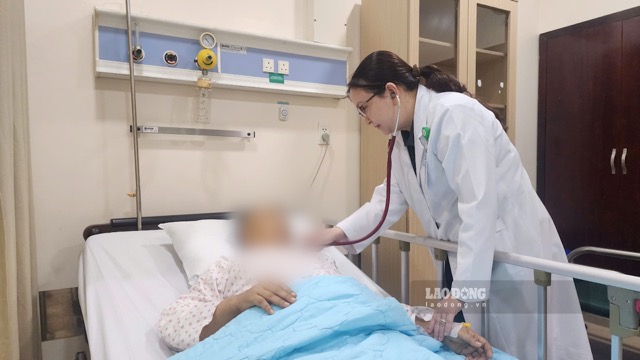
According to doctors, in people with severe illnesses, discomforts do not only come from physical conditions such as pain, shortness of breath, nausea or insomnia. Patients may also face anxiety, fear, treatment cost pressure or feeling like they are becoming a burden to their families.
Therefore, palliative care requires the coordination of many expertise and social work. Notably, the need for palliative care is not only posed for cancer patients but can also be seen in people with heart failure, chronic obstructive pulmonary disease, irreversible cirrhosis, severe kidney failure, dementia or sequelae of stroke.
Dr. Yen Vi believes that a concept that needs to be changed is that palliative care only begins when the patient is no longer able to be treated. In fact, this model can be implemented in parallel with treatment, depending on the condition and needs of each person.
For patients with severe chronic diseases, repeated hospitalizations, uncontrollable symptoms or impaired physical condition, assessing the need for palliative care early can help better control symptoms, instead of just treating each acute episode.
In the direction of developing a mitigating care network in Ho Chi Minh City, the coordination between specialized hospitals, general hospitals and grassroots healthcare is expected to help the care process be more continuous.


