
High blood pressure not only affects the cardiovascular system but can also silently damage the kidneys for many years. Worryingly, in the early stages, this functional decline usually does not show obvious symptoms.
How does high blood pressure affect the kidneys?
| High blood pressure affects kidneys | Signs and possible consequences |
|---|---|
| Blood vessel damage in the kidneys | Prolonged high blood pressure can damage small blood vessels in the kidneys, causing blood filtration function to gradually decline. |
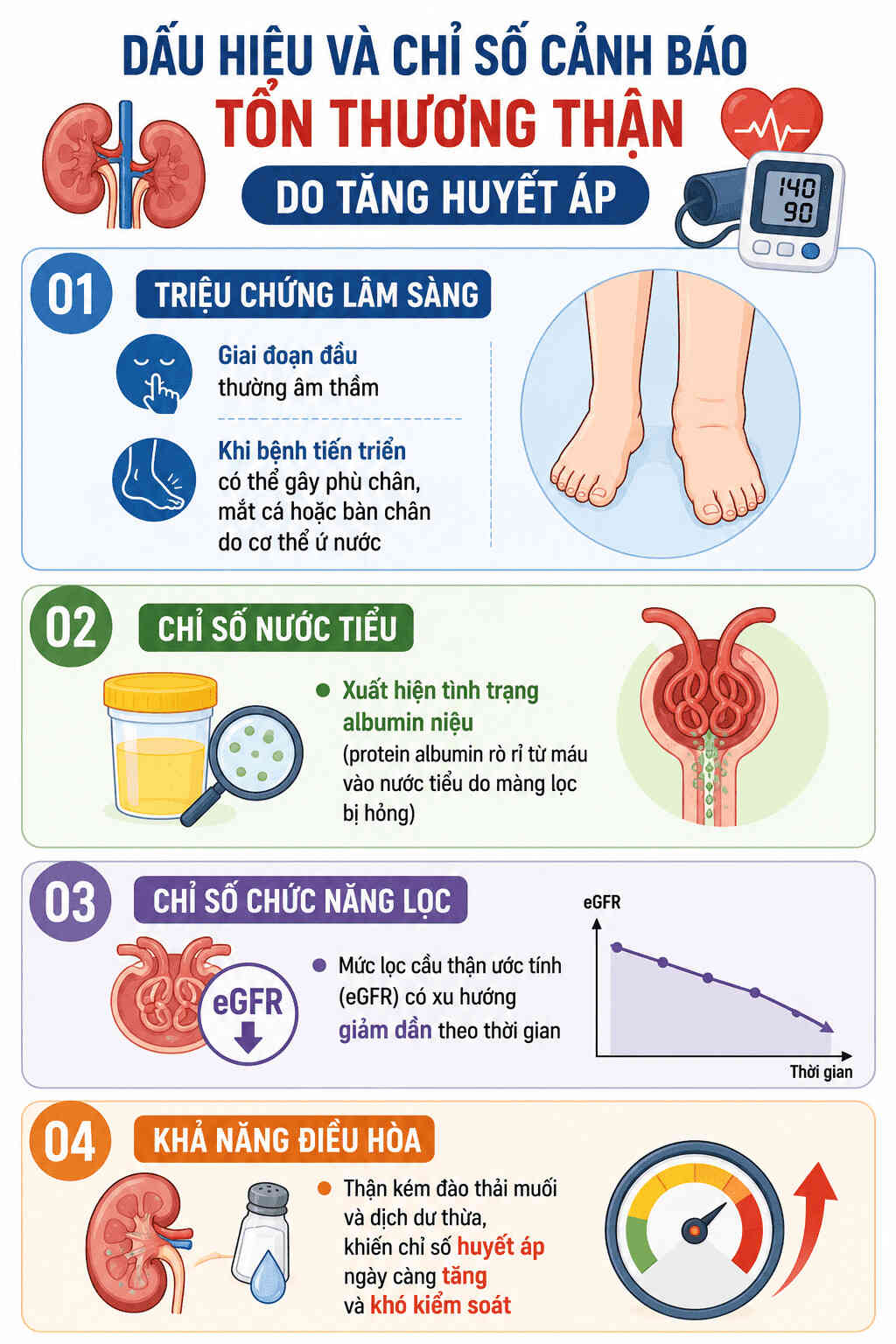
| Following Effects on the kidney's filtering system | When the kidneys are affected, albumin protein may appear in the urine and the eGFR may decrease over time. |
| @@️ Kidney disease can progress silently | In the early stages, there may not be obvious symptoms. When the disease becomes more severe, the patient may experience leg edema, fatigue, or changes in urination. |
| • Weak kidneys can increase blood pressure | When the kidneys reduce their ability to excrete excess salt and water, the amount of fluid in the body can increase and contribute to higher blood pressure. |
| ✅ Need periodic checks | People with high blood pressure should check their blood pressure, creatinine/eGFR and albumin in their urine as directed by their doctor to monitor kidney health. |
High blood pressure can cause kidney damage for a long time without obvious symptoms. Patients should monitor blood pressure and check kidney function periodically as directed by a doctor.
Impaired blood vessel and filter function
Kidneys play a role in filtering waste, removing excess water and contributing to regulating blood pressure. According to medical experts, when blood pressure is continuously high, the blood vessel walls in the kidneys must bear great pressure for a long time. This condition can cause blood vessels to narrow, reducing the amount of blood to nourish and support kidneys in filtering waste.
In addition, millions of small filters (nephrons) in the kidneys are also gradually damaged. When the filter barrier is weakened, albumin protein can leak from the blood into the urine. Over time, the ability to filter blood gradually decreases, reflected in the decline of the estimated glomerular filtration index (eGFR). In the late stage, patients may experience leg edema due to body salt and water stagnation.
Dangerous medical loop
The relationship between blood pressure and kidneys has reciprocal effects. When the kidneys are weakened, the ability to remove excess water and salt from the body may be less effective. The amount of fluid stagnant in the circulatory system continues to contribute to pushing blood pressure higher. This increase returns to destroy kidney blood vessels, forming a dangerous vicious circle.
The information in the article is for reference only, not for medical diagnosis or treatment. You should talk directly to your doctor for accurate and appropriate advice to your health condition.
Q&A corner: High blood pressure and kidney disease
What periodic health checks can help detect early signs of kidney damage due to high blood pressure before the body develops edema?
In addition to urine tests to find leaks of albumin protein (albuminuria), patients should undergo periodic blood tests to measure creatinine levels. This parameter helps doctors calculate the estimated glomerular filtration rate (eGFR), thereby diagnosing and monitoring kidney dysfunction at a very early stage.


