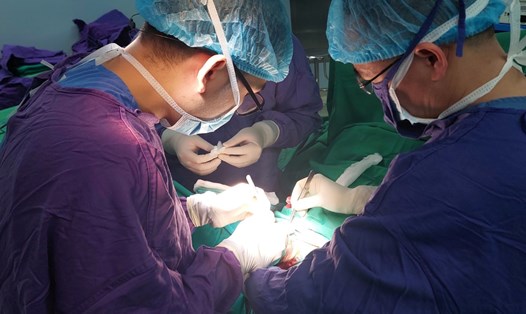
Doctor Nguyen Van Phuc - Department of Andrology, Central Military Hospital 108 - shared: Penile cancer is a rare disease in men, but the consequences can be very serious if detected late, directly affecting physiological function, psychology and quality of life. Notably, one of the important risk factors of the disease stems from a fairly common condition: phimosis.
Most cases of penile cancer are squamous cell carcinoma, formed from the skin and mucous membranes of the glans or the inner surface of the foreskin. In the early stages, the disease usually manifests discreetly with signs such as small ulcers, red patches or nodules. However, due to psychological hesitation, many people are slow to see a doctor, causing the disease to progress silently.
Circus fever is a condition in which the foreskin cannot completely slide down to reveal the glans, even when the penis is erect or in a normal state. In young children, this can be a physiological phenomenon, but if it lasts until adulthood, especially accompanied by recurrent inflammation, it is considered a disease requiring intervention.
The link between phimosis and penile cancer is not only limited to difficulty with hygiene, but also related to many complex biological mechanisms," said Dr. Nguyen Van Phuc.
First of all, prolonged chronic inflammation. When the foreskin cannot slide down, genital mucus and bacteria easily accumulate, creating a humid environment, favorable for recurrent infections. Prolonged inflammation causes epithelial cells to be continuously damaged and regenerated, thereby increasing the risk of abnormal changes - a precursor to cancer.
In addition, phimosis also increases the risk of HPV virus infection - a factor recorded in about half of penile cancer cases, especially type 16. A prolonged inflammatory and humid environment creates conditions for the virus to survive, deeply penetrate the mucous membrane and affect genes that control cell division, leading to uncontrolled development.
In addition, this condition is also related to chronic skin diseases such as lichen sclerosis - a factor recorded with a higher rate in patients with penile cancer. The combination of inflammation, fibrosis and prolonged lesions increases the risk of malignant transformation.
Many epidemiological studies show that men who have had early circumcision have significantly lower rates of penile cancer. However, this is not a mandatory measure for all cases. Intervention is often indicated when there is pathological phimosis, recurrent inflammation or complications. The important factor is still good inflammation control and ensuring hygiene.
Genital cancer, if detected early, has a promising prognosis. Men, especially those with prolonged phimosis, need to see a doctor when signs such as unhealed ulcers, abnormal red or white patches, discharge, mild bleeding, enlarged inguinal lymph nodes or prolonged odor in the intimate area appear.
Dr. Nguyen Van Phuc recommends not to underestimate the condition of phimosis in adults. This is not only a problem affecting daily life but can also create conditions for chronic inflammation and HPV infection - important factors in the mechanism of penile cancer formation.