
The weekly sample menu for gout patients suggests helping you choose healthy dishes and minimize the risk of gout attacks. This menu is designed to ensure adequate nutrition in three main meals: breakfast, lunch and dinner with easy-to-find ingredients and simple preparation.
If you are not allergic to any ingredients, this menu may be a perfect suggestion for people with high uric acid levels.
To increase diversity, you can flexibly replace equivalent foods. For example: 100g of meat can be replaced by 180g of tofu, 100g of fish, or 100g of shrimp.
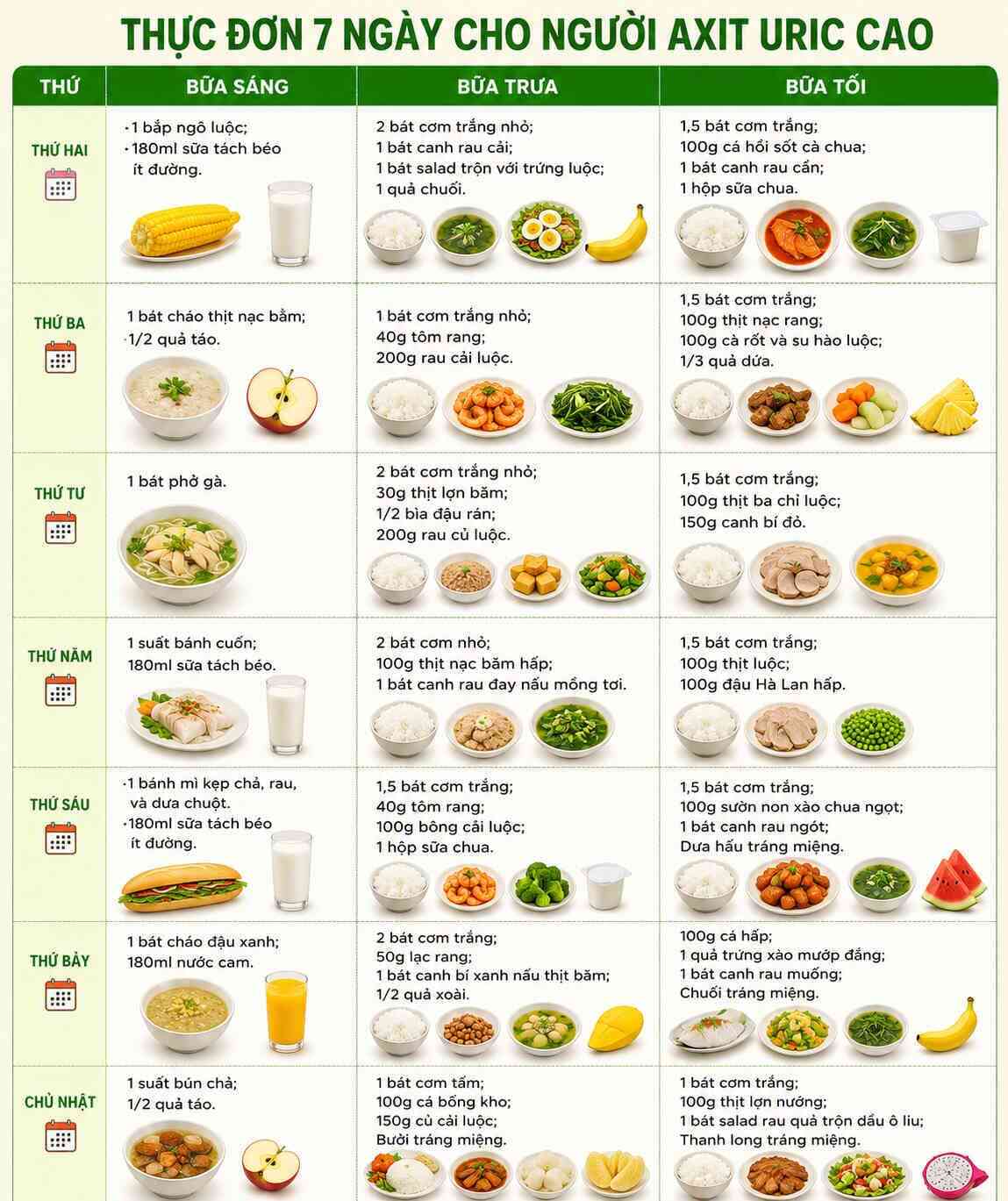
This menu is built on the principle of healthy nutrition, suitable for gout patients, but you can flexibly replace equivalent foods to change the taste. In addition to diet, drink enough water and maintain a scientific lifestyle to help better control the disease.
Guidelines for building a nutritional menu for gout patients
Building a menu for people with gout, whether in the early stages or already chronic, requires special attention to ensure proper nutrition and maintain overall health. Here are important principles to follow to control uric acid:
Ensure nutritional balance: Each meal needs to provide enough groups of nutrients: protein, starch, healthy fats, vitamins and minerals. You should choose fiber-rich, low-purine foods such as green vegetables, whole grains, and low-sugar fruits.
Maintain a scientific eating habit: You should eat on time, enough meals, avoid skipping breakfast, and limit overeating, especially in the evening, to avoid pressure on the digestive system and increase the risk of uric acid buildup.
Diet and lifestyle for people with high uric acid
| Criteria | Diet (Nutrition) | Lifestyle and Movement |
|---|---|---|
| Main objective | Improves circulation, supports weight loss and body recovery. | |
| Priority food | Green vegetables, whole grains, low-sugar fruits and fiber-rich foods. | Gentle exercises such as walking, yoga, swimming. |
| Habits to avoid | Skimp breakfast, overeat in the evening, use purine-rich foods. | Excessive exercise causes joint stress, staying up late, prolonged anxiety. |
| Flexibility principle | You can replace 100g of meat with 180g of tofu, 100g of fish or 100g of shrimp. | Maintain exercise for at least 30 minutes each day and rest reasonably. |
Scientific lifestyle helps support uric acid excretion
Safe weight loss: If you are overweight, scientific weight loss is one of the effective ways to control gout. However, a diet needs to be designed by a doctor or nutritionist to ensure health and not increase gout attacks.
Exercise regularly: Physical activity helps improve circulation, supports weight loss and reduces the risk of gout attacks. Choose gentle, suitable exercises such as walking, yoga or swimming, and maintain at least 30 minutes/day. Avoid overtraining to avoid stressing joints.
Rest and relaxation time: Quality sleep is an indispensable factor for the body to recover and reduce stress. Establish reasonable rest time, combine relaxation activities such as reading, meditation, or listening to music. Avoid worrying or overworking, as prolonged stress can trigger gout recurrence.
Supplement with functional foods if needed: Under the advice of a doctor, you can use health support products such as uric acid reduction tablets or vitamin C, omega-3 supplements to strengthen resistance and protect joints.

Combining a scientific diet, moderate exercise and healthy lifestyle not only helps control gout effectively but also improves the quality of life for people with high uric acid.
Quick quiz on the impact of diet and lifestyle on uric acid levels and gout
Can I change the dishes in the 7-day menu?
It is entirely possible to flexibly replace equivalent foods to change the taste but still must ensure the principle of healthy nutrition.
Does weight loss help gout patients?
Yes, scientific weight loss is an effective way to control the disease, but it is necessary to follow the doctor's instructions to avoid increasing gout attacks.
Is it necessary to supplement functional foods?
You can supplement with vitamin C, Omega-3 or uric acid reduction tablets under the advice and guidance of a doctor.
The information in the article is for reference only, not for medical diagnosis or treatment. You should talk directly to your doctor for accurate and appropriate advice to your health condition.


