Food wrap is convenient but can be harmful to health if of poor quality
Food wrappers, although convenient and cheap, can pose potential health risks if they are poor quality goods of unknown origin. There are still many types of wrappers produced unhygienic, floating ingredients, and even fake reputable brands on the market, making it difficult for consumers to recognize.
These products can contain toxic additives and easily stop being contaminated with food, especially when wrapped in hot, greasy food, used in the microwave or reused many times. Long-term use risks affecting the digestive system, liver, kidneys and overall health.
The Economic Police Department, Hanoi City Police recently discovered a facility producing fake food wrappers and aluminum wrappers in Lung Kenh village, Hoai Duc commune. Notably, on the packaging of the wrapping rolls, the production location is recorded as a business in Ho Chi Minh City, but in reality it was "produced" from a damp, cramped workshop, not meeting the minimum conditions for hygiene and production safety.
Initial records show that the production facility does not meet environmental conditions, the factory is cramped, damp, and messy. Functional forces discovered hundreds of rolls of fake film wrapped and labeled according to large enterprise models to put on the market.
The subjects are suspected of buying genuine goods as samples, then mass-producing fake wrappers from floating, cheap, and uninspected materials. The inspection process also showed that the materials were mixed with dirt, posing a potential risk of unsafety when using food wraps, especially hot or greasy foods.
Use food wrap properly
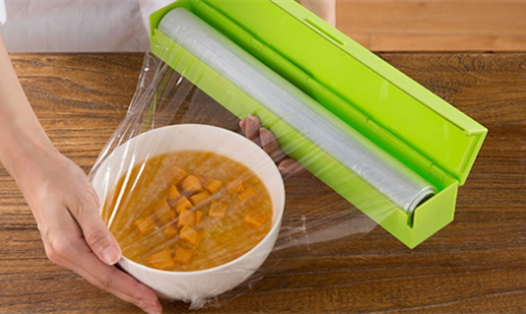
Currently, food wrappers are divided into two main groups. Regular wrappers (PE, PVC) are mainly used to store food in refrigerators, cannot withstand high temperatures and should not be used in microwaves because they can cause chemical contamination into food. Meanwhile, wrappers specifically for microwaves (PMP, PVDC) have high heat resistance from 140-180°C, which are often clearly stated on the packaging but are more expensive.
According to recommendations from the Food Safety Department of the Ministry of Health, no matter what type is used, consumers also need to comply with safety principles: Do not wrap food that is still hot above 70°C; limit wrapping food that is high in fat or in acidic and alkaline environments; do not wrap the film too close to food but should keep a minimum distance of 2.5 cm or use a glass box before wrapping.
In addition, it is necessary to avoid using wrappers that have a strange smell, mold, deformity, and store the product in a dry, stable temperature. When using in the microwave, only use suitable wrappers, wrap them at least 2.5 cm away from food and poke a few small holes to drain air.
Choosing the right type and using it correctly will help food wraps promote preservation efficiency, while protecting the health of the whole family.
It's a bit of a bit of a bit of a bit of a bit of a bit.
It's a bit of a bit of a bit of a bit of a bit of a bit.