Foreign object in airway for 13 months
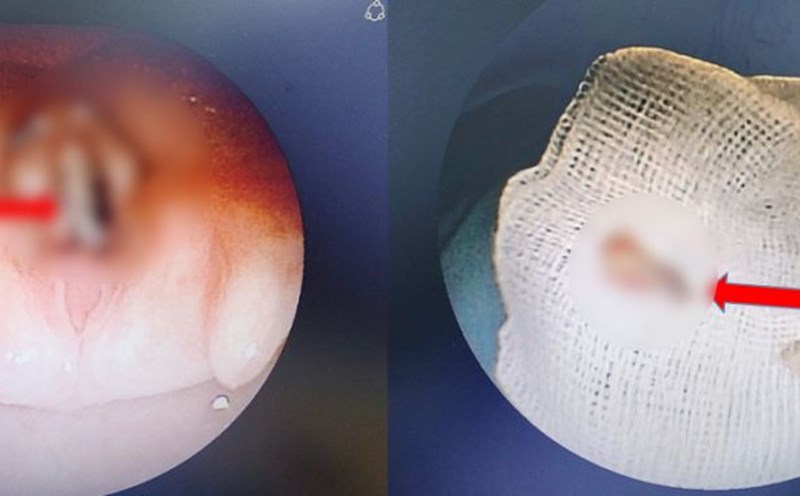
In February 2025, baby V.H. (14 years old, in Hanoi) choked on sapodilla seeds while eating. At that time, the child coughed violently, chest tightness, but after only a few minutes the cough stopped on its own. Believing that the seeds had flowed down the digestive tract, the family did not take the child to the doctor.
However, throughout the next 13 months, the baby continuously had a prolonged dry cough, no fever, no obvious shortness of breath. The family bought medicine for treatment many times, but the symptoms did not improve. Because the symptoms were not too rampant, the possibility that the child still had a foreign object in the airway was not considered.
Only when the recent cough worsened did the baby be taken to a local hospital for examination. The results of computed tomography revealed a foreign object in the right bronchi, after which the patient was transferred to the National Children's Hospital for further treatment.
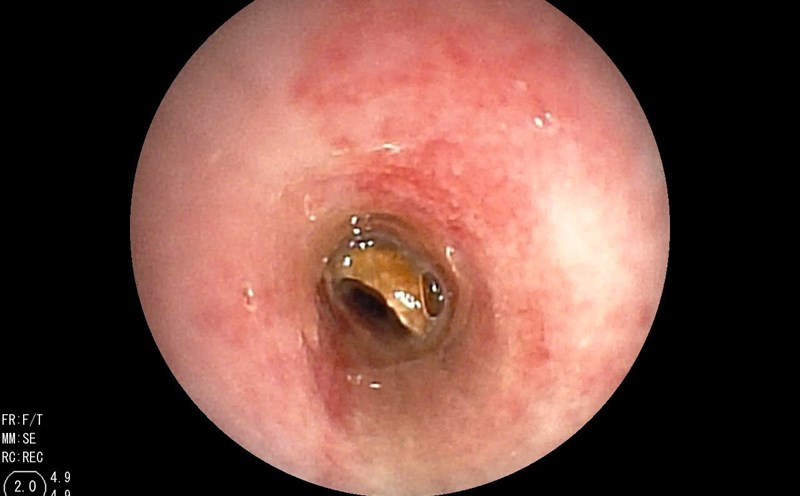
At the Respiratory Center, doctors prescribed bronchoscopy to remove the foreign object. However, because the foreign object had existed for too long, inflammatory tissues and granular tissue were formed around it, making the intervention process complicated. Doctors had to combine a hard tube endoscopy combined with laser to remove the inflamed tissue and release the foreign object before successfully removing it. The foreign object was identified as a sapodilla granule about 1x3 cm in size.
According to BSCKII Nguyen Thi Thu Nga, Deputy Head of the Department of Examination and Respiratory Examination, Respiratory Center, National Children's Hospital, foreign objects that have existed for a long time in the airway can cause inflammation, edema, formation of surrounding tissues, making it much more difficult to access and remove foreign objects, and at the same time potentially posing serious risks to the health and life of children.
Nut-cracking laughter, children fall into respiratory failure
Not only silently prolonged, the foreign object in the child's airway can also develop acute, life-threatening in a short time.
Another case is a 3-year-old girl in Son La, admitted to the hospital in a state of respiratory failure due to chestnut choking. According to her family, while eating, the child was eating and crying, so she inhaled hard, causing foreign objects to enter the airway.
After being given first aid on the spot by the family, the foreign object partially fell out, so the family continued to monitor at home. However, the next day, the child appeared with a heavy cough, gradually increasing shortness of breath, accompanied by signs of cyanosis. The family immediately took the child to the local hospital for emergency treatment, then transferred him to the Emergency and Poison Control Department, National Children's Hospital.
MSc.BS Bui Vu Anh - Department of Emergency and Poison Control - said that immediately after receiving the patient, doctors urgently gave the child oxygen, controlled the airway, performed necessary tests and held an emergency consultation with the Respiratory Center to perform emergency endoscopy. Only more than 2 hours after admission, the foreign object was successfully removed.
After treatment, the child recovered well, without any complications, and was discharged from the hospital after 3 days.
According to doctors, airway foreign objects in children can develop in two main directions.
One is acute progression, when the foreign object causes obstruction of the airway, causing the child to have difficulty breathing, respiratory failure, and even stop breathing if not treated promptly.
Two is prolonged silent developments, with main manifestations being persistent cough, recurrent cough, prolonged respiratory infection or treatment that never recovers.
Notably, after the initial choking, some children may almost return to normal, no longer showing obvious signs, making the family subjective. Meanwhile, foreign objects still exist in the airways, continuing to cause inflammation, blockage and leading to many dangerous complications.