
A diet full of calcium is the foundation for maintaining bone health. People over 50 years old need to pay attention to supplementing enough calcium according to the body's needs and nutritional recommendations.
Milk and dairy products are common sources of calcium. In addition, tofu, soy products, green leafy vegetables, small fish that can be eaten with bones and some seafood can also be included in the daily menu.
Prioritizing calcium-rich foods in daily meals is a simple way to meet nutritional needs. The use of calcium supplements should be considered based on specific portion sizes and needs, instead of arbitrarily taking high doses.
For the body to absorb and use calcium effectively, vitamin D also plays an important role. People who are often indoors or are less exposed to sunlight may need to be assessed for vitamin D deficiency risk.
In case of need to supplement, vitamin D should be used according to the instructions of a doctor or medical expert. Do not arbitrarily use high doses for a long time because excessive supplementation can also be harmful to health.
Reducing salt intake is one of the simplest ways to protect bone health. You should limit pickled foods, canned foods, processed meats and overly salty dishes. When cooking, you can reduce the amount of fish sauce, soy sauce and spices high in sodium.
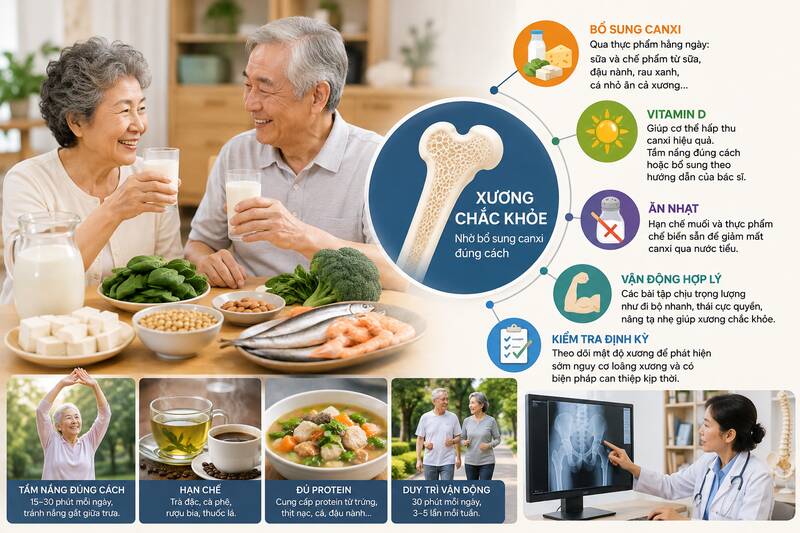
In addition, it is necessary to ensure that the diet has enough protein. Protein is an important component of bone tissue, so elderly people should not overly abstain from protein-rich foods due to concerns about weight or blood fat.
Eggs, lean meat, fish, shrimp and soy products can be reasonably added to your daily menu to provide protein and essential nutrients for the body.
Weight-bearing exercises can help maintain bone strength. Rapid walking, Tai Chi, climbing stairs or strength training at appropriate levels are activities that older people can consider.
Exercise should be maintained regularly and adjusted according to physical condition. People with underlying medical conditions, history of fractures or high risk of osteoporosis should consult a specialist before performing high-intensity exercises.
Another factor that is often overlooked is regular bone health monitoring. Elderly people, especially postmenopausal women and those at risk of osteoporosis, should talk to their doctor about when to check bone density.
If bone density is found to be significantly reduced, the patient needs to be assessed for the cause and appropriate treatment. In some cases, the doctor may prescribe medication to treat osteoporosis in addition to adjusting the diet, supplementing vitamin D, calcium and increasing exercise.
Therefore, protecting bones is not simply drinking more calcium or sunbathing. A nutritious diet, supplementing with appropriate vitamin D, limiting salt, maintaining exercise and periodic bone health check-ups are the factors that need to be combined to maintain a healthy bone system.


