
Vietnamese organ transplantation reaches out but still lacks donor resources
Although Vietnam has mastered many modern organ transplant techniques, it is still facing the biggest "bottleneck" of a lack of donated organ sources. To have more patients saved, the most important thing is to change community awareness and build trust in the transparency of the organ donation and transplantation system.
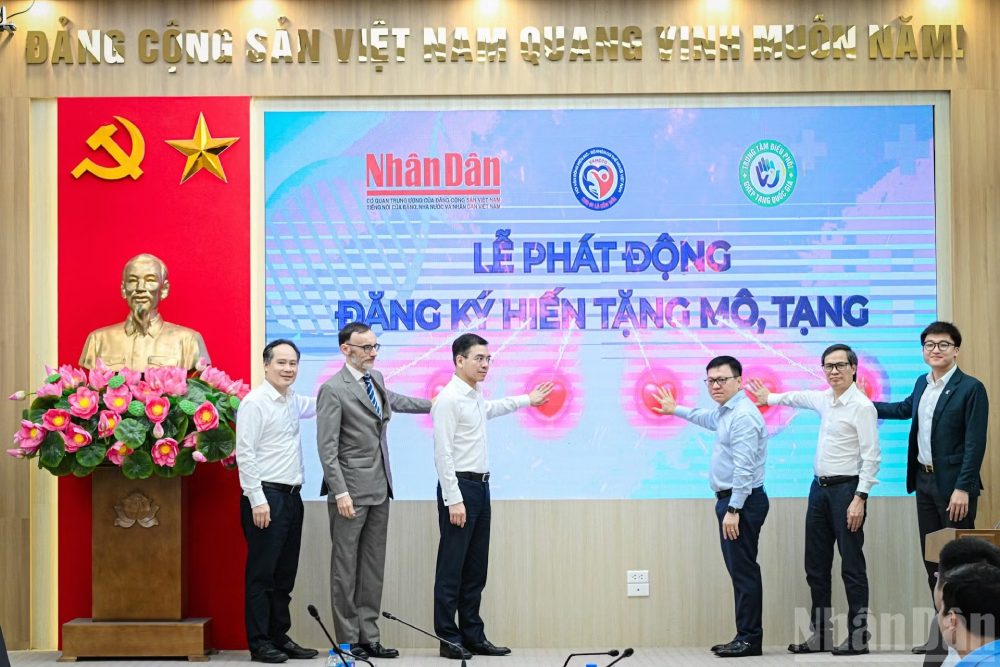
This message was emphasized at the seminar "Journey of Hope" organized by Nhan Dan Newspaper in coordination with the National Coordination Center for Human Organ Transplantation and the Vietnam Association for Moving the Donation of Human Tissues and Organs on May 19, in response to Vietnam's Organ and Tissue Donation Day 2026.
Assoc. Prof. Dr. Dong Van He, Director of the National Coordinating Center for Human Organ Transplantation, Deputy Director of Viet Duc Friendship Hospital, said that Vietnam started organ transplantation in 1992. In the first 20 years, the whole country only performed less than 1,000 transplants. However, in the last 4 years, the number of transplants has increased very rapidly.
In 2025 alone, Vietnam performed 1,368 organ transplants, marking the 4th consecutive year with over 1,000 transplants each year. In the first quarter of 2026, 308 transplants were performed and to date, the whole country has 286 brain death transplants. At one point, Vietnam ranked first in Southeast Asia in terms of the number of organ transplants.
However, if calculated according to the ratio of transplants per million people, Vietnam only reached about 13.6 cases, while Spain reached 139 cases.
According to Assoc. Prof. Dr. Dong Van He, the biggest reason is that the source of organ donation is still too small. In 2025, Vietnam only had 66 organ donations from brain-dead people. Meanwhile, in many countries such as China or Thailand, about 80% of transplants use organ sources from brain-dead and heart-dead people.
The development of the organ donation and transplantation system depends on 3 main factors including law, the health system and community support. In which, the community plays a fundamental role. If people understand and trust the organ donation and transplantation system correctly, families will easily make more humane decisions" - Assoc. Prof. Dr. Dong Van He emphasized.
Dr. Ha Anh Duc - Director of the Department of Medical Examination and Treatment Management (Ministry of Health) - assessed that Vietnam has mastered many complex organ transplant techniques such as lung transplantation, heart-lung transplantation, creating a proud mark in the region. However, the biggest difficulty currently is that the source of donated organs is still too limited.
Communication plays a particularly important role in changing community awareness. We expect the coordination between the 3 units to create a strong breakthrough in communication work, thereby encouraging people to actively register for tissue and organ donation," said Mr. Ha Anh Duc.
Building trust so that people are willing to donate organs
To increase organ donation sources, it is important to build social trust. Many countries that have succeeded in organ donation campaigns have created the belief that transplantation is carried out transparently, fairly and in accordance with the law.
Assoc. Prof. Dr. Dong Van He also said that the Law on Donation, Extraction, and Transplantation of Human Organs and Parts of the Body of Vietnam has not been amended for nearly 20 years, and needs to be completed soon to suit reality.
Meanwhile, Lieutenant General, Assoc. Prof. Dr. Nguyen Hoang Ngoc - Deputy Director of Central Military Hospital 108 - said that to increase organ donation from brain-dead people, the most important factor is still changing social awareness through communication.
According to Assoc. Prof. Dong Van He, there is still inaccurate information about brain death, even confusing brain death with deep coma or vegetative life. This is a serious scientific error. We hope that press agencies will accompany us to provide accurate and humane information about organ donation.


