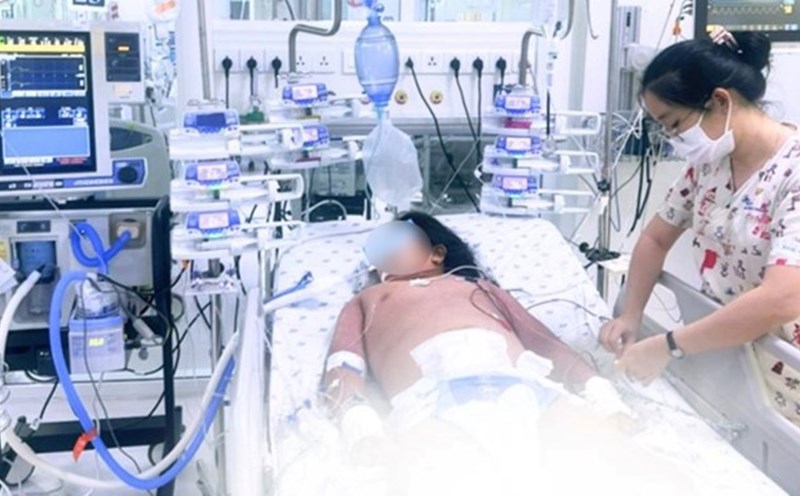
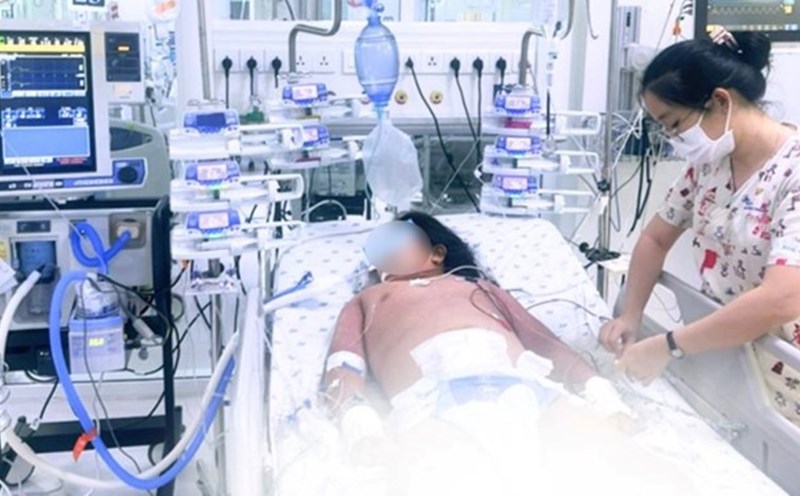
Military Hospital 175 admitted patient N.T.T.H (17 years old, living in Cu Chi district, Ho Chi Minh City) to the hospital with pigmented blood only 31g/L, platelets reduced to 8 x 10⁹/L, accompanied by severe anemia, widespread subcutaneous hemorrhage and chest pain, difficulty breathing.
According to the family, the patient with a history of mother has a platelet reduction. Over the past three years, patients often dizzy, dizzy, prolonged menstruation but have been diagnosed with iron deficiency anemia, oral medication treatment without improving. A week before hospitalization, the patient appeared hemorrhage on the thighs and lower legs on both sides, then spreading the whole body.
Through in-depth tests, doctors determined that the patient had primary Evans syndrome, a very rare autoimmune disorder in which the immune system self- regenerates antibodies to attack blood cells such as red blood cells, platelets and sometimes white blood cells. This is a disease that only accounts for about 7% of cases of autoimmune thrombocytopenia and 2% of cases of immune thrombocytopenia.
Dr. Mai Thi Thu Ly - Department of Clinical Hematology and Occupational Diseases, Military Hospital 175 said: Edis's syndrome has a rapid progression, clinical manifestations are complex and can easily be misdygnosed with other blood diseases such as common anemia, blood clotting disorder or liver disease. Early detection and timely treatment are decisive in saving the patient's life".
As soon as the diagnosis was determined, the treatment team promptly deployed a regimen including blood transfusion and combination of immunosuppressants. After 11 days of active treatment, the patient's hemochromatic index improved significantly: the pigmented blood increased to 115 g/L, platelets reached 177 x 109/L. The patient was stable and discharged from the hospital, continuing to be monitored for outpatient treatment and regular check-ups.
According to Dr. Thu Ly, treating Evans syndrome is still challenging due to the rare disease and the lack of a standard treatment regimen. The personalization of treatment, combining clinical and testing, plays an important role in disease control.
This successful treatment is a testament to the professional capacity and ability to master rare diseases of the medical team at Military Hospital 175. We will continue to promote the development of specialized specialties, improve the quality of diagnosis and treatment, aiming to become a modern military medical center, effectively serving the army and people, affirmed the hospital representative.