
From Son La province, Ms. Tong Thi T and her husband spent more than 10 hours traveling by bus to Thanh Nhan Hospital (Hanoi) for examination in a state of declining health.
Previously, Ms. T had cervical cancer and was treated with radiotherapy. After treatment, her health temporarily stabilized and she returned to her daily life with farming. However, recently, her left leg suddenly became bulging, purple, and heavily heavy, making it extremely difficult to move.
"Sometimes just a few steps away can feel pain and fatigue. I went to the doctor and was told that it could be a sequelae after radiotherapy, so I had to accept going home," Ms. T said.
Two months have passed, and the leg edema has not only not improved but has also gradually become worse. She continued to visit a number of provincial hospitals but the cause has not yet been determined. During the deadlock, she accidentally read the doctors' professional shares about cases with similar symptoms.
"Seeing that the case was too similar to me, I immediately contacted him, hoping to find a treatment solution," she said.
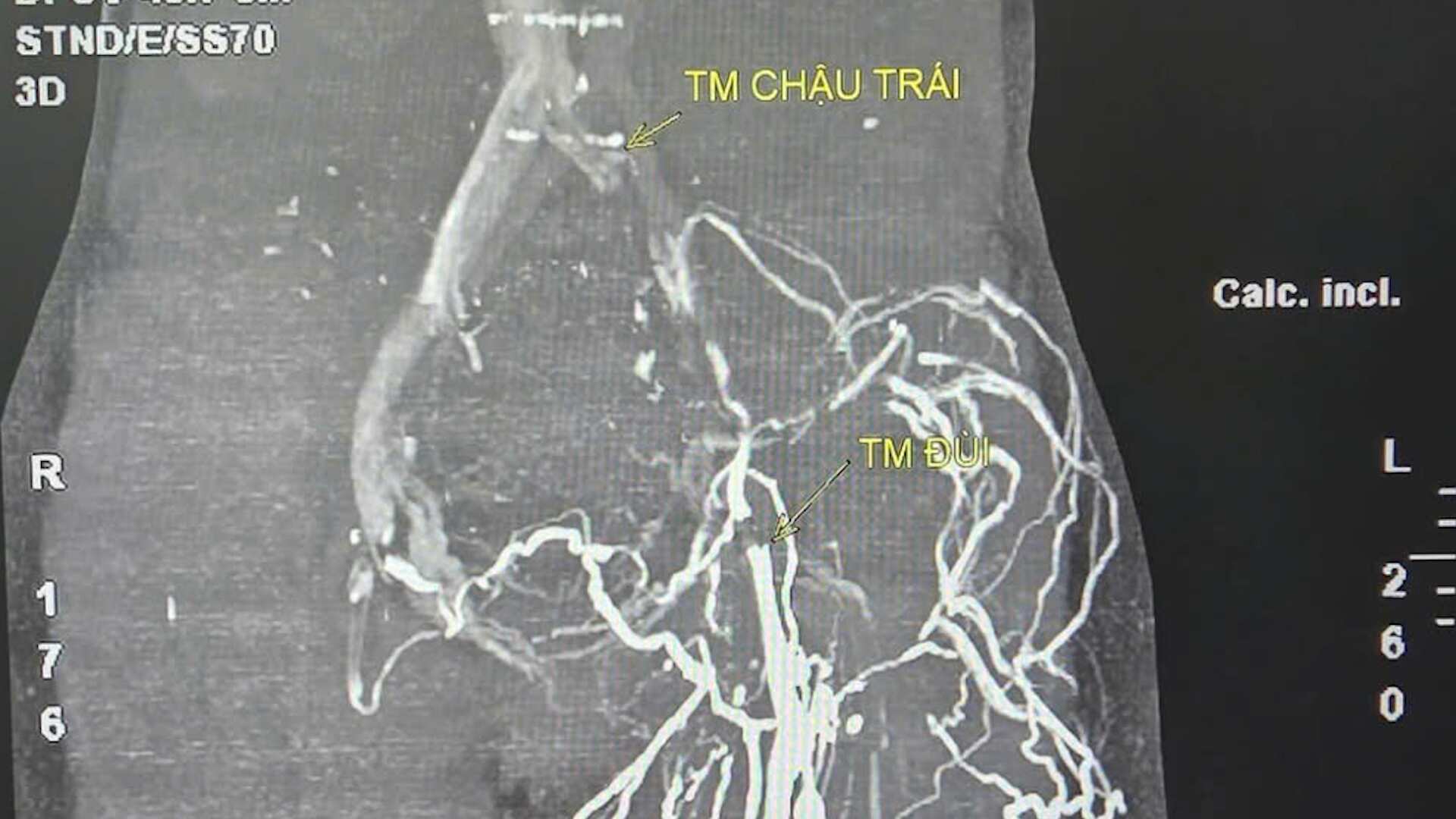
Through in-depth examination and diagnosis, doctors determined that Ms. T's leg edema was not simply a common sequelae, but stemmed from damage to the blood vessel system after radiotherapy for cancer.
According to MSc. Dr. Nguyen Duy Thinh - Head of the Department of Cardiovascular Intervention, Department of Graphic Diagnosis, Thanh Nhan Hospital, in fact, many patients after being treated for gynecological cancer have a long period of edema, but due to lack of information and difficult travel conditions, many people accept living with the disease without knowing that they can completely have effective intervention.
When the cause was clearly determined, the intervention team approached the damage through the road into the left thigh vein, accurately determined the location of the narrow left pelvic vein, proceeded to dribble the ball and place the stent under DSA instructions, thereby restoring the effectiveness of vein circulation, Dr. Thinh emphasized.
After only 48 hours of intervention, Ms. T's leg edema improved significantly. The left leg gradually tightened, the skin turned pink, and walking was easier than before.
"Seeing my legs getting shorter and I can no longer walk, I was very happy. I really feel this long trip is worth it, Ms. T emotionally shared.
Doctors recommend that after cancer treatment, especially gynecological cancer, if symptoms such as prolonged leg edema, pain, heaviness of limbs, skin color changes, etc. appear, patients should absolutely not be subjective.
Phu chi not only affects daily activities but can also be a warning sign of serious blood vessel damage. If diagnosed correctly and intervened promptly, the treatment effectiveness will be very obvious, Dr. Thinh noted.


