
On July 11, information from the General Surgery Department, University Medical Center Hospital - Hoang Anh Gia Lai said that the unit had just received and treated an elderly patient in a rare condition when the JJ catheter (empty, soft, made of plastic or silicone) was stored in the urinary tract for 9 years after urethral stone dissection surgery.
Patient L.T. T. (born in 1952, residing in Chu Bo 2 village, Ia Dok commune, Gia Lai province) has a history of ureteral stone dissection endoscopy 9 years ago.
After surgery, the patient was placed with a JJ catheter to drain urine and support ureteral recovery. However, after being discharged from the hospital, the patient did not return for re-examination as scheduled and did not remember that he still had the catheter in his body.
Recently, the patient developed back pain, painful urination, and bloody urine. The symptoms were increasing, so the patient went to Hoang Anh Gia Lai University of Medicine and Pharmacy Hospital for examination.
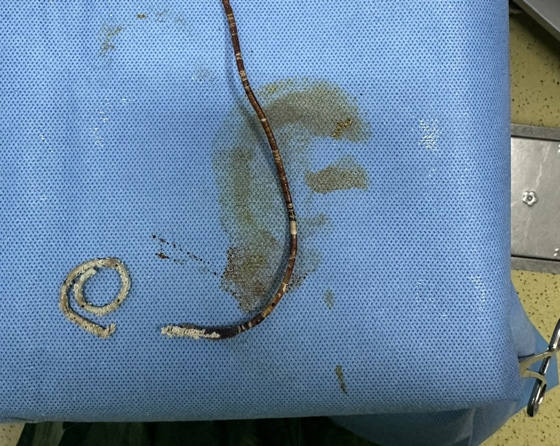
Through examination and performing paraclinical tests, doctors discovered that the JJ catheter was still in the urinary tract after 9 years. This is a rare case because usually, the JJ catheter is only stored in the body for the prescribed time and needs to be removed on schedule to prevent complications.
According to specialists, storing the JJ catheter for too long can lead to many consequences such as sediment buildup, formation of stones clinging to the catheter, urinary tract infections, hematuria, urinary tract obstruction, and even affecting kidney function.
At that time, the removal of the sonde also becomes more complicated, which may require coordination of many intervention techniques for treatment.
On July 8, 2026, after a comprehensive assessment, the team intervened to safely remove the JJ catheter. Currently, the patient's health is stable and continues to be monitored.


