
Mobilizing the public-private health system to jointly take care of people's health
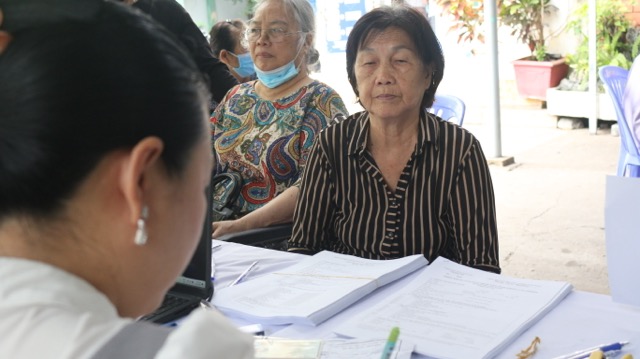
Present early at Tan Son Ward Health Station, Mr. Hong Ky Nam (89 years old) said that he has registered for medical examination and treatment at Thong Nhat Hospital for many years. Although he does not have serious underlying diseases, due to his old age, he often has low blood pressure and dizziness. Mr. Nam expressed his support for the health check-up program in the locality, saying that this is a practical activity, especially meaningful for the elderly.
Not only in Tan Son ward, Ho Chi Minh City has mobilized more than 100 public and private hospitals to participate in health check-ups and screening for people throughout the area. The coordination between the public-private health system aims to expand access to health services for all subjects living and working in the city.
In which, the Pharmacity pharmacy system has proactively mobilized a team of pharmacists to participate in support at examination points, measure basic health indicators, provide nutritional advice and guide people to take care of their health. Representatives of Pharmacity said that the participation of businesses is considered an "extended arm" of the public health system, contributing to narrowing the gap in access to health services, especially for groups of people still facing difficulties.
Deploying universal health check-ups, towards lifelong health management
Also this morning, the Ho Chi Minh City Department of Health organized a launching ceremony for health check-ups and screenings for city residents in 2026. Dr. Nguyen Anh Dung - Deputy Director of the Ho Chi Minh City Department of Health said that this is an important milestone, showing the determination to shift from a treatment model to proactive health care and management.
In 2026, the Ho Chi Minh City health sector will implement 3 key groups of solutions. First, organize community health check-ups, taking grassroots healthcare as the foundation. Ward, commune, and special zone health stations will directly examine at stations and at home, prioritizing the elderly, people with chronic diseases, people with disabilities and vulnerable groups. At the same time, health care teams in the area will proactively review, monitor and update people's health records.
Second, periodically organize community-based specialized screenings with the participation of hospitals. Activities focus on diseases with heavy burdens, helping people access specialized medical services right in their homes, reducing costs and travel time.
Third, strengthen health check-ups at public and non-public health facilities, deploy age and risk group check-up packages, and gradually form the habit of periodic health check-ups.
The new point of the program is to manage people's health based on digital data, continuous lifelong monitoring. The health sector identifies 3 pillars of development including: grassroots healthcare is the foundation, specialized healthcare is the driving force and digital transformation is the pillar.


