
Previously, museums were often seen as a static display space, where artifacts "lie still" behind glass and history is mainly accessed through writing and images. This approach helps preserve memories but also creates distance from contemporary life.
Along with the development of digital technology, museum storytelling is changing, shifting from one-way information transmission to recreating memories through experience.
Digital museums do not replace traditional museums but expand the approach to heritage, through virtual reality technologies such as (VR) and augmented reality (AR), allowing to recreate historical spaces and help viewers "enter" the past visually.
Digital elements are closely integrated with real artifacts and space, creating vivid layers of memories right in the current landscape.
In that trend, Hoa Lam Vien (Dong Anh, Hanoi) is considered a typical example of the potential to create a digital museum associated with archaeological heritage.
Located in Mai Lam commune, on the vital traffic axis of the Thien Duc River connecting Thang Long with the homeland of King Ly Thai To, Hoa Lam Vien is a cultural - historical space with a dense cultural layer, stretching from the pre-Thang Long period to the Ly - Tran dynasties.
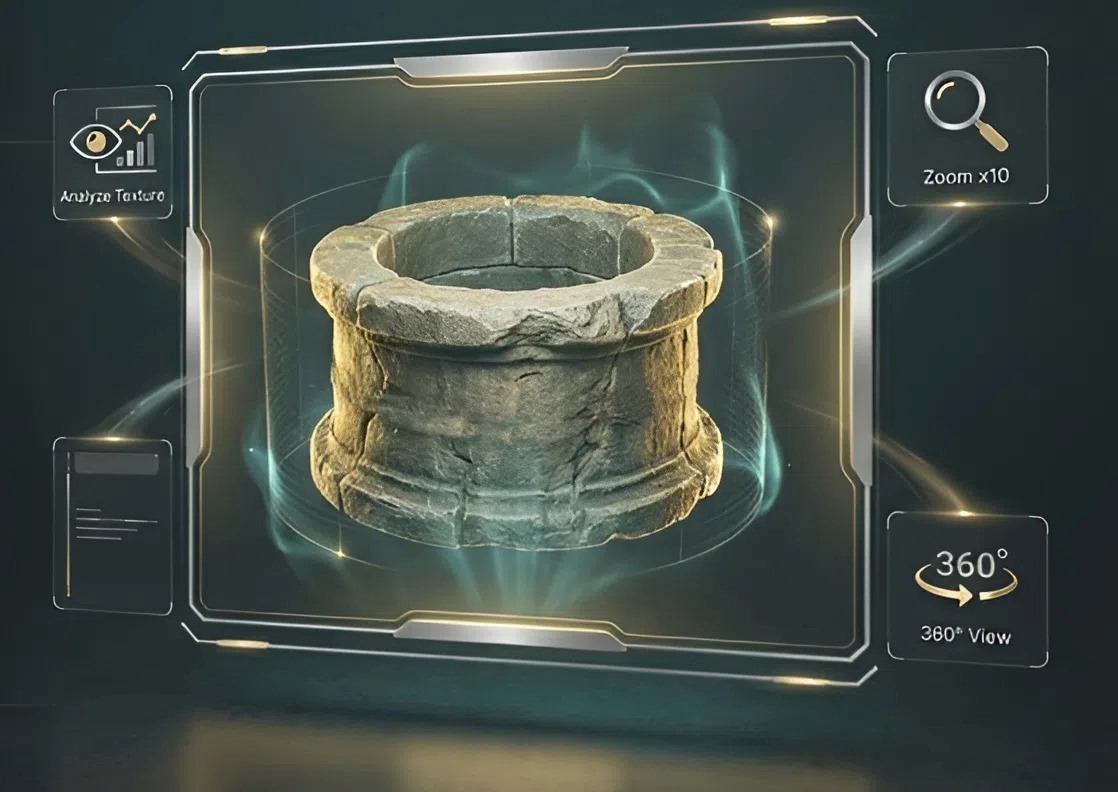
Before the impact of time and urbanization, many relic areas at Hoa Lam Vien are being eroded and degraded. In that context, the concept of "wallless museum" is mentioned as a new approach.
The wallless museum is not confined to a closed architectural structure, but extends into the heritage space itself. Local people can pass by it every day, but thanks to technology, they have the opportunity to better identify the value of where they live.
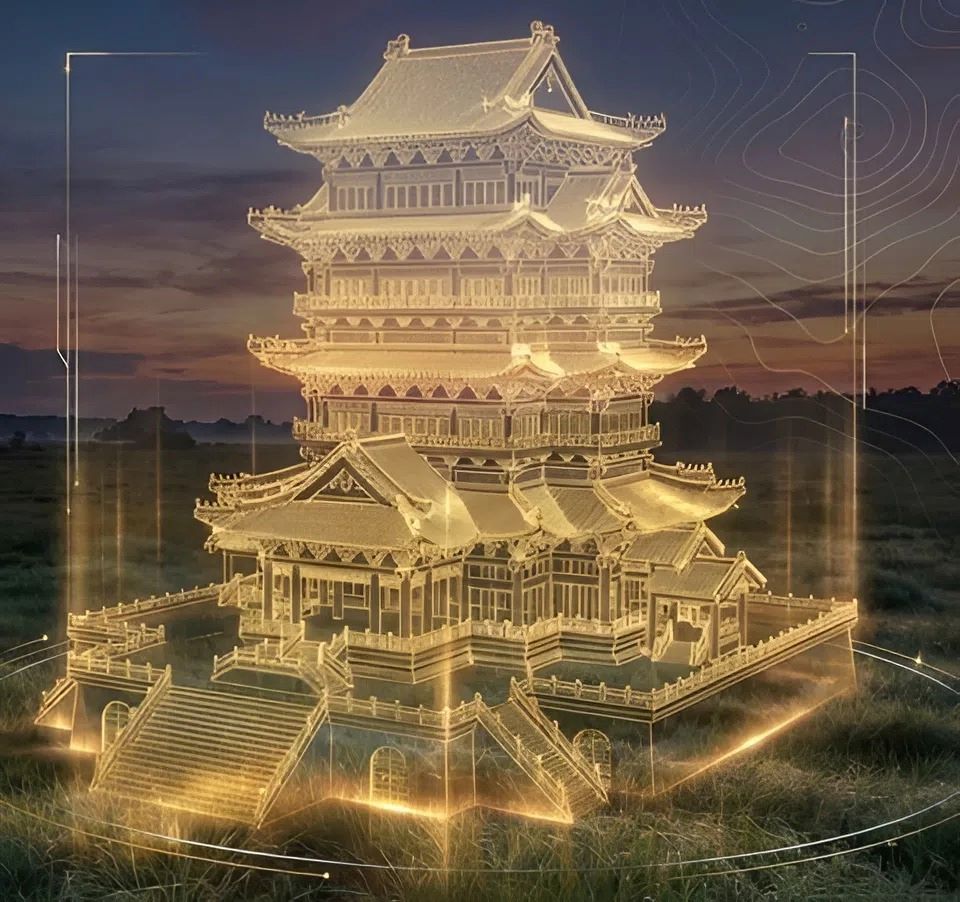
Visitors can stand in the middle of the riverbank, village or field, but through AR and VR, they can imagine the ancient Thai Duong house, the scale of the palace and royal palace that once existed.
Through AR and VR, royal architectural space can be recreated directly on existing foundations. Historical layers appear, overlapping the current landscape, allowing to recreate the majestic scale of the relic without new construction, thereby protecting the originality of the site.
Technology in this case is not imposed, but plays the role of a storyteller, helping historical memories to be accessed in a gentle and natural way.
According to experts, Vietnam has a great advantage with a system of archaeological heritage and historical relics widely distributed, but many places are still "silently present" and have not been effectively exploited.
Dr. Bui Van Tuan, Institute of Hanoi Studies and International Training, Hanoi Capital University, said that for the digital museum model to be effectively implemented in practice, a synchronous system of conditions is needed, first of all, a mechanism and policy that allows a harmonious combination between preserving and promoting heritage values, between state management and socialization.
This requires a clear legal framework for heritage digitization and public-private partnerships. In addition, the concern and support for financial resources from organizations and departments also play an important role in ensuring the sustainable construction, operation and maintenance of digital museums.
Along with that is suitable infrastructure and technology, prioritizing stable and accessible solutions such as AR, 3D models, open data, suitable for outdoor archaeological heritage, both cost-saving and limiting the impact of the original space. The key factor is interdisciplinary human resources, capable of transforming academic knowledge into attractive and accessible stories, especially for young people.
The core of digital museums and wallless museums does not lie in chasing a specific technology. This model is "technologically agnostic", meaning prioritizing the design of experiences and heritage stories, while technology is just a transmission tool.
VR, AR or other digital platforms are only truly meaningful when they serve to accurately, deeply, and appropriately relate memories to the display space.
When implemented in the right direction, digital museums and wallless museums not only help revive archaeological ruins like Hoa Lam Vien, but also open up the possibility of developing multi-dimensional cultural industries.
Heritage when retold is attractive will become a resource for education, tourism and creative economy. For local people, it is pride and awareness of preservation. For young people, it is a close, lively, not rigid approach to history.


