Cách tốt nhất để hiểu ông Donald Trump sẽ khó khăn như thế nào khi giành được nhiệm kỳ thứ hai là thông qua bản đồ bầu cử. Một ứng viên cần giành được ít nhất 270 phiếu đại cử tri để trở thành tổng thống thứ 46 của Mỹ.
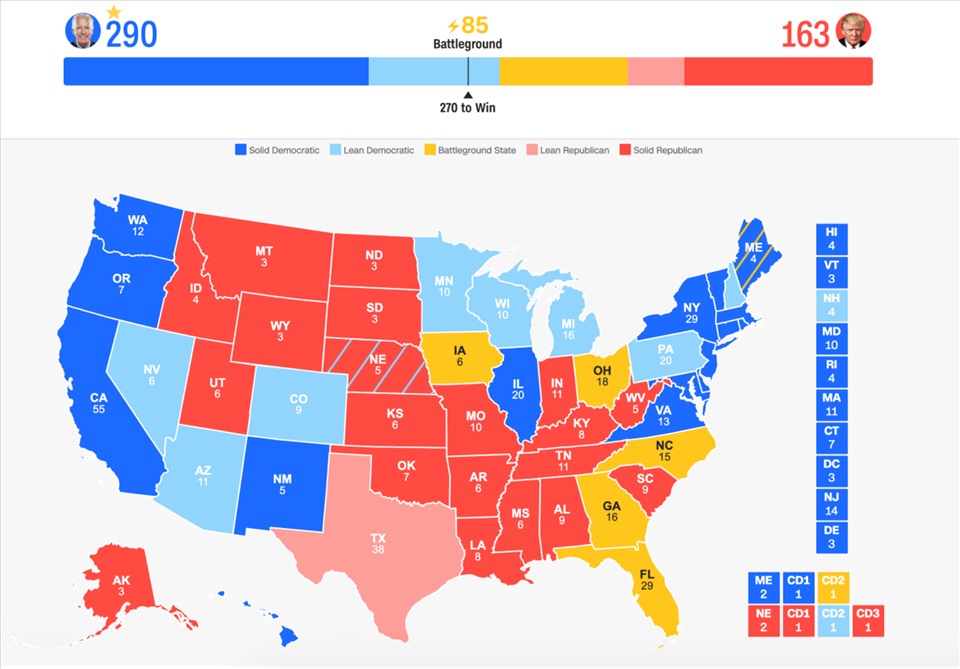
Theo bản đồ "Đường tới 270" mới nhất của CNN, ông Donald Trump hiện có thể có 163 phiếu đại cử tri ở các bang của đảng Cộng hoà hoặc ở các bang nghiêng về phía ông. Có nghĩa là ông phải tìm thêm 107 phiếu đại cử tri để giành được nhiệm kỳ thứ hai.
Nơi rõ ràng tiếp theo để ông Donald Trump dốc sức tranh cử trong những ngày quý giá cuối cùng còn lại là các bang mà CNN đánh giá là bang chiến trường - nơi không ứng viên nào có lợi thế rõ ràng.
Có 5 tiểu bang như vậy là Iowa, Ohio, Bắc Carolina, Georgia và Florida. Ngoài ra còn có một khu vực quốc hội - Maine - mà CNN đánh giá là một cuộc so tài giữa hai đảng.
Ngoại trừ hai tiểu bang Nebraska và Maine, ứng cử viên nào giành được đa số phiếu ở một tiểu bang hoặc Washington DC sẽ thắng tất cả các đại cử tri. Ở Nebraska và Maine, các đại cử tri được chọn dựa trên tỉ lệ phiếu mà ứng cử viên của họ nhận được.
5 tiểu bang đó - và Maine - có tổng cộng 85 phiếu đại cử tri. Chẳng hạn ông Donald Trump thắng toàn bộ những bang này, ông sẽ có 248 phiếu đại cử tri - vẫn còn thiếu 22 phiếu so với những gì ông cần để giành được nhiệm kỳ 2.
Chưa kể, việc ông Donald Trump có thể thắng toàn bộ ở những bang chiến địa nói trên là điều không dễ dàng. Tỉ lệ dẫn trước trung bình lớn nhất của ông Donald Trump là 0,6% ở Ohio, 4% ở Florida và Georgia và 1,4% ở Iowa - theo số liệu thăm dò của Real Clear Politics.
Ngoài ra, cũng có thể có kịch bản ông Trump thua ở toàn bộ 5 bang này, hoặc thắng 3-2, thậm chí 4-1.
Nhưng một lần nữa, giả sử ông Trump thắng cả 5 bang và Maine, ông có thể tìm thấy 22 phiếu đại cử tri khác ở đâu?
Ít lý do lạc quan
Chiến thắng bất kỳ bang nào trong số ba bang truyền thống của đảng Dân chủ - Wisconsin (10 phiếu đại cử tri), Michigan (16) và Pennsylvania (20) - là điều vô cùng khó khăn. Thêm vào đó, các cuộc thăm dò ở cả 3 bang cho thấy không có nhiều lý do để lạc quan cho ông Donald Trump.
Các cuộc thăm dò do The Washington Post, ABC News và Real Clear Politics công bố hôm 28.10 cho thấy, ông Joe Biden đang bỏ xa ông Donald Trump 17 điểm ở Wisconsin và 7 điểm ở Michigan và 3,8 điểm ở Pennsylvania.
(Rõ ràng, nếu ông Trump thắng bất kỳ hai bang nào trong số này, ông sẽ có đủ số phiếu đại cử tri để giành chiến thắng).
Nếu ông Trump không thể giành được bất kỳ bang nào trong số 3 bang đó, thì ông có thể tìm kiếm 22 phiếu đại cử tri ở đâu? Việc này rất khó.
Arizona từ lâu đã là một bang nghiêng về đảng Cộng hòa, nhưng các cuộc thăm dò cho thấy Trump đang gặp khó khăn ở đó. Và ngay cả khi ông giành được 11 phiếu đại cử tri của Arizona, ông mới chỉ giải quyết được một nửa vấn đề của mình. Minnesota là nơi ông Trump thua sít sao năm 2016, và cuộc bỏ phiếu ở Minnesota đối với ông Trump thậm chí còn tồi tệ hơn ở Arizona.
Ngoài 2 tiểu bang đó, có 9 phiếu đại cử tri ở Colorado - bang ngày càng nghiêng về đảng Dân chủ - và 6 phiếu ở Nevada cũng ngày càng ủng hộ Dân chủ, hay 4 phiếu đại cử tri ở New Hampshire, nơi bà Hillary Clinton thắng 0,3% vào năm 2016 so với ông Donald Trump. Nhưng ngay cả khi ông Trump giành được cả 3 bang đó - thì cũng mới được thêm tổng số 19 phiếu đại cử tri, có nghĩa là ông vẫn sẽ thiếu 3 phiếu.
Tuy nhiên, những gì bản đồ bầu cử và toán học cho thấy chỉ là dự báo, và mọi chuyện có thể đảo các đường xu hướng hiện tại để ông Donald Trump có thể đạt mức 270 phiếu đại cử tri hoặc cao hơn. Và chuyện chắc chắn ai đắc cử chỉ có thể chờ xem.