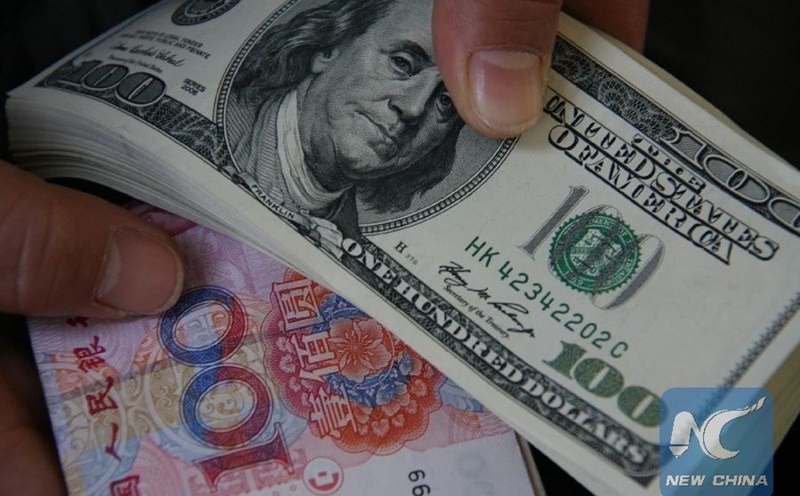
India proposes to include the digital currency interchange initiative of the central banks of BRICS countries in the 2026 summit agenda, with the goal of simplifying cross-border payments and gradually reducing dependence on the USD in the context of increasing geopolitical tensions.
This initiative, if approved, will mark the first time BRICS officially discusses the intercommunication of national digital currencies to serve cross-border trade and tourism.
According to two sources familiar with the matter, the Reserve Bank of India (RBI) has proposed to include this content in the agenda of the 2026 BRICS Summit, expected to be hosted by India at the end of this year.
The focus of the proposal is to build the ability to "interact" between central banks, helping payments between member countries to be faster, cheaper and less dependent on intermediary currencies such as USD.
BRICS, initially including Brazil, Russia, India, China and South Africa, has expanded in recent years with the participation of countries such as the United Arab Emirates (UAE), Iran, Indonesia and some other countries. The bloc's increasing geographical diversity and economic interests make the need for a common payment infrastructure more urgent.
RBI's proposal is said to focus on two areas with large transaction volumes and regular payment needs: cross-border trade finance and tourism spending.
If central banks can "talk" with each other, businesses and people can pay directly in national digital currency, instead of having to convert to USD or euro, thereby reducing costs and exchange rate risks.
However, this move is unlikely to avoid reactions from Washington. US President Donald Trump once publicly warned that any attempt to evade the USD in international payments could lead to retaliatory measures, including tax imposition.
In fact, at the BRICS Summit in 2025 in Rio de Janeiro, leaders issued a statement calling for increased cooperation and compatibility between payment systems, in order to help transborder transactions be faster and less costly. Connecting central banks can be seen as the next step, concretizing that commitment.
RBI has repeatedly emphasized its desire to link the digital rupee with other central banks to improve efficiency and expand the international scope of use of this currency, while affirming that this is not a "de-USDization" campaign.
The digital rupee, launched in December 2022, has attracted about 7 million retail users; China also signaled its desire to expand the international scope of use of the digital yuan.