
On February 15, European Commission President Ursula von der Leyen admitted at the Munich Security Conference that "the boundaries have been broken" and cannot be salvaged. The already fractured transatlantic alliance relationship is now even more precarious as Washington publicly intends to annex Greenland, causing Europe deep skepticism about the US commitment to protection through NATO.
Washington's efforts to reconcile right at the conference also did not yield results. In his speech, US Secretary of State Marco Rubio, although trying to use a more conciliatory tone, completely avoided mentioning core commitments to NATO or the conflict in Ukraine. This silence further strengthens the determination of the "old continent" to reduce dependence on the US as the conflict with Russia prepares to enter its 5th year.
Faced with that situation, German Chancellor Friedrich Merz, French President Emmanuel Macron and British Prime Minister Keir Starmer pledged to build a more solid "European pillar". Notably, Mr. Merz revealed that he had begun discussions with Mr. Macron about the possibility of establishing a common European nuclear deterrence system, an unprecedented move to prevent the risk of the US withdrawing its protection umbrella.
In terms of action, European defense spending has skyrocketed by nearly 80% compared to the pre-conflict period. NATO member countries also agreed to increase core defense spending to 3.5% of GDP.
A series of joint weapons projects are being promoted, typically the agreement to develop long-range attack missiles (ELSA) between France, Germany, Italy, Poland and Sweden. However, some large projects such as FCAS fighter jets are still standing still due to internal disagreements over the division of benefits.
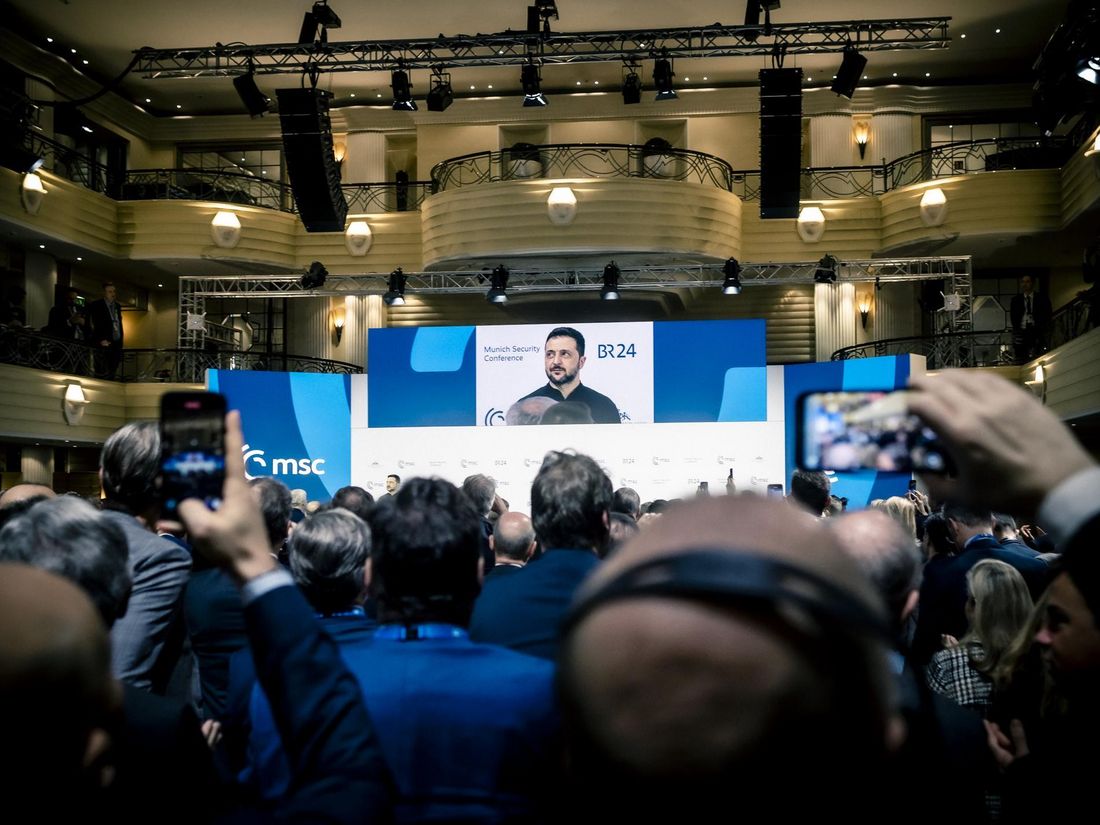
At the end of the conference, Ukrainian President Volodymyr Zelensky issued a heavy warning to the delegates: in this modern conflict, the speed of weapons development is far exceeding the decision-making speed of politicians.


