
The war involving Iran and the closure of the Hormuz Strait - the lifeline of global energy - is shaking the oil and gas market, while pushing China into a position of having to rebalance energy security.
The Strait of Hormuz transports about 40% of China's oil and 30% of imported LNG. When this flow is disrupted, Beijing not only faces the risk of losing cheap oil from Iran but also faces the risk of prolonged energy shortages.
In that context, the Power of Siberia 2 project - a approximately 2,600km long pipeline leading gas from the Yamal peninsula (Russia) through Mongolia to China - has been "heated up" again.
Experts predict that if the crisis lasts and global LNG prices continue to escalate, the attractiveness of this Russia-China super gas pipeline will increase sharply. Especially when Qatar - the largest LNG supplier to China - is forced to stop exporting after the world's largest LNG plant Ras Laffan was attacked, causing about 17% of capacity to be paralyzed for many years.
In the new 5-year plan announced in early March, China for the first time mentioned "promoting preparations for the central route of the China-Russia gas pipeline" - which many observers see as directly implying Siberian Power 2.
Previously, after the Iran-Israel conflict in 2025, international media reported that Chinese policymakers had begun to see this project as a more feasible option.
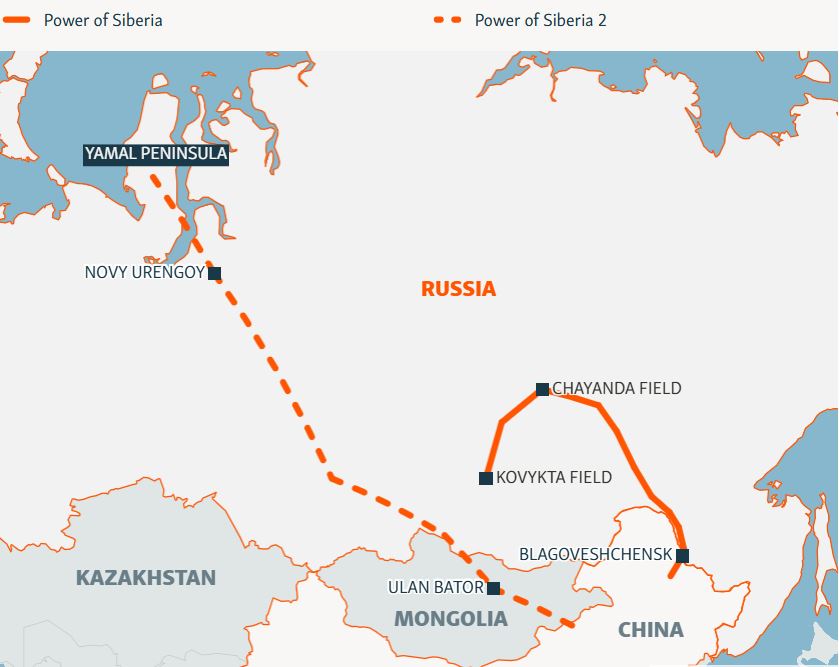
However, the biggest "bottleneck" has not been removed. Negotiations that have lasted for many years are stuck in 3 core issues: gas prices, committed output and construction financial mechanisms.
China wants to buy gas at a price close to Russia's subsidized domestic price, and at the same time only commits to using about 50% of the designed capacity of 50 billion m3/year - much lower than normal commercial standards.
If Moscow agrees to compromise, the project will become more attractive to Beijing. But in return, China may have to bear most of the construction costs and demand significant ownership - something that is not easily accepted by Russia in the context of economic pressure after losing the European market.
In fact, the needs of both sides are not completely balanced. For Russia, Siberian Power 2 is a "lifebuoy" to compensate for the decline in exports to Europe after the Ukraine conflict. Meanwhile, China still has many other options and always pursues a strategy of diversifying supply sources to avoid dependence on any partner.
In the opposite direction, Beijing is also not completely passive. Large oil reserves, reduced domestic demand and the boom in electric vehicles help China somewhat "immune" to the current energy shock. This country is also increasing imports through pipelines from Central Asia, especially Turkmenistan, and developing new routes from the Russian Far East, expected to operate from 2027.
However, the Hormuz crisis has revealed a reality: dependence on energy transportation by sea is a strategic risk. In that context, gas through pipelines - especially from Russia - has become a worthwhile backup option.


