
The years-long preparations are helping Beijing stand firm against the world energy shock, at least in the short term.
The war between the US and Israel with Iran has pushed the Middle East into a spiral of deep conflict, causing the Hormuz Strait to be almost paralyzed, while this is a vital energy transportation route for the world.
As a result, oil exports from this region plummeted by 61% in just a few weeks, dragging the earthquake across Asia, which heavily relies on Middle East supply.
But amidst that chaotic picture, China shows a different position.
As early as 2021, Chinese President Xi Jinping emphasized the requirement to "hold energy in their hands". This message is not just a slogan. For many years, Beijing has quietly built a large-scale "energy shield".
According to experts, China's energy system currently has a "significant buffer zone". This comes from 3 pillars: huge oil and gas reserves, stable domestic supply and the boom in renewable energy.
Although still importing about half of the crude oil from the Middle East, China's dependence is still much lower than economies such as Japan or South Korea. Meanwhile, oil flows from Iran - the largest customer is China - remain relatively stable despite the war.
Chinese oil tankers also flexibly navigate supply. A supership has diverted to the Red Sea to receive oil from Saudi Arabia, showing rapid adaptation in the context of disrupted supply chains.
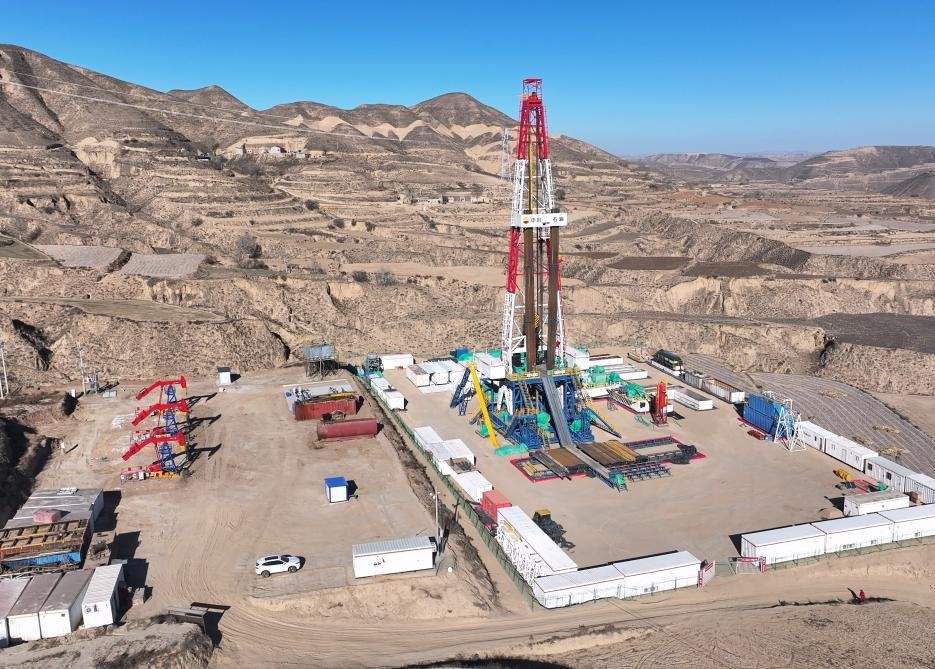
More importantly, Beijing is holding a "huge reserve". Although not officially announced, many estimates suggest that China owns about 1.4 billion barrels of oil reserves - enough to reduce the shock in the event of a global supply breakdown.
At the same time, this country is also gradually reducing dependence on fossil fuels. According to the International Energy Agency (IEA), the number of electric and hybrid cars sold in China each year is even more than the rest of the world combined.
Meanwhile, Ember estimates that wind, solar and hydropower accounted for about 31% of the country's electricity output in 2024.
However, China's advantage is not an "absolute shield".
Discharging strategic oil reserves is not simple, as this mechanism has only been tested once. Meanwhile, private oil refineries - which are heavily dependent on Iranian oil - are facing major risks if supply is disrupted for a long time. Industries and chemicals using liquefied natural gas may also be under strong price pressure.
In fact, the biggest problem lies in time. If the crisis lasts for months, even longer, even the world's second largest economy will hardly avoid chain reactions.
In other words, Beijing is in a better position than the rest, but not immune.
However, what is happening now shows one thing that China's energy reserve and shift strategy is being effective, at least in the short term.


