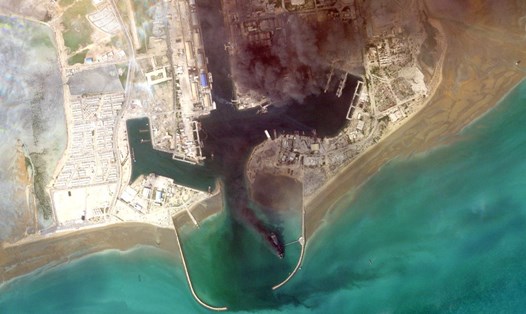
Gas prices in Europe are skyrocketing after LNG facilities in Qatar - one of the world's largest suppliers - were attacked.
On the London market, gas prices have increased by about 1/3, exceeding the $850/1,000 m3 mark, reflecting a supply shock from the Middle East.
However, Europe's direct dependence on LNG Qatar is not too large, accounting for only about 10-15% of demand. What makes the market "hot" is the chain reaction: When goods from the Middle East are disrupted, Asia - a region that consumes up to 90% of LNG from the Gulf - is forced to pay higher prices to win supply, pulling global prices to skyrocket.
In that context, Russian LNG unexpectedly became a "lifebuoy", especially for Asian economies facing energy shortages.
Unlike Europe, many Asian countries are heavily dependent on Middle Eastern LNG. Pakistan is almost completely dependent, India about 68%, and Bangladesh more than 50%. When supply is disrupted, this region quickly falls into crisis.
In South Asia, emergency measures have been implemented: power cuts, school closures, shortening working weeks and even returning to using coal, firewood, and oil. Long queues at fuel stations are becoming common.
Meanwhile, Russia announced its readiness to redirect part of LNG from Europe to Asia, without waiting until the European Union (EU) completes its import ban plan by the end of 2026. The Russian Deputy Prime Minister said that the shipments could be transferred in the near future.
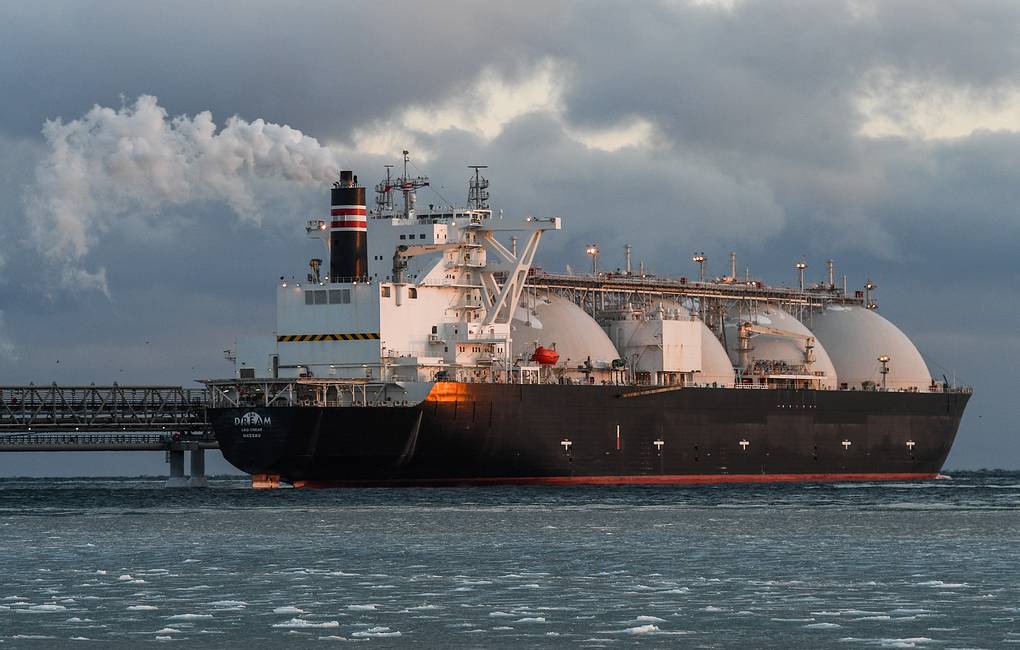
However, Russia's "rescue" capability is still limited. The country's total LNG capacity is only about 42-47 million tons per year, much lower than the total exports of Qatar and the UAE (more than 86 million tons). This means that Russia can only partially compensate for the shortage, which cannot be completely replaced.
Another major barrier is logistics. Russia's key LNG projects, especially in the Arctic, depend on specialized icebreaker ships. The number of ships of this type is very limited, making it difficult to quickly shift to Asia.
Another difficulty is that most of Russia's LNG has been bound in long-term contracts, while many new projects are still affected by sanctions. This limits the possibility of expanding exports in the short term.
However, analysts believe that there are still "windows" if Russia optimizes the transportation chain. Transshipment points such as Kamchatka or Murmansk can help reduce pressure on icebreakers, allowing regular ships to receive LNG and transport it further to Asia.
In the medium term, if Europe actually cuts Russian LNG, about 15 million tons may be "liberated" and redirected to the Asian market. New projects, if completed, may also add significant supply.
The current crisis shows a clear reality: when the Middle East is unstable, the global LNG market immediately shakes. And in that picture, Russia is emerging as the "last" supplier that Asia can rely on.