
German Chancellor Friedrich Merz said Berlin will coordinate with Kiev to bring Ukrainian men of enlistment age living in Germany back to the country, in order to strengthen military capabilities for Ukraine in the context of prolonged conflict.
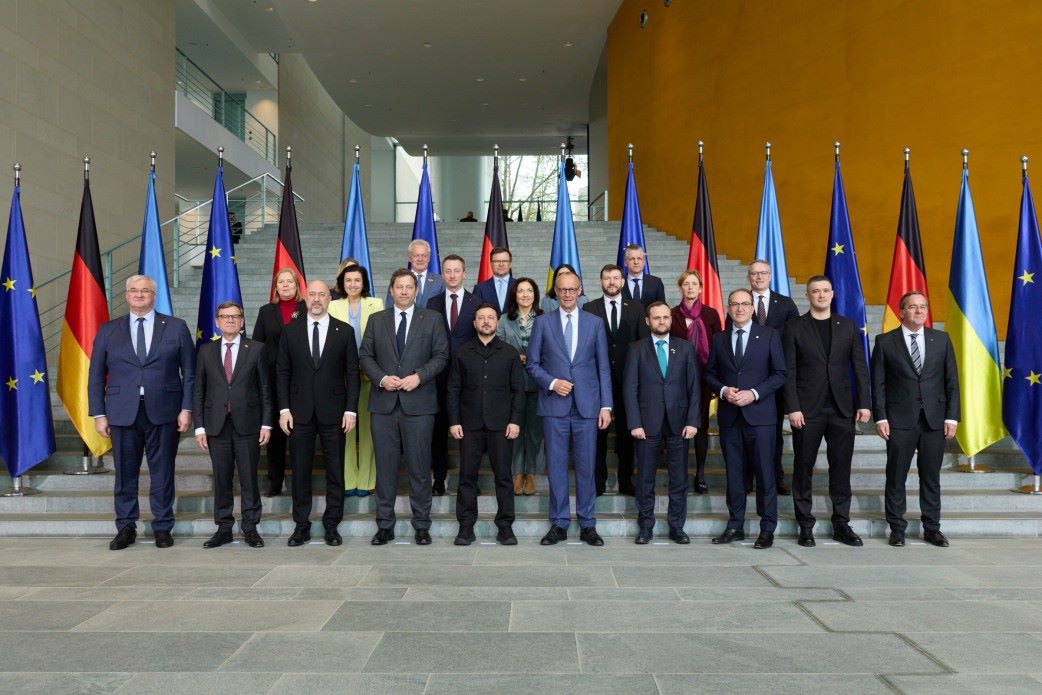
Speaking after a meeting with Ukrainian President Volodymyr Zelensky in Berlin on April 14, Mr. Merz emphasized that limiting the flow of people of military age leaving Ukraine is an "essential factor" to maintain defense capabilities, social stability and national reconstruction.
We need to move forward quickly and specifically, for the benefit of both sides" - the German leader emphasized.
On the Kiev side, Mr. Zelensky also agreed that this is an "issue that needs to be resolved", and admitted that the Ukrainian army wants these people to return to military service.
Berlin's proposal was made in the context that Ukrainian forces are suffering heavy losses and increasingly lacking voluntary recruitment sources. According to RT, many information and images circulating on social networks show that enlistment enforcement teams have applied strong measures, from blocking people on the streets, workplaces to residential areas to replenish forces.
These measures sparked a wave of reactions in Ukrainian society, with many clashes between military service officers and civilians. Some cases have led to casualties for both recruits and functional forces.
According to some Ukrainian officials, the rate of people voluntarily joining the army is currently very low. Mr. Vadym Ivchenko, a member of the National Security Committee of the Ukrainian Parliament, said that only about 8-10% of new recruits are volunteers, the rest come from mandatory mobilization measures.
Since the Russia-Ukraine conflict escalated in 2022, Germany has become the top destination for Ukrainian migrants in the European Union EU, receiving more than 1 million people according to official statistics. This makes the issue of repatriating men of military age a sensitive topic, related to immigration policy, human rights and national obligations.
Previously, in January, Prime Minister Merz also called on Kiev to create conditions for young people to stay in the country instead of leaving for Western Europe.
Meanwhile, Russia has repeatedly accused Western countries of turning the conflict into a proxy war "to the last Ukrainian" - a statement that increases controversy surrounding current support policies for Ukraine.
Germany's proposal to coordinate repatriation is forecast to continue to cause heated debate in Europe, as the balance between military support for Ukraine and protection of refugee rights becomes increasingly complex.


