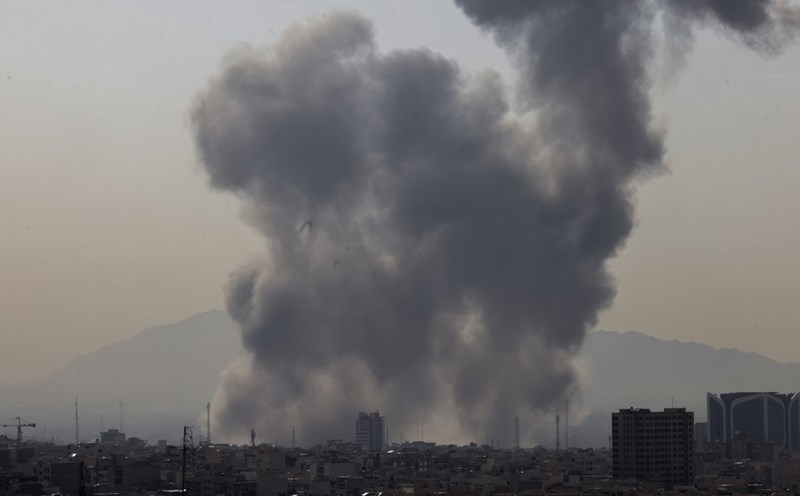
Oil is the first measure
The oil market reacts the fastest to geopolitical risks. Iran is located along the Strait of Hormuz - a shipping route that transports about 20% of global oil supplies. Any disruption here could shake the energy market.
Brent oil prices traded around 73 USD/barrel at the end of the week, the highest since July and a sharp increase since the beginning of the year. After the attacks, some oil and gas corporations and trading companies have temporarily suspended transportation through the Strait of Hormuz.
Experts at Capital Economics believe that if tensions are controlled, Brent oil prices could increase to about 80 USD/barrel. However, if the conflict lasts, oil prices could completely approach 100 USD/barrel, thereby pushing global inflation up by another 0.6-0.7 percentage points.
Fluctuations spread to gold, currency and bond prices
The airstrike on Iran took place in a market already shaken by trade tensions and a wave of technology stock sell-offs earlier this year. The VIX volatility index increased by about 1/3 in 2026, while the implied volatility on the US bond market increased by about 15%.
The USD is also of particular interest. Analysts believe that the reaction of the greenback depends on the scale and duration of the conflict. During the June tensions related to Iran, the USD index once weakened in the short term before stabilizing again.
If oil supplies are disrupted for a long time, the USD may strengthen against most other currencies, except for traditional safe-haven assets such as the Japanese yen and Swiss franc.

Israel's shekel is also the focus of attention. In previous conflicts, shekel often fell sharply and then recovered quickly. However, JPMorgan warns that if confrontation with Iran lasts and spreads to authorized forces, the impact may be more widespread.
In the context of increasing risks, cash flow is shifting to defensive assets. Swiss Franc has increased by about 3% against the USD since the beginning of the year. US Treasury bonds are also forecast to attract more buying power.
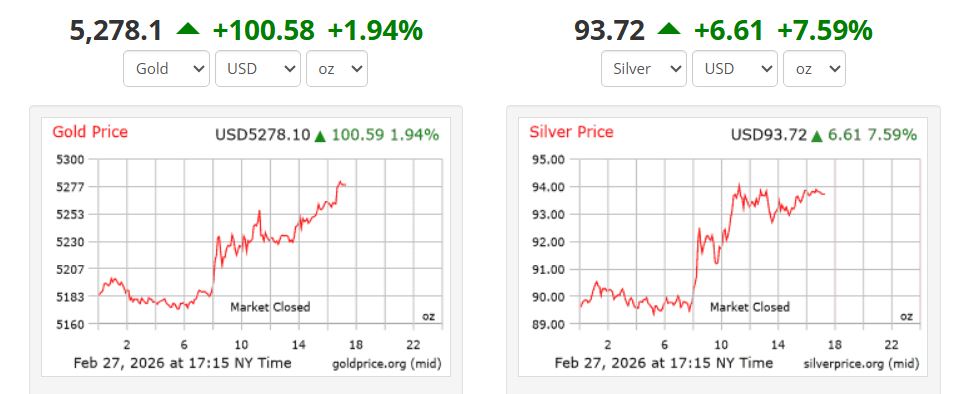
Notably, gold prices have increased by 22% in 2026 and may continue to benefit if tensions escalate. World gold prices at 9 am on March 1st traded around 5, 278.1 USD/ounce, up 100.58 USD, equivalent to an increase of 1.94%.
Regarding domestic gold prices in the Vietnamese market, SJC gold bar prices and Bao Tin Minh Chau 9999 gold ring prices were listed at 9:00 AM on February 28th at 184 - 187 million VND/tael (buying - selling).
Silver prices are also expected to attract capital flows in parallel with gold. World silver prices are currently trading around 93.72 USD/ounce, up 6.61 USD, equivalent to an increase of 7.59%.
Conversely, Bitcoin does not show a shelter role when it fell 2% last weekend and lost more than 25% in the past 2 months.
Gulf market and defense stocks
Investors are closely monitoring Middle East stock exchanges to find initial signals. Saudi Arabia and Qatar reopened on March 1st, while Dubai traded from March 2nd. Experts estimate that if the conflict continues, Gulf stocks could fall by 3-5%.
The aviation industry is under pressure as many flights are canceled due to disrupted airspace. Conversely, defense stocks may benefit. European arms manufacturers, which have increased by about 10% since the beginning of the year, are forecast to continue to rise as geopolitical tensions increase.
With oil, currency and regional stocks reacting first, global investors are following each development to assess whether this US-Iran conflict is just a short-term shock or the beginning of a crisis with greater spillover effects in the financial market.