
On April 14, German Chancellor Friedrich Merz confirmed that Hungary's energy security issue will be the focus of discussion at the informal EU Summit, taking place in Cyprus in 2 weeks.
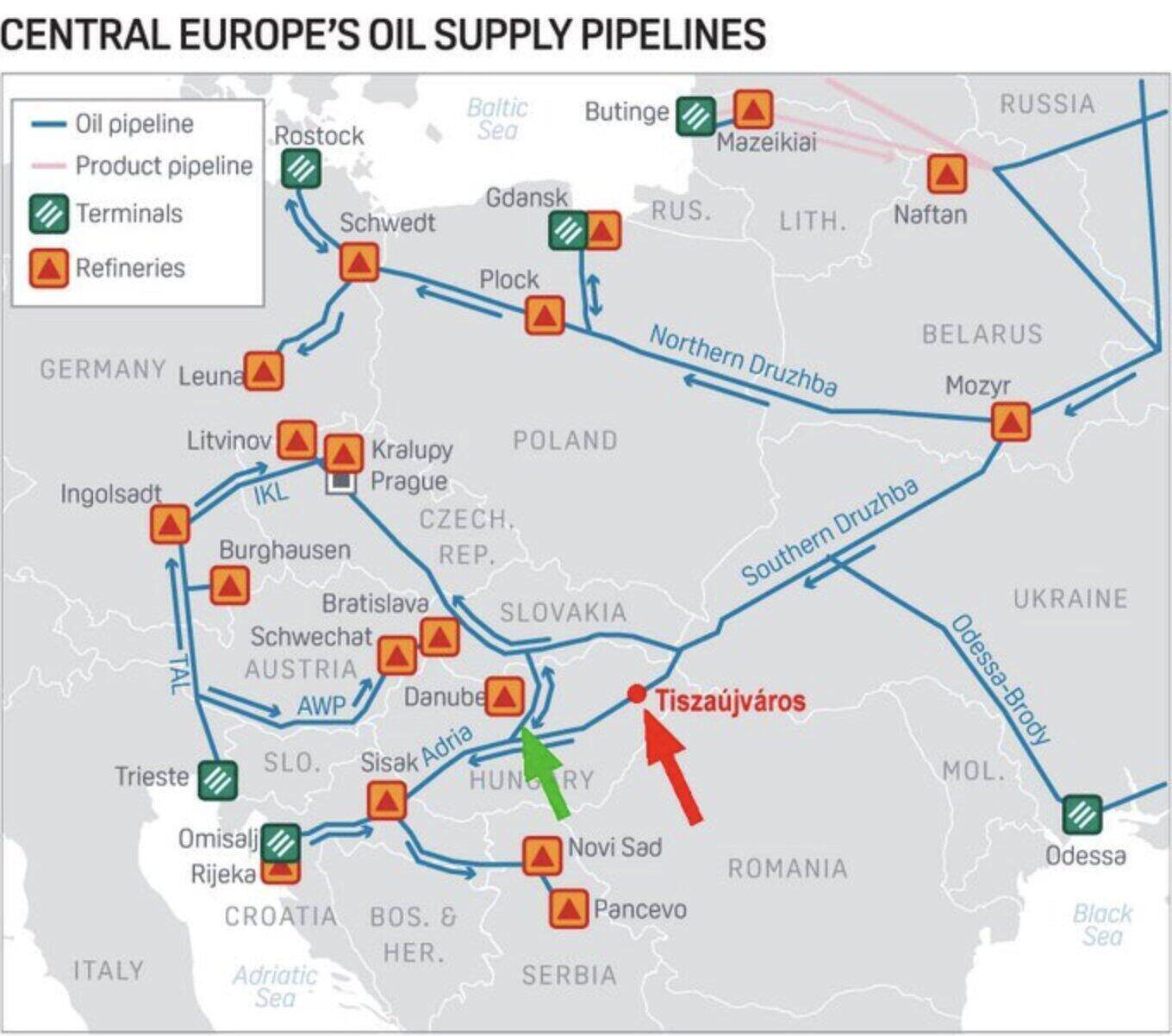
Mr. Merz affirmed that the EU will make an official proposal to convert the oil supply route to Budapest. Instead of continuing to depend on the Druzhba pipeline system running from Russia, Hungary is encouraged to use the pipeline passing through Croatia to access oil sources from the international market.
Prime Minister Merz noted that this proposal was not new, but the previous government in Budapest resolutely refused for a long time to maintain energy relations with Moscow.
However, with the change of senior personnel after the recent election, EU leaders expect a new chapter in Hungary's foreign policy.
I hope many things will change from this moment. Hungary will no longer seek to get closer to Russia but will work with us to make decisions at the European level," Mr. Merz emphasized.
The transition to the oil pipeline through Croatia (Adria line) is assessed by experts as a strategic step to cut off the remaining energy "wire" between Russia and Central Europe.
This is also a difficult test for the new Hungarian government in balancing short-term economic interests and long-term political commitments to the EU bloc.
Abandoning cheap Russian oil from the Druzhba system requires high consensus from domestic energy corporations and strong financial support from Brussels to compensate for infrastructure conversion costs.
Diplomats in Brussels expect that if Budapest accepts this roadmap, it will create unprecedented unity in the EU's energy sanctions policy.


