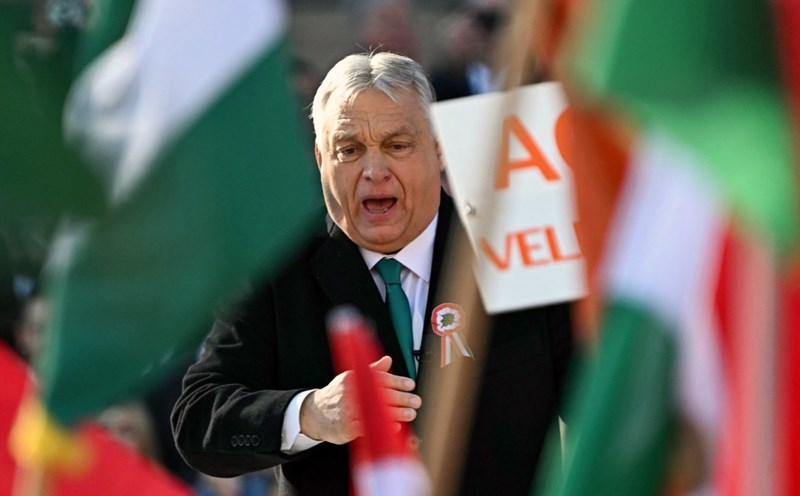
Hungarian Foreign Minister Peter Szijjarto predicts that Russian oil supplies through the Druzhba pipeline will be restored on April 13, immediately after the parliamentary elections in this country.
Ukrainska Pravda newspaper reported that, speaking at a political conference in Budapest, Mr. Szijjarto made a noteworthy statement: Ukraine will soon be forced to resume oil flow through Druzhba, because this country will "run out of money" before Hungary "runs out of oil".
According to Hungary's argument, Kiev's temporary suspension of transporting Russian oil through Druzhba cannot last long due to increasing financial pressure. Budapest is blocking a 90 billion euro loan package from the European Union (EU) for Ukraine, thereby putting pressure on Kiev to concede.
Hungarian Prime Minister Viktor Orban previously also affirmed that he would not support any financial decisions that benefit Ukraine if the oil flow through Druzhba was not restored. This is an important pipeline supplying oil to Hungary and some Central European countries, making the energy issue a "lever" in the political confrontation.
In his speech, Mr. Szijjarto expressed confidence that the ruling Fidesz party will win the election and immediately after that Ukraine will have to reopen the Druzhba pipeline. He even mentioned the specific time as the evening of April 13 - a statement showing that Budapest believes that they are holding an advantage.
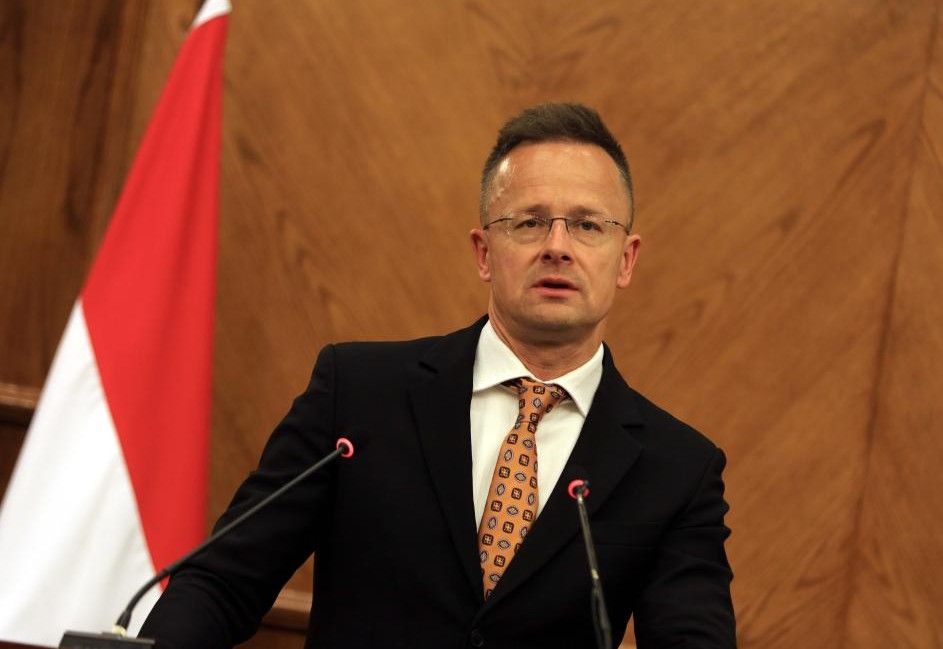
The Hungarian Foreign Minister also warned that admitting Ukraine to the EU could lead to serious consequences. According to him, if a warring country joins the EU, it means that NATO may be drawn into conflict with Russia, increasing the risk of a large-scale war breaking out.
Meanwhile, European leaders have opposing views. German Chancellor Friedrich Merz said that Hungary's continuous obstruction of the financial support package is a "serious violation" of the spirit of solidarity in the EU.
European Commission President Ursula von der Leyen also affirmed that the bloc will still seek to provide loans to Ukraine in the period 2026-2028, despite opposition from Budapest.
Conversely, the EU welcomed Ukraine's commitment to repairing the Druzhba pipeline within 6 weeks, after the line was damaged by a missile attack. Brussels has even proposed financial and technical support to restore oil flows to Hungary and Slovakia.
However, the future of Druzhba is still uncertain. Hungary's statement shows that energy is becoming an increasingly apparent tool of political pressure in the Russia-Ukraine conflict, while reflecting the increasingly deep rifts within Europe.
If the oil flow is truly restored as predicted, this will be a remarkable turning point. But otherwise, Druzhba may continue to be a hot spot in the complex geopolitical battle between Ukraine, Hungary and the entire EU.