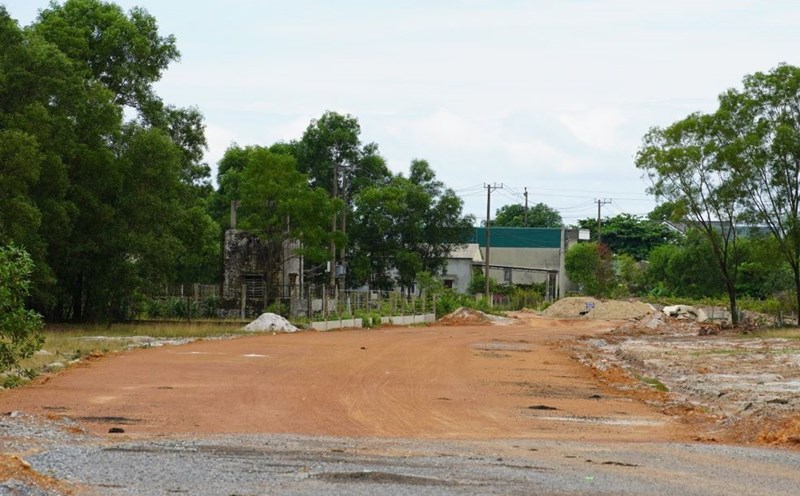
Land clearance bottleneck
On March 23, the Department of Construction of Quang Tri province said that contractors are focusing on materials, machinery, and manpower, taking advantage of favorable weather to accelerate the construction progress of the Dong Ha East bypass Project. This project has a length of 13.3km, the section from Km741+170/QL1 (Doc Mieu) to Km10+187/QL9 to Cua Viet port, invested by the Department of Construction of Quang Tri province. Total investment of more than 415.9 billion VND from the state budget in the medium-term public investment plan for the period 2021 - 2025.
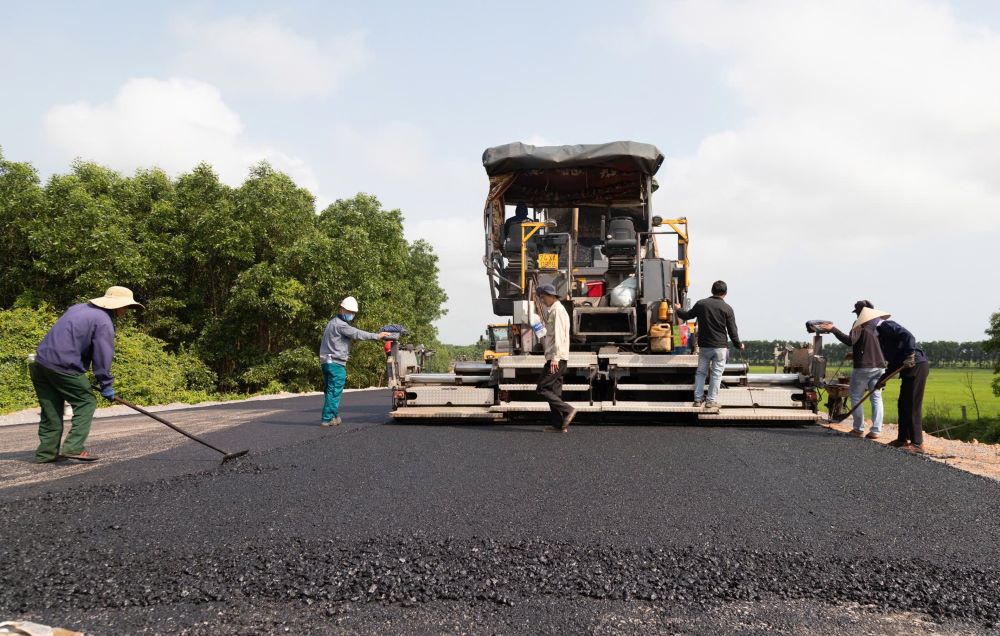
Currently, the main items such as the roadbed, asphalt paving, painted lines, and markers are basically completed. Some locations are continuing to construct and complete the National Highway 1 intersection, DT. 575a intersection and traffic safety system.
According to records, the construction volume of the entire project has reached about 85%. However, the progress is being affected by some problems in site clearance.
Mr. Nguyen Van Hai - Vice Chairman of Gio Linh Commune People's Committee said that up to this point, the locality has handed over 13.25/13.3km, reaching 99.62%. However, there are still 3 cases with a total length of about 50m that have not handed over the site, mainly located at important intersections. Specifically, at National Highway 1 intersection, there are still 2 households that have not agreed on compensation and support plans. At DT. 575a intersection, there is still 1 household that has received money but has not handed over the site.
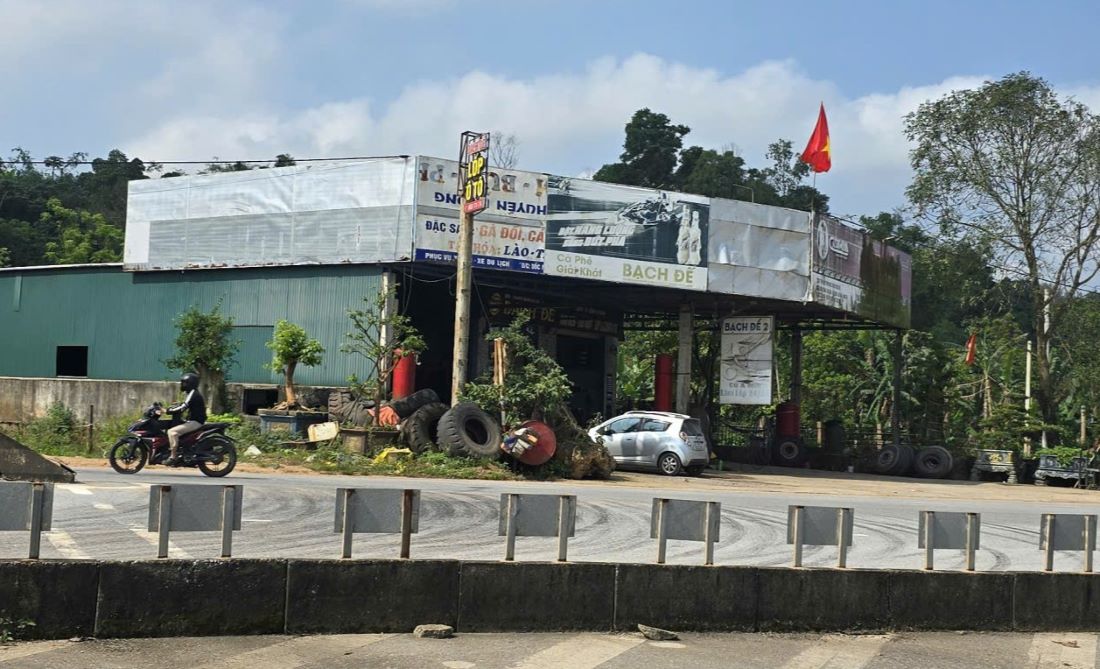
In which, Mr. Le Minh Tuan's household (Le Mon village) has 901m2 of land that was recovered, and a compensation plan of more than 7.7 billion VND (land compensation and assets on land) and 2 resettlement plots have been approved. However, the family has not agreed because they believe that the compensation price is lower than the market price, and the resettlement area is lower than the road surface of National Highway 1, which is not favorable for business.
Similarly, Mr. Ta Van Thanh's household (Gia Mon village) has been approved for compensation of more than 1.3 billion VND but requested to be allocated more land outside the resettlement area or change to another type of land. Notably, Mr. Nguyen Huu Manh's household (Lai An village) has received compensation money and been arranged for resettlement but has not yet handed over the site.
These households are all located at intersections, if not resolved thoroughly, it will be impossible to connect the route, directly affecting the completion of the entire project.
Review and prepare coercion plans
Faced with the above situation, on March 20, Gio Linh Commune People's Committee held a meeting with the participation of leaders of the Provincial People's Committee Office, Department of Agriculture and Rural Development, Department of Construction and related agencies and units and reached a consensus that with Mr. Ta Van Thanh's household, the locality will review the origin of the land, if conditions are met, it will consider allocating land with land use fees according to the provisions of the 2024 Land Law.
For Mr. Le Minh Tuan's household, specialized agencies are required to review the entire process to develop a plan for coercive land recovery if no consensus is reached.
Regarding Mr. Nguyen Huu Manh's household, Gio Linh Commune People's Committee has requested the family to dismantle the construction and hand over the site before March 30, 2026.
Local leaders said that in cases where legal regulations have been ensured but households still do not comply, coercion will be carried out to ensure project progress.
The Dong Ha bypass road project was approved in 2022, expected to be completed in 2024 but had to be extended due to site clearance issues, currently the implementation time is only until the end of the second quarter of 2026.
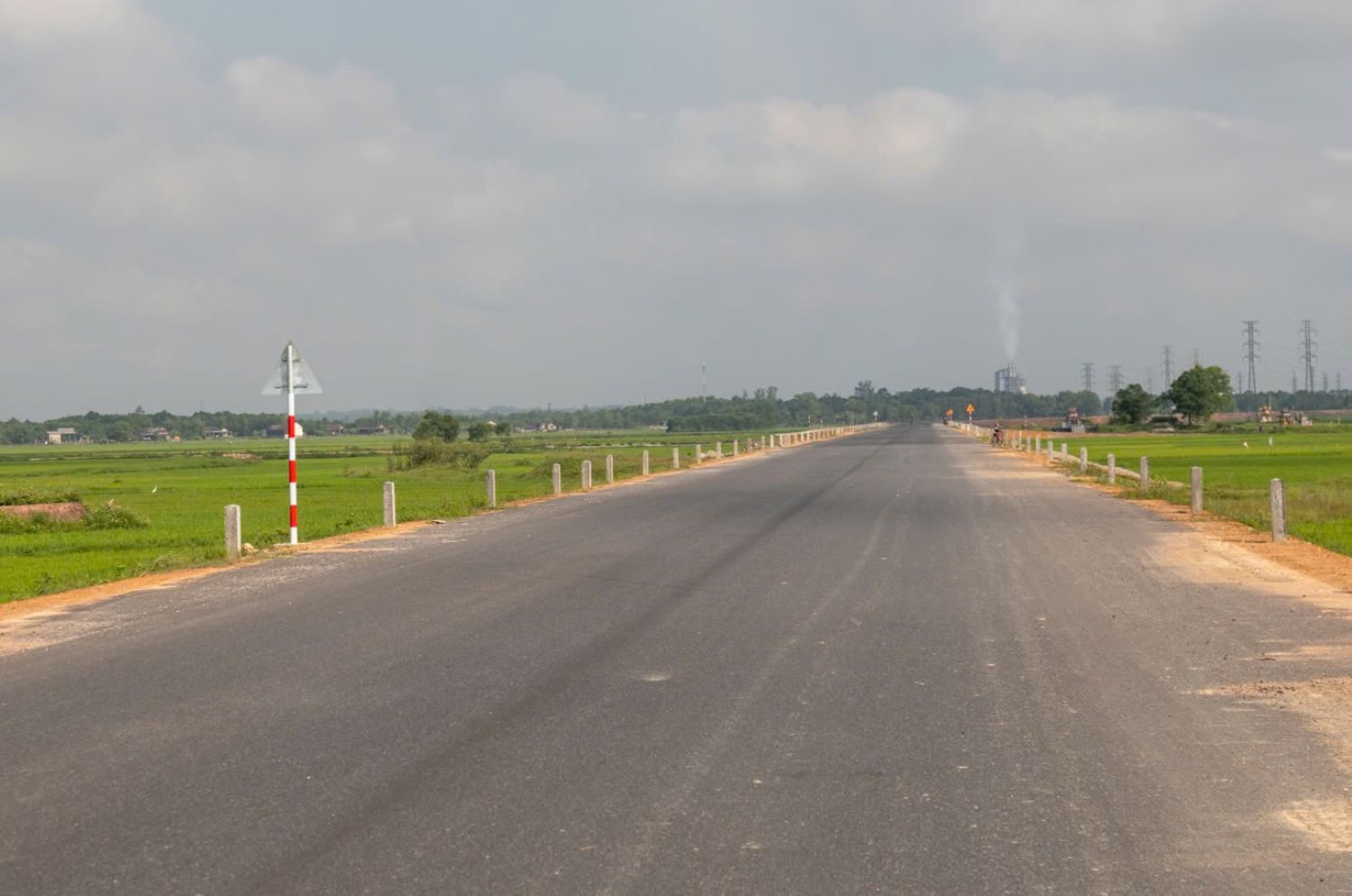
This is an important project in reducing traffic pressure through Gio Linh and Dong Ha urban areas, limiting traffic accidents caused by heavy trucks and tractor trucks circulating through residential areas.
Local people expect that when the project is completed, congestion and the risk of accidents will be significantly reduced, contributing to ensuring traffic safety and socio-economic development in the region.
However, if the bottleneck of site clearance is not resolved thoroughly soon, the risk of slow progress is present.