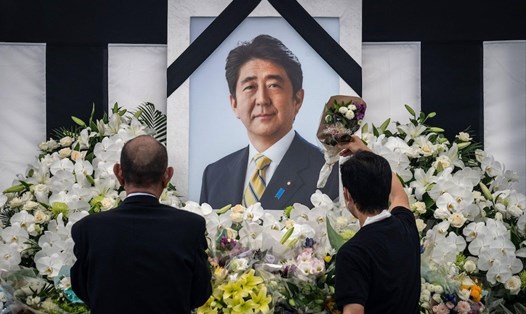
On February 4, Nara District Court sentenced Tetsuya Yamagami to life imprisonment - the perpetrator who assassinated former Japanese Prime Minister Abe Shinzo - in July 2022. The court also rejected the defense's argument that the defendant's "tragic" growing circumstances should be considered when deciding the sentence.
The court sentenced Yamagami to life imprisonment at the request of the prosecutor, after determining that the defendant committed murder, gun manufacturing and other charges.
A day earlier, Yamagami had agreed to appeal after being persuaded by lawyers many times. The appeal was filed on February 4, within the deadline prescribed for the first-instance ruling issued on January 21.
The defense, although not arguing about the basic details of the daytime murder, proposed a sentence of no more than 20 years, arguing that Yamagami deserved the opportunity to rebuild his life in society.
In a jury trial starting in October last year, Yamagami testified that his mother's blind faith in the United Church and constant donations destroyed his family, causing him to have the intention to target former Prime Minister Abe - whom the defendant considered an ally of this organization.
However, the judges argued that Yamagami's past injuries were not sufficient grounds to reduce the sentence. This argument has caused defense lawyers to express strong outrage after the verdict.
Japan does not apply life imprisonment without amnesty, and people sentenced to life imprisonment may be eligible for amnesty after serving 10 years in prison.
However, in reality, very few people are released under this category, according to the Japanese Ministry of Justice.
In 2024, out of 1,650 prisoners serving life imprisonment, only 1 person was pardoned after nearly 38 years of imprisonment, while 32 people died in prison. The average serving time of life imprisoned people is 38 years and 1 month.