
On January 24, speaking on Air Force One aircraft on his return from Davos, President Donald Trump declared that the US is deploying a powerful navy towards the Middle East. He affirmed that many warships are moving to prevent uncertainty even though he does not want conflict to occur.
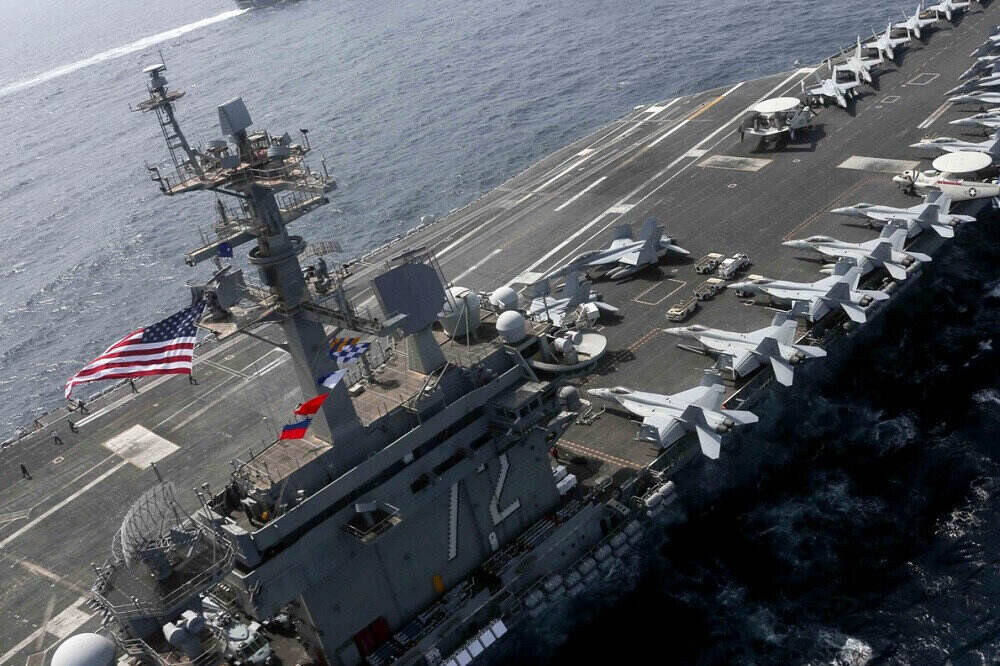
According to the plan, the aircraft carrier strike group USS Abraham Lincoln and guided-missile destroyers will arrive in the area in the next few days. In addition, air defense systems are also strengthened around US and Israeli bases. Britain is participating in this move by sending Eurofighter Typhoon fighters to Qatar.
A senior Iranian official declared that the country would consider any attack as an act of "comprehensive war" and affirmed that it would respond with the harshest measures.
General Ali Abdollahi Aliabadi - head of the headquarters of the Khatam-al Anbiya Center, the coordinating agency of the Iranian Revolutionary Army and Guards - warned that if the US attacks, all US military bases in the area will become "legitimate targets".
This military escalation takes place on the basis of a serious internal crisis unprecedented in Iran. On January 23, human rights organization HRANA released a report with the number of deaths in riots in Iran exceeding 5,000. Among them, there were more than 4,700 protesters and hundreds of security personnel, marking the bloodiest wave since 1979.
The root cause of the wave of riots is believed to stem from the economic collapse. At the Davos Forum, US Treasury Secretary Scott Bessent said that the US's "maximize pressure" strategy was successful. He said that the Iranian economy collapsed in December last year, the domestic currency depreciated and bankruptcy pushed people into a dead end.
In Geneva, United Nations High Commissioner for Human Rights Volker Türk described the situation as "horrifying" when thousands of people, including children, died on the streets, and called on Iran to immediately stop strong crackdowns.


