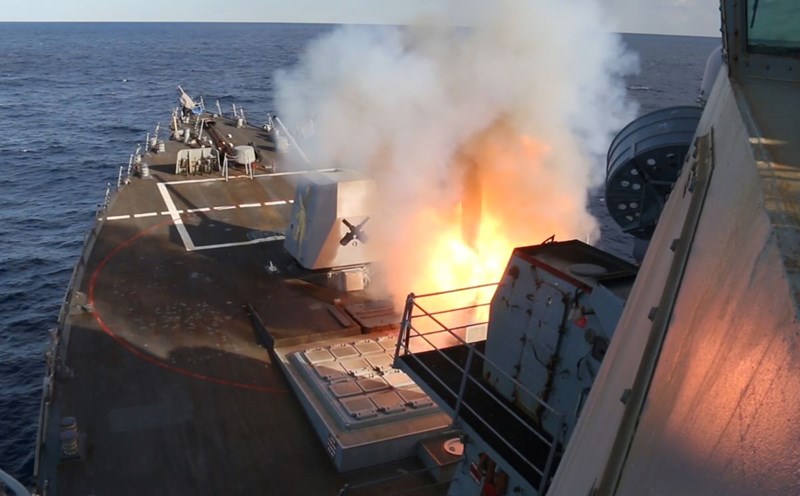
The information was revealed at a closed-door meeting in Parliament, raising concerns about defense capabilities and the risk of prolonged war.
In a closed-door meeting at Capitol Hill on March 4, senior officials in President Donald Trump's administration told congressmen that Iran's Shahed one-way attack drones (UAVs) are posing a bigger challenge than expected to the US air defense system.
According to sources attending the meeting, War Minister Pete Hegseth and Chairman of the Joint Chiefs of Staff, General Dan Caine, admitted that the US will not be able to intercept all the UAVs that Iran can launch.
Shahed is a low-flying, slow-speed UAV, but this characteristic makes it more difficult to detect than ballistic missiles. They can evade radar and make the air defense system consume a large amount of expensive interceptor missiles to cope.
A source said that officials tried to reassure that Gulf partners were stockpiling anti-aircraft missiles, but did not deny the growing pressure.
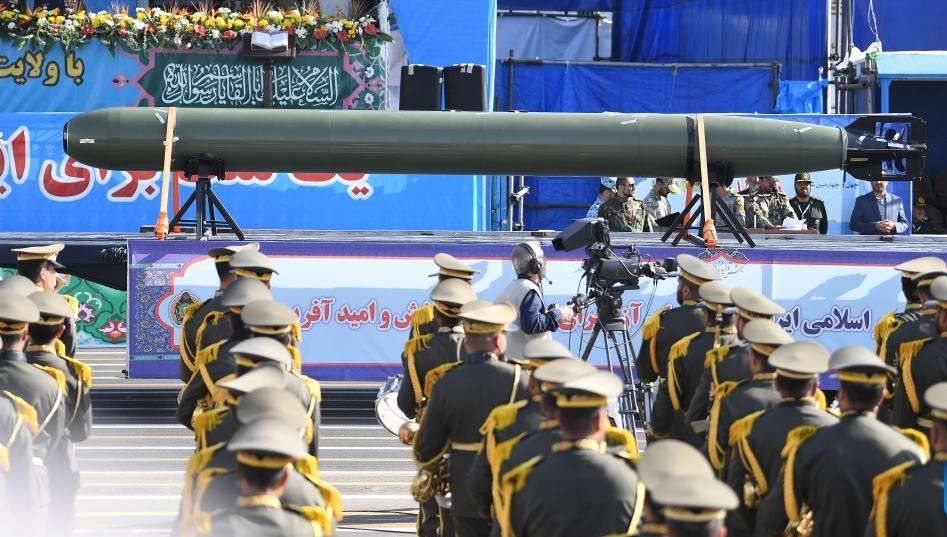
The meeting takes place in the context of US-Iran warfare risking triggering a global energy crisis and further destabilizing the Middle East. President Trump declared that most of Iran's military facilities have been "neutralized", and confirmed new airstrikes targeting Tehran leaders.
However, inside the closed meeting room, lawmakers left with conflicting assessments of how long the conflict could last.
Republican Senator Tommy Tuberville said the administration set a 3-5 week deadline to end US involvement. But Senator Josh Hawley commented that the war "sounds like there is no clear ending".
House Minority Leader Hakeem Jeffries warned that the fighting could last weeks and criticized the White House for launching a war without evidence of imminent threats to the United States.
The fact that Congress has not voted to pass any resolution allowing the use of force is causing heated debate. House Speaker Mike Johnson called it "a dangerous but necessary campaign", emphasizing that there is no official declaration of war.
Meanwhile, Democratic Senator Mark Kelly, a member of the Senate Armed Services Committee, warned that the US air defense ammunition stockpile is not unlimited. He believes that Iran has the ability to produce large quantities of Shahed UAVs, short-range and medium-range ballistic missiles, and also possesses significant reserves.
At some point, this will be a mathematical problem," Kelly said, implying that the US must calculate the supply of interceptor missiles while Iran can maintain the pace of attacks with cheap UAVs.
Observers believe that if Tehran continues to use the "worn-out" tactics of suicide UAVs, Washington will face a difficult choice: Either increase defense spending to supplement its air defense missile arsenal, or accept the risk that some targets cannot be absolutely protected.