
In the context of the Hoarmuz Strait being blocked, causing oil prices to jump to the threshold of 108 USD/barrel, the US administration is considering a calculated step. US Treasury Secretary Scott Bessent announced plans to soon allow the circulation of 140 million barrels of Iranian oil currently trapped on oil tankers due to sanctions.
Mr. Bessent explained that this is an effort to supplement immediate supply for the market in the next 10 to 14 days. Economists have discovered that this is actually a "man's stick hits his back", using the opponent's own resources to eliminate the price manipulation advantage that Iran is holding in the Gulf region.
To compensate for the shortage of 10-14 million barrels per day due to disrupted maritime traffic, the US affirmed that it will focus on supplying crude oil instead of intervening in derivative financial markets.
In addition to deleveraging Iranian oil, the US is also expected to carry out unilateral strategic reserve releases (SPRs), stronger than the coordination level that the G7 bloc and allies have previously agreed upon. Discovering loopholes in the supply chain and taking advantage of "frozen" oil sources at sea is considered the most feasible solution to stabilize investor sentiment in the short term.
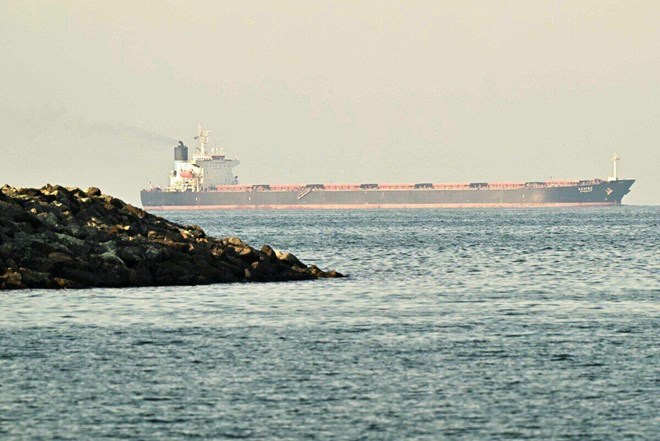
However, this plan also faces mixed opinions from geopolitical observers. Some experts worry that allowing the circulation of this oil will indirectly help Iran collect significant financial resources, thereby having more budget to maintain military operations and support the authorized forces.
Although Western allies are trying to regulate the market, there are still doubts about whether this "pain reliever" is sufficient to reassure the long-term market when the conflict shows no signs of cooling down. Detecting the contradiction between the goal of maximizing pressure and the need for economic stability is becoming a thorny problem for the White House.
The flexibility in US policy shows that the top priority at this time is to protect the domestic economy and reduce pressure on partner countries. By pushing oil, which is oriented towards China, to the global market, the US hopes to weaken Iran's control over the world's energy artery.
The results of this strategy not only affect gasoline and oil prices at pumping stations but are also a measure of the coordination capacity of the US and its allies in the brain battle in the Middle East.


