
On March 16, British Prime Minister Keir Starmer issued a tough message, affirming that Britain will not be drawn into an expanding conflict in the Middle East. He emphasized that protecting national interests must be based on calm and realistic assessment, rather than blindly following the conflicting military calculations of the US.
Germany and Italy also flatly refused to deploy naval forces. German Defense Minister Boris Pistorius affirmed that his country is not responsible for interfering in a conflict that they did not initiate.
Similarly, Italian Foreign Minister Antonio Tajani emphasized that diplomacy needs to prevail and Rome has no intention of expanding any naval missions in the region at this sensitive time.
In response to this unanimous rejection, Mr. Trump publicly criticized Britain as a "disappointing ally". The US President recalled the US contributions to NATO and Ukraine to put pressure, even threatening a "very bad future" for the world's largest military alliance if its members do not support the US in clearing the Strait of Hormuz.
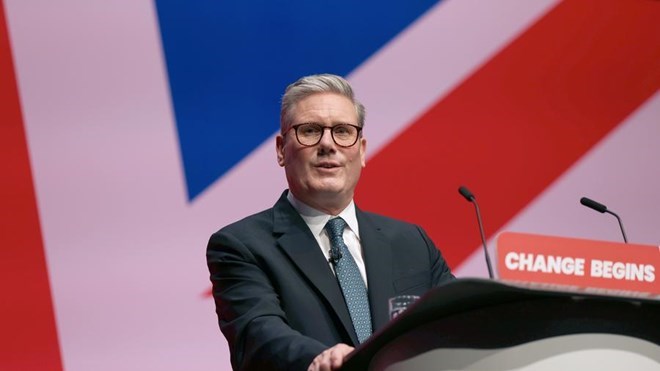
This rift shows that European powers are urgently discovering diplomatic escape routes to cool down oil prices and protect the domestic economy, instead of choosing a military solution as the US and Israel are promoting.
In London, Mr. Starmer's government is facing double pressure: One side is the strict demands from its US allies, and the other side is voters' concerns about living costs.
The fact that oil prices exceeded the threshold of 100 USD/barrel after Iran blockaded the strait has forced Britain to seek alternative technical solutions, such as deploying mine hunting drones to detect mine threats instead of sending large warships into the Gulf "hotbed". This is considered a tactical step to maintain the face of bilateral relations but still ensure not to get bogged down in conflict.
The relationship between Mr. Trump and European allies, which had been shaky before, has now become even worse as Washington lacks a clear roadmap to end the conflict. EU officials fear that the US military campaign could turn into a full-scale crisis, benefiting competitors in the energy market.
In the coming days, the international community will continue to closely monitor whether allies can find common ground or whether this rift will lead to a complete restructuring of the Western security order.


