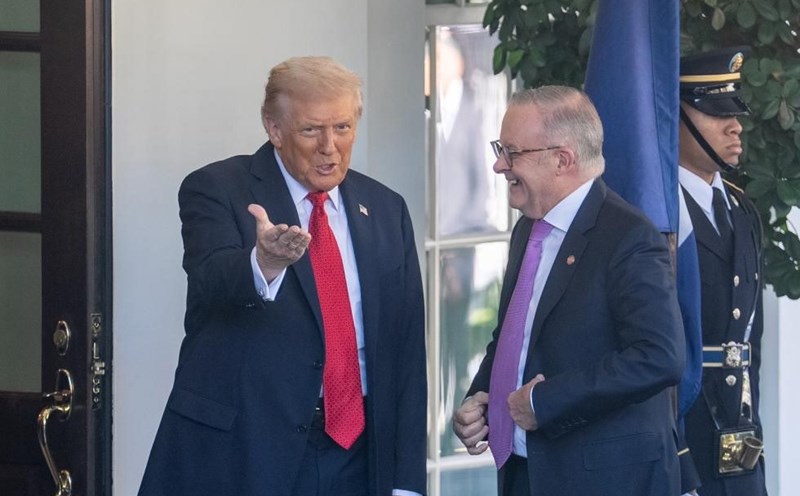
On February 2, speaking at the White House, US President Donald Trump officially announced the launch of a program to build a national reserve for important minerals.
He emphasized that the core objective of this project is to serve "civil purposes in emergencies", ensuring that the US economy is not paralyzed when the global supply chain encounters problems.
This project is codenamed "Project Vault". According to information from the White House, in the early stages, this initiative will mobilize huge capital of up to 12 billion USD.
In which, the financial structure is clearly divided: 10 billion USD will be deducted from capital from the US Export-Import Bank, and the remaining 2 billion USD will come from contributions from the private sector.
The US leader expressed great optimism about the economic efficiency of the project. "This historic initiative is a close financial combination. We even expect US taxpayers to profit from the interest rates of loans used to launch the Vault project," Mr. Trump declared.
Observers believe that this move by the US is a step to "copie" the Strategic Oil Reserve (SPR) model but apply it to the new technology era.
If oil is the blood of the 20th-century industry, then strategic minerals such as lithium, cobalt, nickel or rare earths are the "life-saving material" for the 21st century. They are an indispensable component in everything, from electric car batteries, smartphones to renewable energy systems.
The US's emphasis on "civil purposes" and "urgent situations" shows Washington's deep concern about the vulnerability of the current supply chain.
In the context of the world geopolitics having many complex fluctuations, dependence on mineral supply from abroad is considered a major economic security risk for the US.
By mobilizing capital from the Export-Import Bank, the US wants to stimulate the exploitation and storage of these resources domestically or from close partners, instead of leaving them to the free market as before.
This decision also reflects the general trend of current powers to return to strengthening internal resources and establishing "buffer zones" of resource safety, preparing for the worst possible scenarios that may occur in the future.