
On September 9, Iran launched a new wave of attacks targeting US targets in the Middle East region in retaliation for the US military's previous sinking of Tehran's oil tankers. The spiral of military confrontation entering its 6th month continues to push the two sides deeper into a fierce war of consumption.
According to the Iranian Islamic Revolutionary Guard Corps (IRGC), this force attacked 20 US ships trying to move through the Strait of Hormuz. Iranian state television added that the IRGC also launched ballistic missiles aimed at two US destroyers in this sea area.
At the same time, the IRGC announced that it had launched a missile attack on the US Al-Azraq airbase in Jordan. IRNA news agency quoted military sources as saying that the attack destroyed maintenance facilities, force deployment areas and shelters for US fighter jets. The Jordanian military confirmed that it intercepted 18 missiles from Iran flying into its airspace.
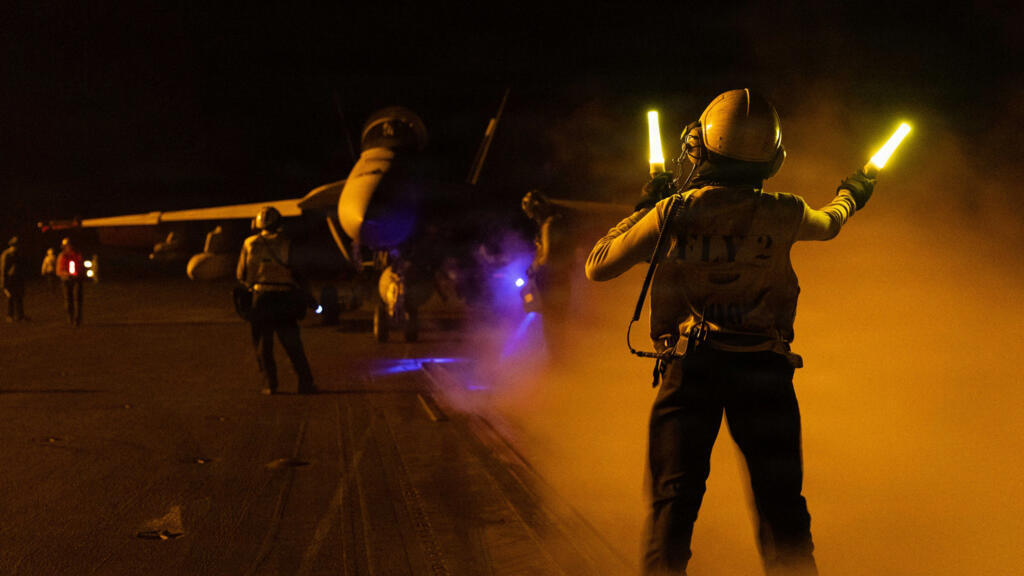
Previously, the US military destroyed 5 Iranian oil tankers in response to Tehran targeting a US warship for the second time in less than a week. Speaking during a visit to Colombia, US Secretary of State Marco Rubio declared that Washington would continue to sink the oil tanker if Tehran did not stop its attacks on the US Navy.
In response, Tehran warned it would expand the attack to oil tankers operating off Kuwait and Bahrain - two allies of Washington in the Persian Gulf. In addition, Iran announced that it had seized a modern US unmanned diving device in Hormuz, although the US military affirmed that this was just an old equipment with technical problems and did not contain sensitive data.
The tit-for-tat exchange between the two sides immediately fueled concerns about global energy supply disruptions. In the morning trading session on September 9 in Asia, the price of Brent North Sea oil jumped to 99.46 USD/barrel, while the price of US light sweet crude oil (WTI) touched the threshold of 94.45 USD/barrel, approaching the 100 USD/barrel mark.


