
According to AFP, about 33 countries around the world recorded the hottest July since the data was compiled, amid climate change continuing to increase extreme heat waves.
AFP analysis based on ERA5 data from the European Union (EU) Copernicus Climate Change Observatory said that temperature records are concentrated in Africa, Central America and Europe.
ERA5 is a dataset combining observation information from satellites operated by many countries, land, sea and air meteorological stations, along with climate models, providing hourly data globally since 1970.

In Africa, 10 countries in the region recorded the hottest July ever recorded, including Mauritania, Niger, Burkina Faso, Chad, Sudan, Kenya and Ethiopia.
The temperature in July in Chad and Sudan is 2 degrees Celsius higher than the average for the period 1981-2010. The Sahel is one of the areas most seriously affected by rising temperatures. Many countries in this region also face armed conflict, food insecurity and poverty at the same time.
According to warnings from scientists of the World Weather Attribution (WWA) network in January, the possibility of extreme heat waves has increased nearly 10 times since 2015, mainly due to the impact of human-induced climate change.
In Central and North South America, about 110 million people from Mexico to northern Brazil experienced the hottest July ever recorded.
El Salvador, Nicaragua and Honduras are countries located in the "dry corridor" region, all recording record high temperatures in June and July. Prolonged heat increases the risk of food shortages in this region - which is often affected by extreme weather phenomena.
The World Food Program (WFP) forecasts that Central America may be a region seriously affected by food insecurity. Including the Caribbean region, about 16 million people may face the risk of food insecurity by the end of 2027.
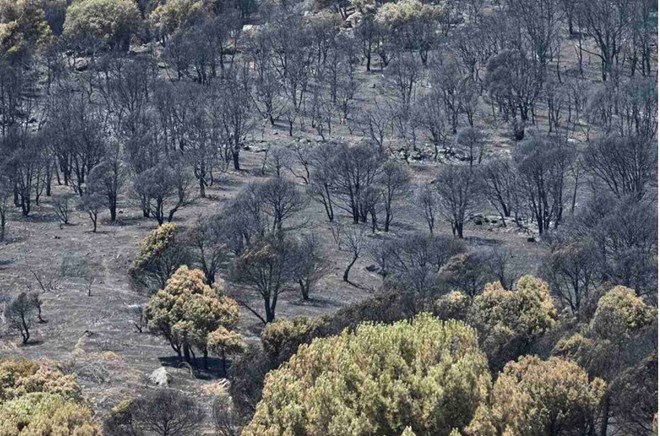
Europe also experienced the hottest July ever recorded, concentrated in southern England, western France and northern, eastern Spain.
In France, the average temperature in July is 3.8 degrees Celsius higher than the 1991-2020 average. Serious droughts in this country and Spain continue to increase the risk of forest fires. A forest fire in Gironde province, France, at the end of July burned nearly 42,000 hectares, forcing more than 220,000 people to evacuate. Nearly 44,000 hectares were also burned in a major forest fire in Avila province, near Madrid, in Spain.
Many other localities with a total population of more than 250 million people also recorded unprecedented temperatures in July, including Sichuan province of China, Wyoming and Colorado states of the United States, and Sumatra and Borneo islands of Indonesia.


