
On December 18, Russian Foreign Ministry spokeswoman Maria Zakharova said that Russia does not accept the deployment of European troops in Ukraine "in any form".
Speaking to local media, Ms. Zakharova emphasized that Russia has repeatedly talked about this, calling the sending of troops to Ukraine a "fake peacekeeping force". She warned that foreign soldiers in Ukraine would become legitimate targets for the Russian military.
Russian Foreign Minister Sergei Lavrov also talked about this on December 11. He affirmed that there will be no peacekeeping or supervision of a ceasefire in the event that European soldiers are sent to Ukraine when the conflict ends.
Peace-keeping forces are just a cover-up for military intervention, the top Russian diplomat said.
Returning to Zakharova's comments, she described the European leaders pursuing the plan as a "warrior alliance", saying their actions only complicated the situation.
Instead of focusing on finding solutions to the crisis, in the context of constantly talking about peace and needing to take into account the interests of all parties involved in the conflict, the countries in this alliance are in fact developing plans of the nature of occupying Ukraine, Zakharova concluded.
Kremlin spokesman Dmitry Peskov also expressed a similar view, saying on December 17: "Our stance on foreign military forces in Ukraine is very clear."
Mr. Peskov noted that Russia's viewpoint is "completely understandable" and has been "broadly known".
The initiative to establish a "peacekeeping force" with a scale of tens of thousands of soldiers was initiated by British Prime Minister Keir Starmer in March 2025. The plan has received strong support from French President Emmanuel Macron and the attention of more than 30 other European countries.
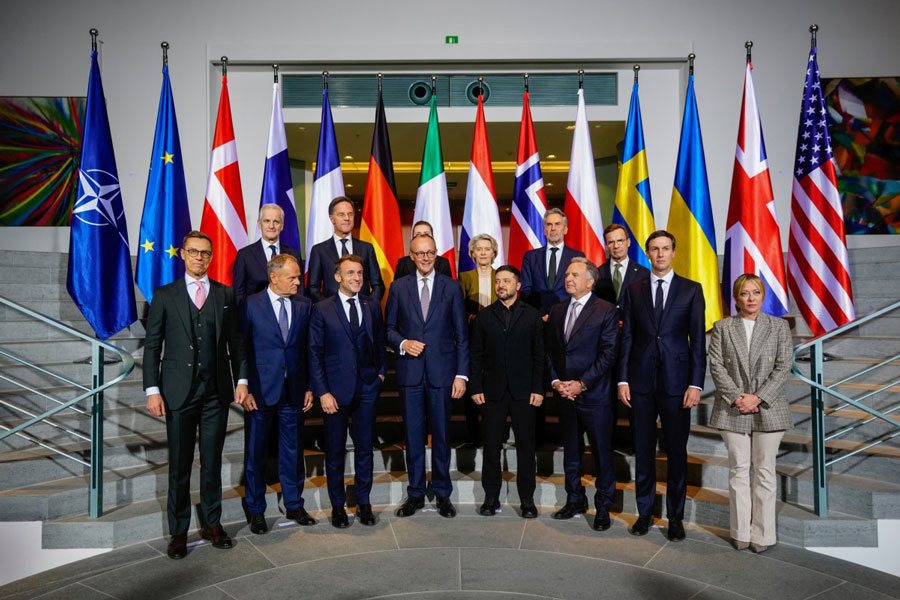
After falling into stalemate many times due to concerns about escalating tensions, the plan was resumed on December 15 after a meeting between Ukrainian President Volodymyr Zelenky and European leaders in Berlin (Germany).
Observers said that this time the plan brought more obvious provoking "colors". In particular, German Chancellor Friedrich Merz said that Western forces deployed in Ukraine as part of post- ceasefire security guarantees could retaliate if Russia conducts new attacks.


