
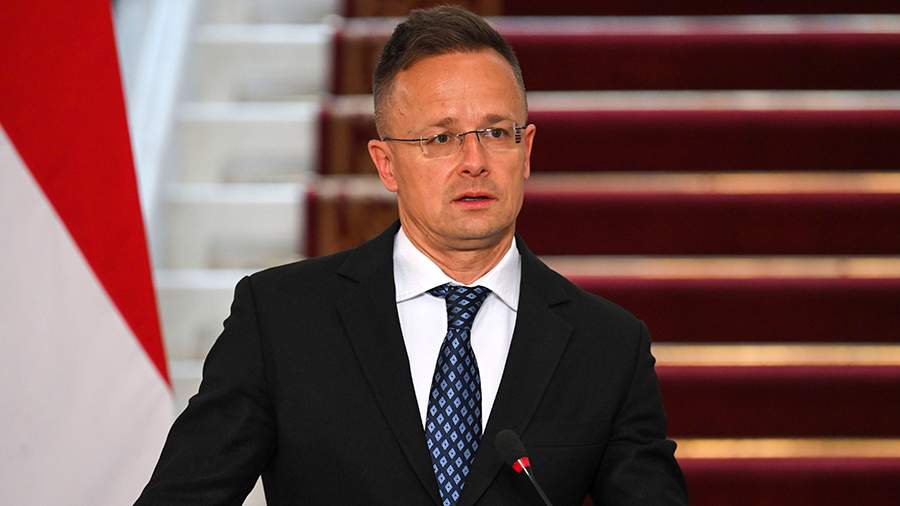
Speaking on local television, Foreign Minister Peter Szijjarto emphasized that Hungary considers the transfer of the European Union (EU) military training mission to Ukraine as a red line.
Hungary will not allow that to be overcome under any circumstances, Szijjarto said, explaining: This will escalate the conflict to an unpredictable level and put Hungary and its people in a serious danger.
The statement comes as several Western countries are once again pushing for the idea of deploying troops to Ukraine to monitor a potential ceasefire with Russia when the conflict ends.
On December 15, a number of EU leaders, heads of NATO, the European Commission (EC) and Ukrainian President Volodymyr Zelensky agreed a joint statement on a solution to the conflict in Ukraine, after a two-day meeting in Berlin (Germany).
Stating that security guarantees are considered necessary, it stated that Ukraine needs to be allowed to maintain armed forces at about 800,000 troops to ensure deterrence.
Europe also needs to coordinate to establish a mental-national force for Ukraine, formed from the contributions of participating countries ready to participate and supported by the US.
The commander of this force will support the reconstruction of Ukrainian forces, protect Ukrainian airspace and contribute to ensuring maritime security, including the deployment of operations inside Ukraine, the joint statement said.
Security guarantees will also include a US-led ceasefire monitoring mechanism to provide early warnings of any future attack risks and respond to violations of the deal.
Documents on territory belong to the Ukrainian people, only when there are solid security guarantees are effectively established, the statement stressed.
It is not yet clear whether this plan will be implemented within the EU or through a voluntary alliance of member countries. However, observers believe that if placed under EU management, the target could fall into a dead end again, in the context that Hungary has clearly expressed its above opposition stance.


