
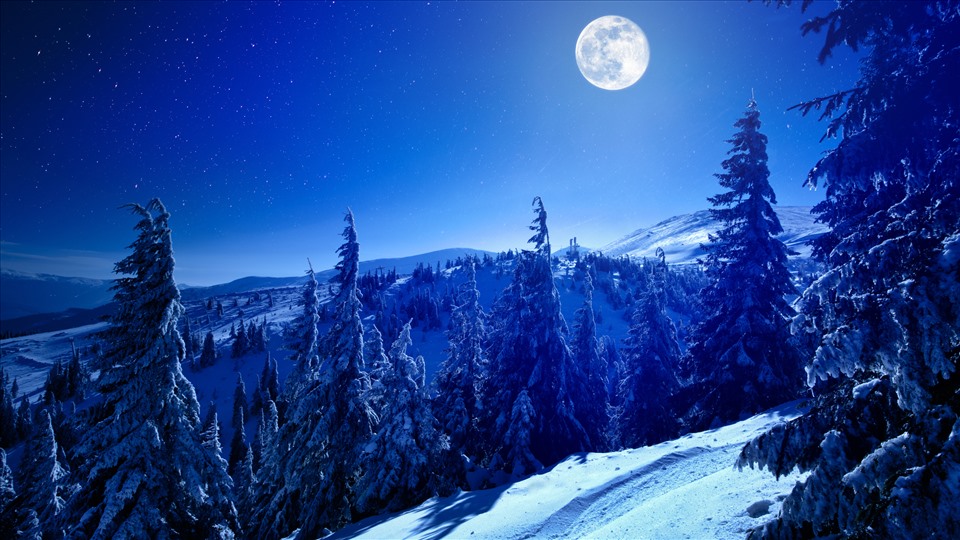
Theo cuốn sách thiên văn Old Farmer's Almanac, trăng rằm tháng này rơi vào ngày 18.12, được gọi là "Trăng lạnh" (Cold Moon), và nếu bạn sống ở các vĩ độ trung bình của Bắc bán cầu, thì cái tên đó không có gì là bí ẩn. Mặt trời vào thời điểm này trong năm lặn sớm và bầu trời tối dần vào khoảng 5h30 chiều. Mặt trăng chính thức tròn lúc 11h đêm.
Trăng tròn tháng 12 sẽ là trăng tròn dài nhất trong năm và là trăng tròn cuối cùng trước ngày Đông chí ở Bắc bán cầu. Ngày Đông chí sẽ đến vào 22h59 ngày 21.12, khi Bắc Cực ở độ nghiêng xa nhất - 23,5 độ - so với Mặt trời.
Thời gian của các pha Mặt trăng phụ thuộc vào vị trí của Mặt trăng so với Trái đất; trăng tròn xảy ra khi Mặt trăng nằm hoàn toàn đối diện với Trái đất so với Mặt trời.
Điều đó có nghĩa là giờ trăng tròn phụ thuộc vào múi giờ ở các nước, chẳng hạn ở Việt Nam trăng tròn vào đêm 18.12, trong khi ở Anh trăng sẽ tròn vào 4h36 sáng 19.12, còn ở Cape Town, Nam Phi là 6h35 cùng ngày 19.12.
Nếu nhìn về hướng Tây Nam vào khoảng thời gian trăng tròn đêm 18.12, thì trăng tròn sẽ ở bên trái. Ba hành tinh - sao Kim, sao Thổ và sao Mộc - sẽ tạo thành một đường gần như thẳng từ Tây Nam đến Nam, đi lên với góc 45 độ so với đường chân trời, trong đó sao Mộc ở vị trí cao nhất còn sao Kim gần đường chân trời nhất.
Sao Kim sẽ chỉ cao hơn đường chân trời khoảng 10 độ tại thời điểm đó, nhưng nó sáng đến mức ngay cả trong điều kiện tương đối kém - ví dụ như cảnh quan thành phố với đèn đường - vẫn có thể nhìn thấy bằng mắt thường.
Sao Thổ sẽ cao khoảng 20 độ và ở bên trái sao Kim, và sao Mộc khoảng 32 độ và bên trái sao Thổ. Sao Kim là ngôi sao đầu tiên mọc vào lúc khoảng 18h40, sao Thổ theo sau lúc 19h50 tối và sao Mộc xuất hiện lúc 21h20.
Trong khi đó, theo Heavens-Above, sao Hỏa mọc vào khoảng 17h28.
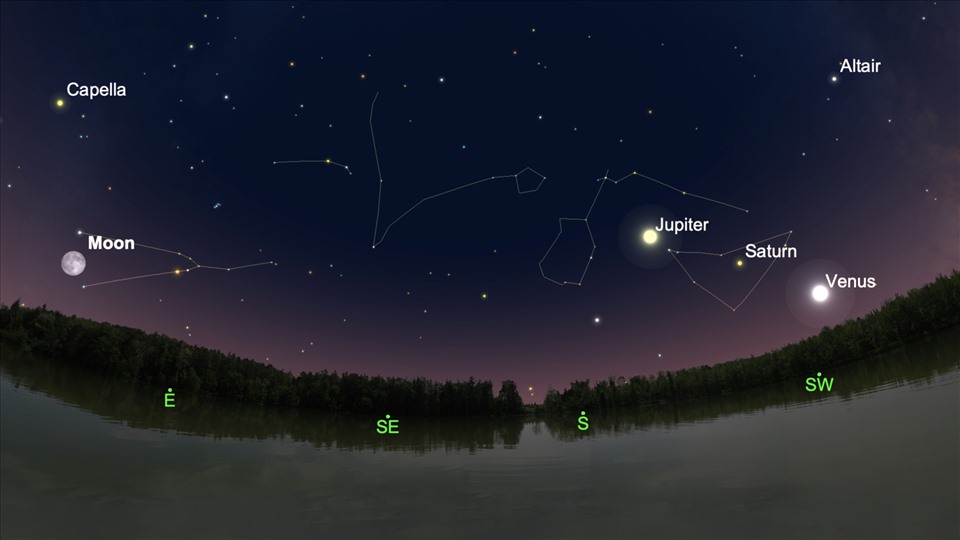
Vào thời điểm này trong tháng 12, các chòm sao mùa đông ở Bắc bán cầu rất nổi bật - ngôi sao Thiên Lang ("Dog Star" Sirius), ngôi sao sáng nhất trên bầu trời đêm với độ sáng biểu kiến bằng -1,47 ở phía trên đường chân trời và chòm sao Lạp Hộ (Orion) ở phía đông nam. Lạp Hộ đối diện với chòm sao Kim Ngưu (Taurus), và bên trái Kim Ngưu là chòm sao Song Tử (Gemini).
Từ chòm Song Tử nhìn lên về phía Bắc có thể thấy chòm sao Ngự Phu (Auriga), Ngũ xa (Charioteer), và Capella - ngôi sao sáng nhất trong chòm sao Ngự Phu.
Khi màn đêm buông xuống, các chòm sao khác trở nên rõ ràng, mặc dù chúng khó có thể nhìn thấy từ các vị trí trong thành phố. Ví dụ, Cự Giải, Con Cua, nằm ngay phía đông của Song Tử, nhưng nó mờ nhạt và khó phát hiện trong một thành phố đầy ánh sáng.


