
The strong earthquake that occurred in Kumamoto Prefecture on July 28 once again raised concerns about the risk of natural disasters in Japan - a country located on the Pacific Ring of Fire, which regularly records earthquakes and volcanic activity.
According to statistics from the Japan Meteorological Agency (JMA), this country annually records thousands of earthquakes that can be felt. Japan also accounts for about 20% of earthquakes with magnitudes of 6 or more worldwide, making disaster prevention and control always placed at a high priority level.
In the past 15 years, Japan has suffered many earthquakes with serious consequences.
The most serious was the 9.0 magnitude earthquake off the coast of Tohoku on March 11, 2011. This disaster followed a giant tsunami, killing or missing nearly 20,000 people, and causing the meltdown of the reactor core at the Fukushima Daiichi nuclear power plant - the most serious nuclear disaster since Chernobyl in 1986.
By April 2016, Kumamoto Prefecture continued to suffer a strong earthquake of magnitude 7.3. More than 270 people were killed, including many cases due to landslides and heavy rains occurring after the earthquake. This is also the area that just recorded the latest earthquake.
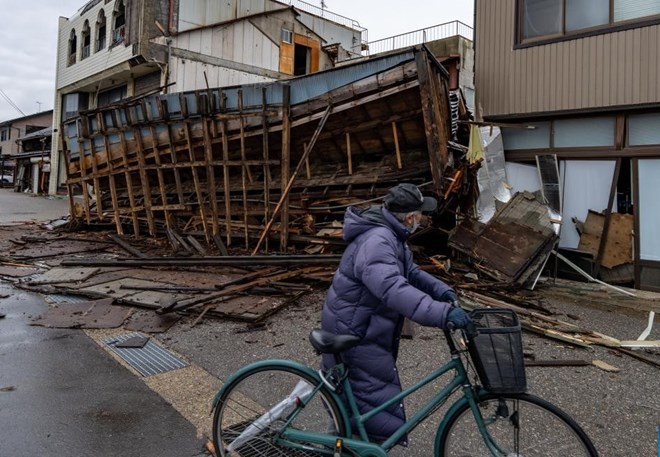
In 2018, Japan experienced 2 consecutive major earthquakes. The 6.1 magnitude earthquake in Osaka killed 4 people, injured hundreds and disrupted the operations of many production facilities. Just a few months later, the 6.7 magnitude earthquake in Hokkaido killed more than 40 people, caused widespread landslides and power outages for about 5.3 million people.
Off the coast of Fukushima Prefecture, 2 strong earthquakes of magnitude 7.3 in February 2021 and magnitude 7.4 in March 2022 continued to cause casualties, injuring hundreds of people and causing widespread power outages. These tremors also reminded many people of the 2011 disaster.
In early 2024, the Noto peninsula was shaken by a 7.6 magnitude earthquake that killed more than 300 people. In August of the same year, a 7.1 magnitude earthquake off Miyazaki prefecture caused Japan to issue a warning for the first time about the risk of a "super earthquake". Although the warning was lifted after a week, this event shows that the risk of earthquakes in Japan is still present.
With its special geological location, experts believe that Japan will continue to face the risk of strong earthquakes in the future. Therefore, the system of seismic monitoring, early warning and disaster response measures still play a key role in minimizing casualties and property damage.


