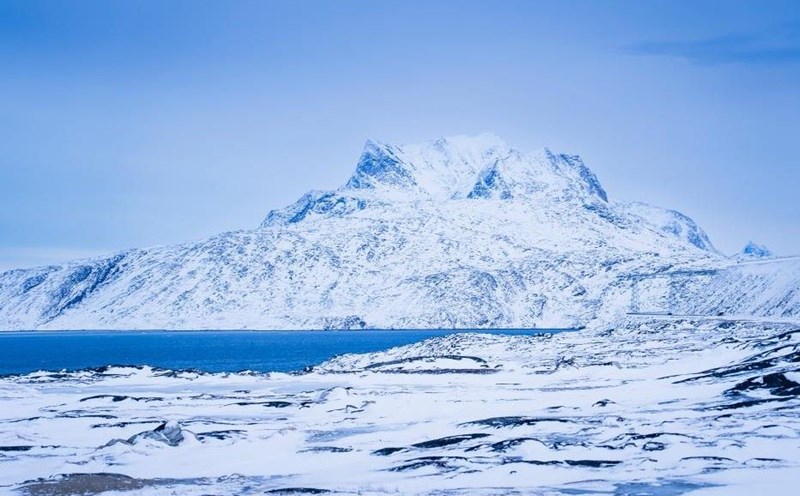
During a lightning trip to the World Economic Forum (WEF) in Davos (Switzerland) on January 21, US President Donald Trump withdrew threats that were once seen as "weights" to put pressure on Denmark regarding Greenland.
He affirmed that the US will not use force, nor will it impose taxes as previously planned, and said that a long-term agreement is very close.
Speaking to reporters after meeting with NATO Secretary-General Mark Rutte, Mr. Trump said Western allies in the Arctic could reach a new agreement, meeting Washington's security priorities, including the desire to build the "Golden Dome" missile defense system and access strategic mineral resources, while preventing Russia and China's ambitions in this region.
It is an agreement that everyone is satisfied with. A long-term, even permanent agreement. It puts everything in a very good position, especially on security and minerals" - Mr. Trump emphasized, affirming that this is "the agreement of the future".
A NATO spokesman said that 7 NATO member states with territory in the Arctic will closely coordinate to ensure collective security. Accordingly, negotiations between Denmark, Greenland and the United States will continue, with the goal of ensuring that Russia and China cannot have a foothold - both economically and militarily - in Greenland.
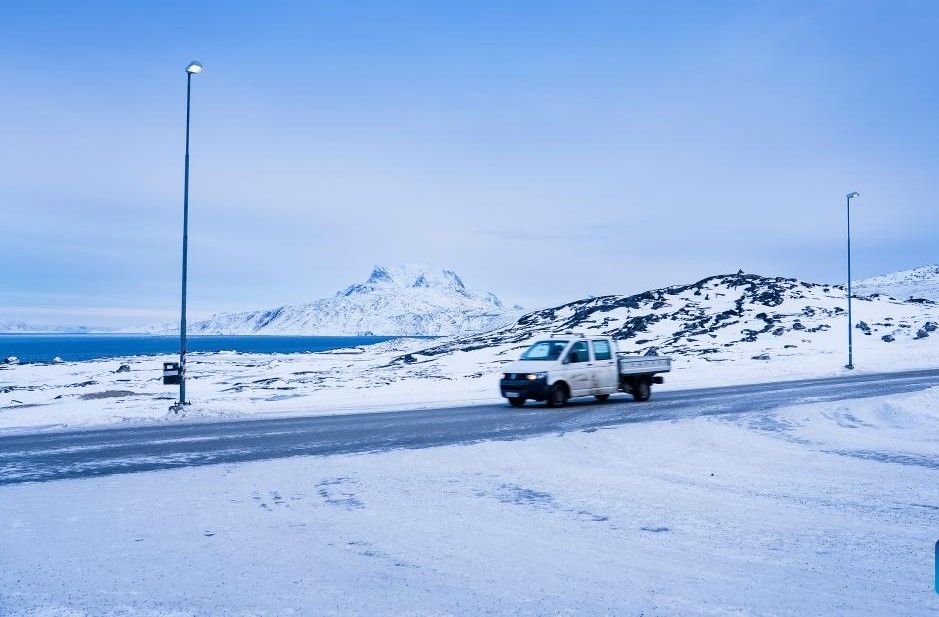
On the social network Truth Social, the US President declared that the US and NATO have "formed the framework for a future agreement related to Greenland and in fact the entire Arctic region". He said he would not impose tariffs expected to take effect from February 1.
On the Danish side, Foreign Minister Lars Lokke Rasmussen emphasized that the Greenland issue needs to be addressed through closed diplomacy, instead of public statements on social networks.
Answering DR Radio, he affirmed that the core for Copenhagen is to end tensions on the basis of respecting the integrity and sovereignty of the Kingdom of Denmark, as well as the right to self-determination of the people of Greenland.
Foreign Minister Rasmussen said he had exchanged with NATO Secretary-General Mark Rutte, but declined to disclose details of the contents achieved. The Greenland government has not yet made an official comment.
President Trump also said he has assigned Vice President JD Vance, Foreign Minister Marco Rubio and Special Envoy Steve Witkoff to participate in the next rounds of discussions to concretize the framework of the agreement.
Earlier the same day, in a speech in Davos, Mr. Trump admitted that the financial markets had reacted negatively to his tough threats, and clearly affirmed that the US would not use force.
The change in tariff position immediately had a positive impact on the US stock market. The S&P 500 index increased by 1.2%, contributing to prolonging the recovery after the strongest sell-off in the past three months.
For many weeks, NATO allies have expressed concern about the increasingly harsh statements of the US President about "taking control" of Greenland - an autonomous territory belonging to Denmark, a long-time ally of Washington in NATO.
However, observers also noted that in the first year of his term, Mr. Trump repeatedly made strong threats that made the market and allies "restless", before softening his tone or withdrawing completely.