
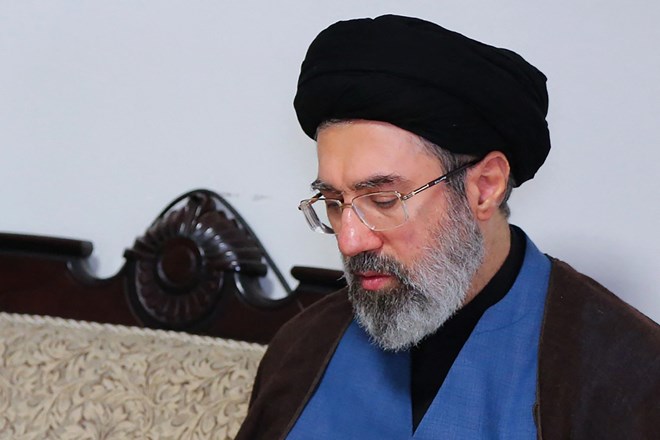
On March 8, speaking on Air Force One, Mr. Trump affirmed that the US would put maximum pressure on the successor in Iran to prevent nuclear risks and avoid repeated military operations in the future. This statement was made just hours before Iran officially announced that Mr. Mojtaba Khamenei - son of late Supreme Leader Ali Khamenei - was in charge of the highest power. Iran immediately rejected it, affirming that the election of leaders is an internal self-determination and does not accept any interference from the US.
Tensions continued to escalate as the Pentagon confirmed that the 7th US soldier had died from severe injuries from a raid in Saudi Arabia. Meanwhile, casualties in Iranian territory have exceeded 1,300 people, along with dozens of other victims in Israel and Gulf countries due to continuous retaliatory shelling.
Analysts believe that Mr. Mojtaba Khamenei's seizure of power is a direct challenge to Mr. Trump, in the context that US public opinion is beginning to be skeptical about the price to pay for this conflict.
To reassure the market ahead of midterm elections in November, the Trump administration is urgently seeking alternative oil supplies from Venezuela. US Energy Secretary Chris Wright affirmed that Washington is ready to discharge 400 million gallons of oil from strategic reserves to curb rising energy prices.
Mr. Wright emphasized that the conflict will not last and the current economic fluctuations are only temporary, completely under US control to avoid a widespread financial crisis.
However, the increase in the number of US soldiers killed is creating heavy political pressure on the White House. Opposition senators have begun to demand that the government provide concrete evidence of the threat from Iran to justify this costly military campaign.
Experts believe that Iran's choice of successor in a "father-to-son" manner immediately after Mr. Trump's threat is a signal that Tehran will not back down, pushing the Middle East region into a new spiral of instability that is more unpredictable.
Currently, widespread attacks are still continuing, targeting essential infrastructure such as desalination plants and oil depots. The combination of military pressure and tough political statements from Mr. Trump is making the prospect of a diplomatic solution more distant than ever.


