
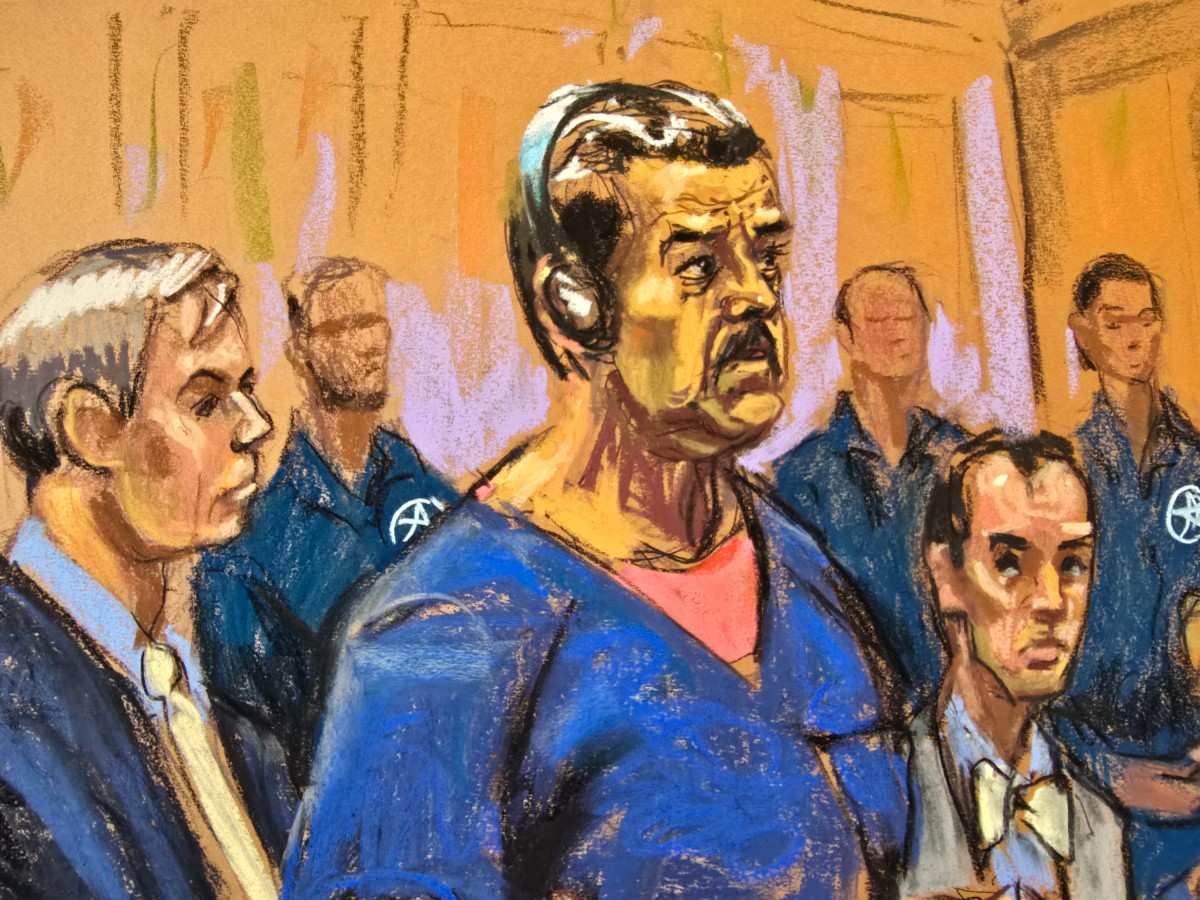
On January 5, a hearing lasting about 30 minutes took place at the Manhattan Federal Court, New York, USA. Before Judge Alvin Hellerstein, Mr. Maduro, 63 years old, through an interpreter declared: "I am innocent. I am not guilty. I am a decent person. I am still the president of my country".
His statement was interrupted by the judge as the trial continued according to procedures. His wife, Cilia Flores, also declared not guilty. The next hearing was scheduled for March 17.
Earlier that day, Mr. Maduro and his wife were escorted by helicopter from a detention center in Brooklyn to Manhattan.
Images at the court show him being handcuffed, wearing orange and beige prison uniforms, listening to the indictment through translator's ears. The judge asked him to stand up to confirm his identity and inform the two defendants of their right to contact the Venezuelan consulate.
Outside the court, dozens of protesters supporting and opposing Mr. Maduro gathered, reflecting the deep division surrounding the person who once held the highest power in Venezuela.
According to the indictment, Mr. Maduro is accused of heading a transnational cocaine trafficking network, cooperating with many armed and criminal organizations, including Mexican drug cartels such as Sinaloa and Zetas, the FARC of Colombia and the Tren de Aragua gang of Venezuela.
He faces 4 criminal charges, including drug terrorism, conspiracy to import cocaine, as well as possessing machine guns and destructive equipment.
Prosecutors believe that this activity has lasted since Mr. Maduro was a National Assembly member in 2000, then held the position of foreign minister and became president in 2013.
Mr. Maduro has long rejected all accusations, saying that this is an excuse for the US conspiracy to control Venezuela's huge oil resources.
After the arrest, shares of some US oil and gas companies increased in price, in the context of investors expecting access to oil from this South American nation.
A few hours after the trial in New York, in Caracas, Vice President Delcy Rodriguez sworn in as interim President of Venezuela. In her speech, she expressed her support for Mr. Maduro but did not mention the possibility of a direct response to US actions. She described the incident as a "kidnapping" and pledged to steer the country through "terrible moments".
The Venezuelan government declared a state of emergency, requesting security forces to search and arrest individuals believed to be supporting the US raid.
At the United Nations, the Security Council held an emergency meeting to discuss the consequences of this campaign. Russia, China and Venezuela's left-wing allies strongly condemned Washington's actions.
United Nations Secretary-General Antonio Guterres expressed concern about the risk of instability in Venezuela and questioned the legitimacy of the operation, considered the largest US military intervention in Latin America since the Panama invasion in 1989.
International law experts also argued fiercely, arguing that the arrest of an incumbent head of state could erode the rule-based international legal order.


