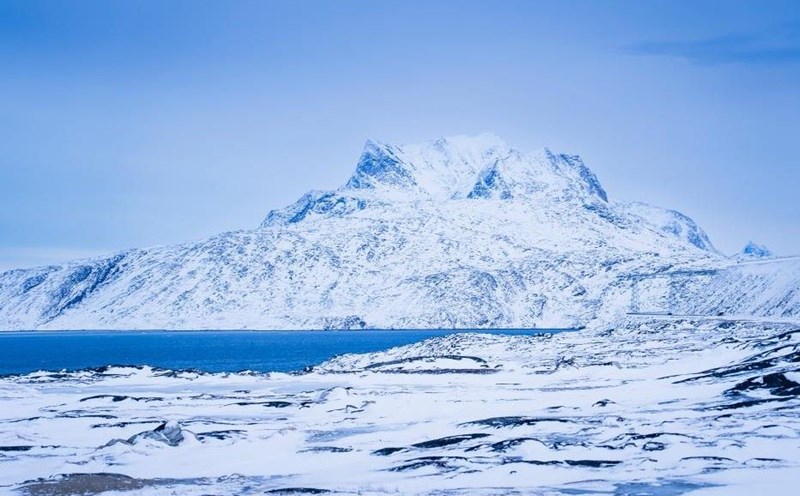
For the first time in ocean research history, the Chinese expedition used the deep-sea diving vessel Fendouzhe to dive to a depth of 5,277m, surveying the eastern part of the Gakkel Mountains - the seabed between Greenland and Siberia, which was previously almost a "forbidden zone" for humans.
According to articles published in Nature and from official Chinese scientific agencies, this campaign opens a "rare window" into an area where special deep-sea life forms may exist, while providing important clues about the changes taking place in the Arctic - which warms much faster than the global average.
Access to one of the last pristine seabeds
Mount Gakkel is a chain of underground volcanoes stretching beneath the sea ice, running between Greenland and Siberia.
Previously, scientists only knew about this mountain habitat through sonar maps and some short surveys by unmanned devices. A study published in Nature in 2003 discovered hydrothermal vents in the western part of the Gakkel mountain habitat, but the eastern area has never been directly accessed. Therefore, this area is likened to the "last piece" missing in the picture of the Arctic seabed.
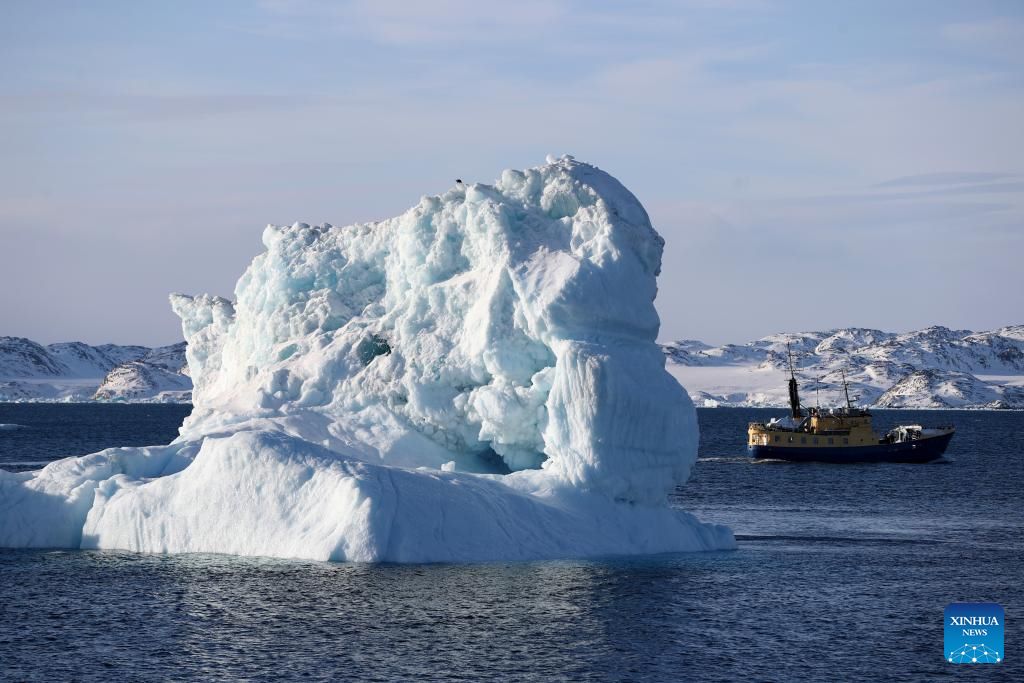
To safely access this area, the Chinese Ministry of Natural Resources and the Chinese Academy of Sciences have deployed an Arctic mission in coordination between the submersible Fendouzhe and the icebreaker Tan Suo San Hao research vessel.
In about 3 months at sea, the team conducted a total of 43 dives, of which Fendouzhe completed 32 in conditions where more than 80% of the sea surface was covered in ice.
Before each dive, the icebreaker creates a "temporary lake" between the ice blocks for the dive to descend to the sea. When returning, Fendouzhe stops right under the water, uses sonar and cameras to find gaps on the ice, or waits for the mother ship to open its way.
Artifacts that can rewrite Arctic history
In nearly 100 days at sea, the research team collected sediment cores, rocks, seawater and biological samples along the Gakkel Mountains. The camera and sonar system recorded detailed images of hills and ravines under the seabed, replacing the faint lines on the old map with visual data from the ocean floor.
An important goal of the mission is to determine whether the eastern part of Mount Gakkel exists with hydrothermal vents. These undersea "hot springs" nurture living ecosystems based on chemical energy instead of sunlight.
Despite taking place in a distant place, what happens at the bottom of the Arctic Ocean is still closely related to the global climate system - which dominates extreme cold air waves or unusual winters that humans experience on the ground.
A seabed that has never been marked by humans has officially appeared on the scientific map - and its secrets may gradually change how we understand the deep ocean as well as the changing Arctic above.