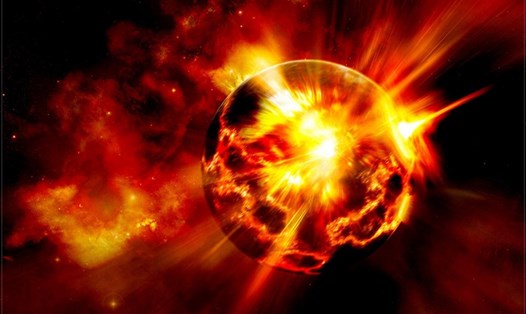
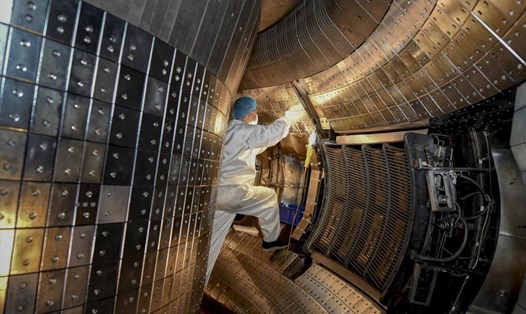
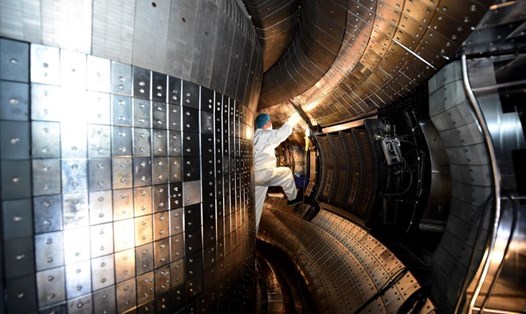
Tân Hoa Xã đưa tin, vòng thí nghiệm phản ứng tổng hợp hạt nhân mới của "mặt trời nhân tạo" (tên đầy đủ là Experimental Advanced Superconducting Tokamak - EAST), đã khởi động tại Viện Khoa học Vật lý Hợp Phì, tỉnh An Huy, trong tháng này.
Theo ông Song Yuntao, phó giám đốc Viện Khoa học Vật lý Hợp Phì, thử nghiệm này nhằm nâng cấp hệ thống sưởi phụ trợ EAST để làm cho mặt trời nhân tạo “nóng hơn” và “bền hơn”. Cuộc thử nghiệm dự kiến kéo dài trong nửa năm.
Lò phản ứng EAST được thiết kế để tái tạo quá trình tổng hợp hạt nhân do mặt trời thực hiện. Kể từ lần đầu tiên đi vào hoạt động vào năm 2006, EAST đã là một nền tảng thử nghiệm mở cho các nhà khoa học Trung Quốc và quốc tế tiến hành các thí nghiệm liên quan đến nhiệt hạch.
Mặt trời nhân tạo Trung Quốc đã lập một số kỷ lục về thời gian giữ được nhiệt độ plasma cực nóng. Vào tháng 6, EAST đã đạt được nhiệt độ cao nhất là 160 triệu độ C, nóng hơn Mặt trời hơn 10 lần.
EAST là một trong ba Tokamak nội địa lớn hiện đang được vận hành trên khắp Trung Quốc. Đây là một phần của Lò phản ứng thử nghiệm kỹ thuật nhiệt hạch (CFETR) quốc tế, sẽ trở thành lò phản ứng tổng hợp hạt nhân lớn nhất thế giới khi bắt đầu hoạt động vào năm 2035.
Mặt trời nhân tạo, thực chất là công nghệ nhiệt hạch, có thể cung cấp nguồn năng lượng sạch vô tận bằng cách mô phỏng quá trình nhiệt hạch hạt nhân trong Mặt trời - mặc dù đòi hỏi kỹ thuật phức tạp và chi phí lớn.
Chính phủ Trung Quốc đã yêu cầu các nhà khoa học chuẩn bị cho lò phản ứng thử nghiệm kỹ thuật nhiệt hạch Trung Quốc (CFETR), bao gồm thiết kế kỹ thuật và xây dựng một cơ sở thử nghiệm lớn ở thành phố Hợp Phì.
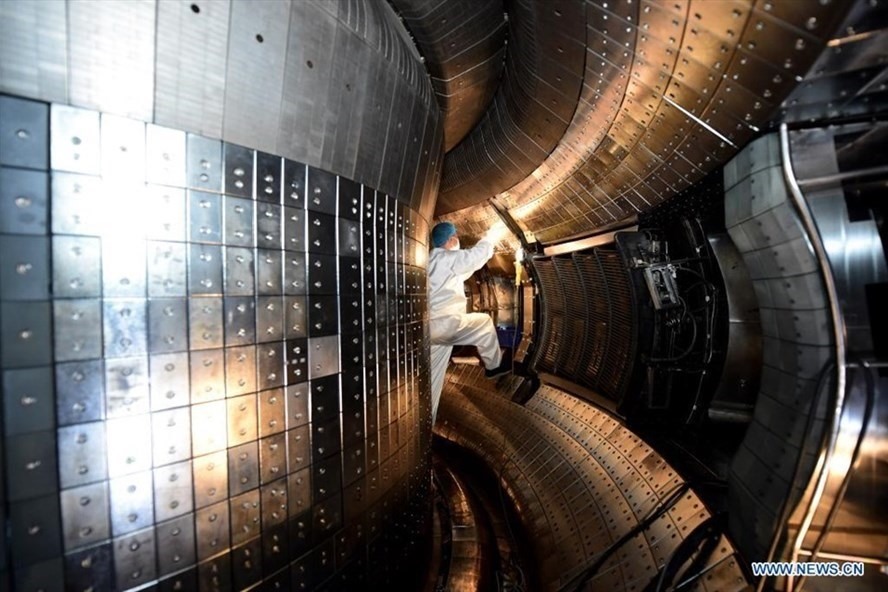
Mục đích của dự án là để CFETR trở thành cơ sở đầu tiên sản xuất điện bằng nhiệt của phản ứng tổng hợp hạt nhân. Thách thức của hoạt động này là kiểm soát một loại khí cực nóng, hydro, với nhiệt độ bên trong lò phản ứng dự kiến đạt hoặc vượt trên 100 triệu độ C.
Chính phủ Trung Quốc có kế hoạch bắt đầu xây dựng hàng loạt nhà máy năng lượng nhiệt hạch trước năm 2060 - thời hạn cuối cùng để đáp ứng mục tiêu trung hòa carbon của đất nước.