
Theo tờ SCMP, giáo sư Song Yuntao - một trong những nhà khoa học đứng đầu dự án - nói với truyền thông địa phương tại một hội nghị kiểm soát carbon ở Bắc Kinh rằng, có thể hoàn thành việc xây dựng một lò phản ứng tổng hợp hạt nhân vào đầu những năm 2030 nếu Bắc Kinh ủng hộ.
Công nghệ nhiệt hạch, còn được gọi là mặt trời nhân tạo, có thể cung cấp nguồn năng lượng sạch vô tận bằng cách mô phỏng quá trình nhiệt hạch hạt nhân trong mặt trời - mặc dù đòi hỏi kỹ thuật phức tạp và chi phí lớn.
Chính phủ đã yêu cầu các nhà khoa học chuẩn bị cho lò phản ứng thử nghiệm kỹ thuật nhiệt hạch Trung Quốc (CFETR), bao gồm thiết kế kỹ thuật và xây dựng một cơ sở thử nghiệm lớn ở thành phố Hợp Phì. Nhưng giáo sư Song Yuntao - giám đốc Viện Vật lý Plasma ở Hợp Phì - nói với tờ Tin tức Bắc Kinh rằng, dự án vẫn đang chờ chấp thuận cuối cùng.
Mục đích của dự án là để CFETR trở thành cơ sở đầu tiên sản xuất điện bằng nhiệt của phản ứng tổng hợp hạt nhân. Thách thức của hoạt động này là kiểm soát một loại khí cực nóng, hydro, với nhiệt độ bên trong lò phản ứng dự kiến đạt hoặc vượt trên 100 triệu độ C.
Trong giai đoạn đầu đi vào hoạt động, CFETR được thiết kế để tạo ra sản lượng điện ổn định là 200 megawatt, tương đương công suất của một nhà máy nhiệt điện than nhỏ.
Lò phản ứng nhiệt hạch của Trung Quốc có thể sẽ không phải là lò đầu tiên trên thế giới, bởi lò phản ứng thí nghiệm nhiệt hạch quốc tế (ITER) ở miền nam nước Pháp sắp hoàn tất xây dựng và có thể hoạt động vào năm 2025.
Sau nhiều lần trì hoãn kể từ khi bắt đầu vào năm 2007, ITER đã trở thành dự án khoa học quốc tế tốn kém nhất trong lịch sử, tiêu tốn của các quốc gia liên quan - bao gồm cả Trung Quốc - từ 45 đến 65 tỉ USD. Mặc dù ITER sẽ lần đầu tiên đưa ý tưởng về mặt trời nhân tạo thành hiện thực, nhưng nhiệt lượng mà nó tạo ra không thể duy trì để tạo ra đủ năng lượng cho sản xuất điện, như mục tiêu của lò phản ứng Trung Quốc.
Giáo sư Song cho biết, Trung Quốc và các quốc gia khác đang hỗ trợ và theo sát tiến độ ở Pháp, đồng thời sử dụng kiến thức và công nghệ được phát triển cho ITER để tăng cường các dự án lò phản ứng nhiệt hạch của riêng Trung Quốc - và cuộc đua xây dựng mặt trời nhân tạo đang nóng lên.
Theo giáo sư Song, Mỹ có kế hoạch sản xuất điện bằng các nhà máy điện tổng hợp hạt nhân thí điểm do chính phủ và các công ty tư nhân xây dựng trong khoảng thời gian từ năm 2035 đến năm 2040. Anh đề xuất thương mại hóa năng lượng tổng hợp hạt nhân vào năm 2040.
Nghiên cứu nhiệt hạch của Trung Quốc bắt đầu với phần cứng và công nghệ của Nga, nhưng Bắc Kinh đã giành được vị trí hàng đầu trong lĩnh vực này trong những năm gần đây, theo giáo sư Song.
Vào tháng 5, một thiết bị mô phỏng ở Hợp Phì đã tạo ra plasma cháy ở 150 triệu độ C được duy trì ở mức ổn định trong hơn 100 giây, đạt kỷ lục thế giới. Các nhà khoa học đã giới hạn khí nóng - thứ rất khó đoán và có thể phá hủy bất cứ thứ gì nó chạm vào - bằng một từ trường cực mạnh do chất siêu dẫn tạo ra.
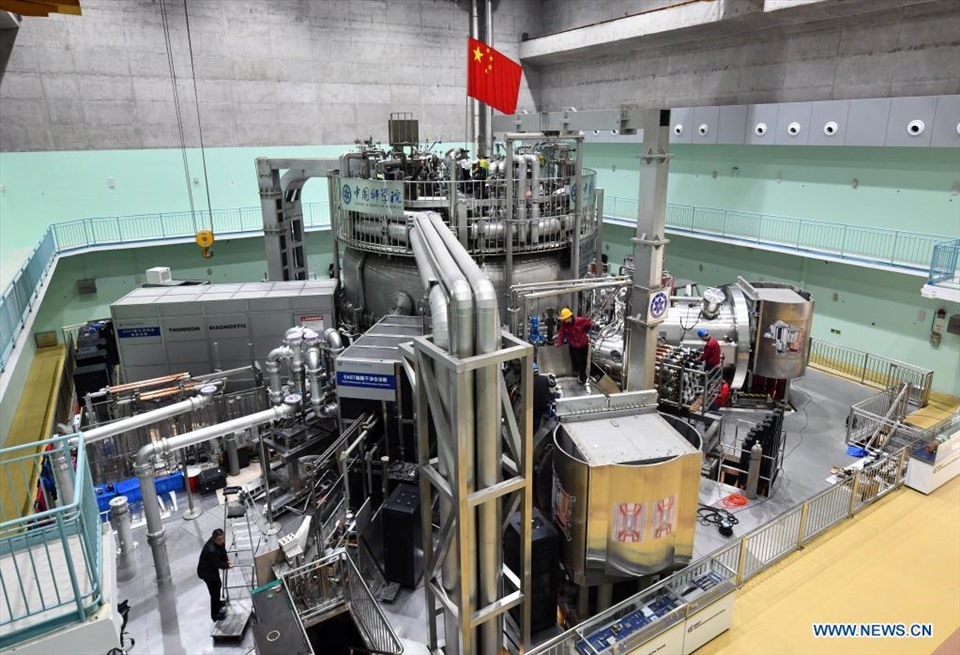
Giáo sư Song cho hay, mục tiêu tiếp theo của dự án là tăng thời gian đốt cháy lên 400 rồi 1.000 giây. Theo ông, công việc cũng mang lại lợi ích trong các lĩnh vực khác. Ông nói, nhờ những tiến bộ trong nghiên cứu nhiệt hạch, năng lực sản xuất vật liệu siêu dẫn của Trung Quốc đã tăng gấp 10.000 lần.
Chất siêu dẫn cần thiết trong nhiều lĩnh vực, từ vận tải đến thiết bị y tế, và việc tăng sản lượng giúp giảm giá thành của chúng một cách đáng kể. Khoảng 60 đến 70% vật liệu siêu dẫn ở nước ngoài được mua từ Trung Quốc.
Chính phủ Trung Quốc có kế hoạch bắt đầu xây dựng hàng loạt các nhà máy năng lượng nhiệt hạch trước năm 2060 - thời hạn cuối cùng để đáp ứng mục tiêu trung hòa carbon của đất nước.


