European Council President António Costa "argued" with Hungarian Prime Minister Viktor Orban about Budapest blocking a 90 billion euro loan for Ukraine, according to letters accessed by the media.
These letters increased the confrontation between the EU and Hungary, after Budapest threatened to withdraw its previous approval and veto the financial package if Kiev does not resume Russian oil flow through the pipeline network running through Ukrainian territory.
In a letter sent on February 23, while on his way to Ukraine to mark the 4th anniversary of Russia launching a special military operation, Mr. Costa called on Budapest to "act in accordance with the joint decision of December 18, 2025 and lift the blockade of the implementation of the 90 billion euro loan to support Ukraine".
Mr. Costa warned that non-compliance with the decision of December 18 would "constitute a violation of the principle of sincere cooperation" between EU member states, while emphasizing "no member state is allowed to undermine the credibility of decisions collectively adopted by the European Council".
However, in a response letter on the same day, Mr. Orban - who will enter re-election in April - affirmed that he continued to oppose disbursement, accusing Kiev of delaying the repair of the Druzhba pipeline damaged by a Russian UAV (unmanned aerial vehicle) attack.
There are no technical obstacles to resuming oil transportation through the Druzhba pipeline to Hungary. It only requires a political decision from Ukraine," the Hungarian Prime Minister wrote.
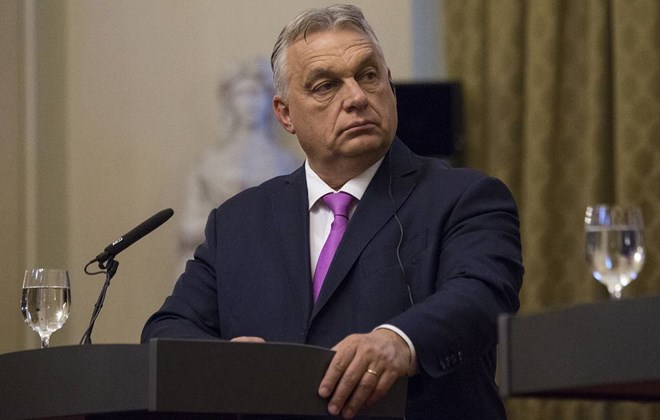
Considering himself "one of the most disciplined and consistent leaders" of the EU, Mr. Orban believes that his veto power is justified due to the emergence of new situations.
Mr. Costa must also see the absurdity of this situation: We passed a financially beneficial decision for Ukraine that I personally object to, then Ukraine created an energy emergency in Hungary and he asked me to pretend nothing happened. That's impossible" - the Hungarian leader added.
I am not in a position to support any decision that benefits Ukraine until they restore normalcy," Orban wrote.
In his letter, Mr. Costa said that he is still "fully committed" to ensuring energy security for all EU countries and will raise the Druzhba pipeline issue with Ukrainian President Volodymyr Zelensky.
Mr. Costa is scheduled to visit Ukraine with European Commission President Ursula von der Leyen on February 24.
Previously, the EU agreed on the terms of the 90 billion euro loan that was very necessary for Ukraine earlier this year, after a long period of disagreement on how to mobilize funds. Without this amount, Kiev could fall into a budget deficit as early as April.