
According to a military data analysis report from Dragon Capital, Ukraine's air defense capabilities are recording a significant decline in the first half of January 2026.
The Ukrainian Air Force only successfully shot down 26 out of a total of 73 missiles of various types launched by Russia. This 36% interception rate marks a clear decline compared to the stable average of 60% maintained since October 2022.
The performance decline was most clearly revealed in the raid that took place on the night of December 12 and early morning of January 13. Data shows that Kiev's air defense forces only neutralized 2 out of a total of 18 ballistic missiles of the enemy. With high speed and complex trajectory, ballistic missiles are becoming a major challenge to Ukraine's current defense system.
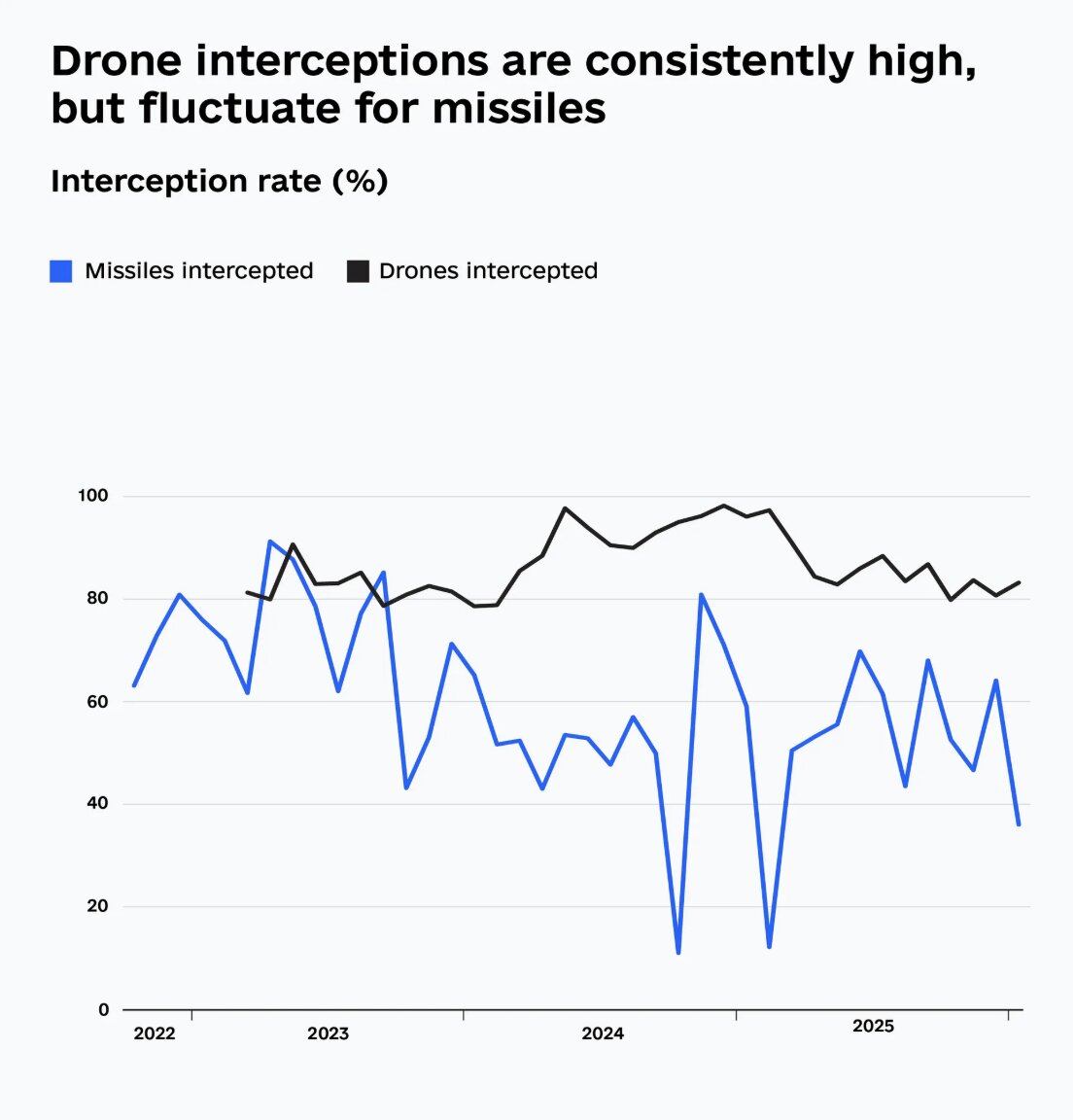
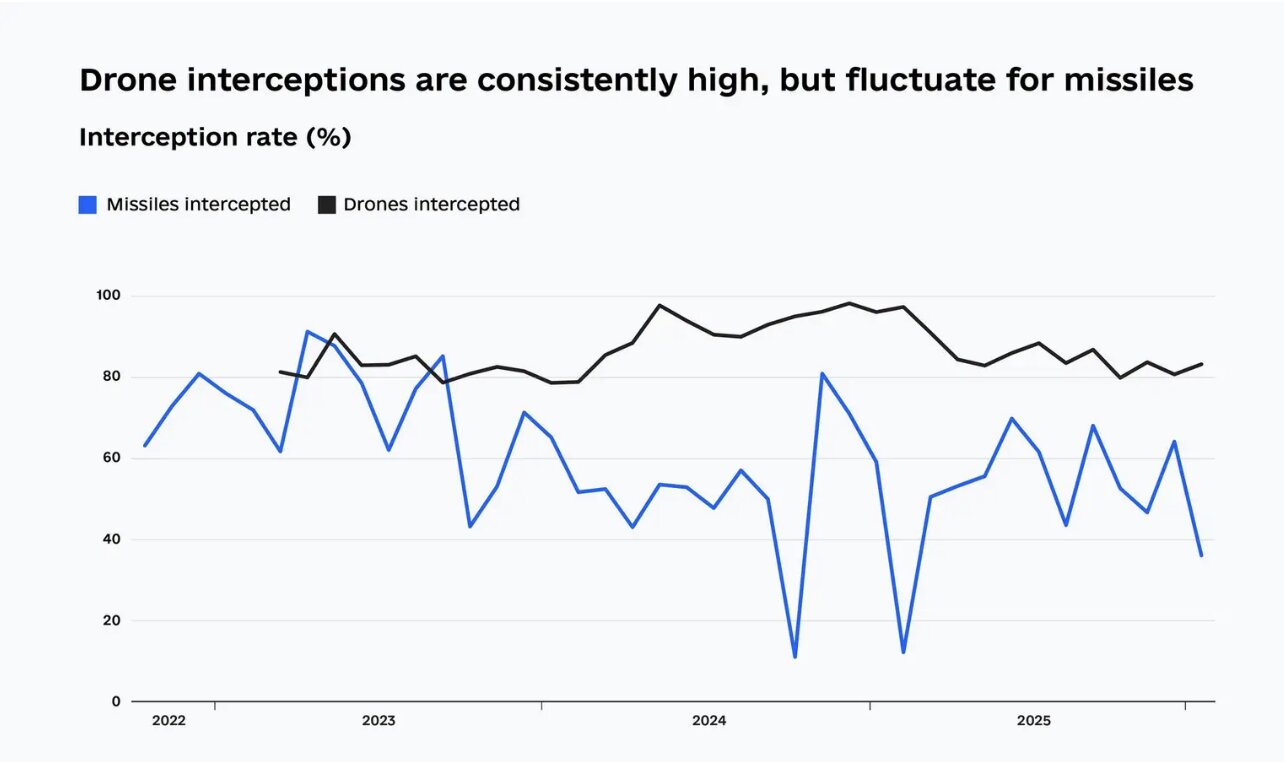
Contrary to the situation of missile response, the interception rate of unmanned aerial vehicles (UAVs) remains high.
In the same period, Russia launched 1,852 UAVs and 83% of them were shot down. However, military experts believe that Moscow is deploying a mixed attack tactic: Using a large number of UAVs to overload the warning system, combined with cruise missiles and ballistic missiles to accurately attack key infrastructure.
The main cause of the above situation is identified as a serious shortage of ammunition and equipment.
In an interview, a lieutenant colonel from the Eastern Ukrainian Air Force Command admitted: "We do not have enough interceptor missiles and radar to cover the mission. The radar stations are continuously targeted and destroyed by the enemy.
Currently, Ukrainian Patriot air defense systems are in shortage of PAC-3 missiles manufactured by the US. To solve this problem, on January 6, the US announced an agreement with Lockheed Martin to triple the production of PAC-3 missiles, from the current 600 missiles/year. However, increasing production takes time, while pressure to protect strategic targets in Ukraine is increasing day by day.


