
Pressure after a successful cycle
In recent years, Vietnamese women's volleyball has created a memorable successful cycle. The team has continuously made its mark in regional and continental tournaments, from emotional matches against Thailand, AVC Nations Cup championships to their first appearance in the world arena.
That success comes from a generation of players with good expertise, bravery and understanding after many years of attachment. Captain Thanh Thuy is a great support in the main attacking position, Bich Tuyen brings strength in the opposite hitter position, Bich Thuy creates certainty on the net.
Lam Oanh, Tu Linh, Nguyen Thi Trinh, Khanh Dang and Kieu Trinh were important links in the team's operating system.
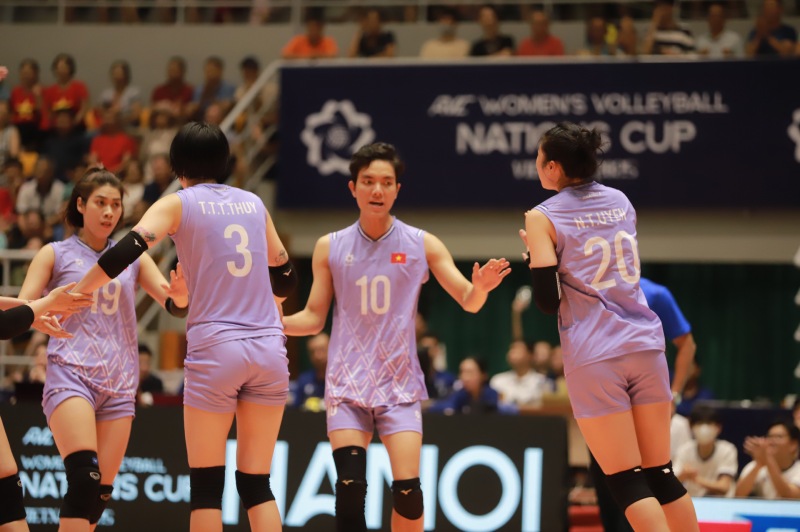
The Vietnamese women's team once had a period of maintaining high stability. When the squad reached its best state, the supporting positions were quite rhythmic. The attack has weight, the block creates pressure, and the defense and step-by-step stage are gradually improved.
However, this success also creates great pressure. When the team is used to entering tournaments in the mindset of competing for titles, all experiments become more difficult.
In recent tournaments, the Vietnamese women's team has not had the strongest force. Some key players have physical problems or injuries. Some players need to adjust their playing volume after a long period of continuous training at both club and national team levels.
This is an unavoidable reality in top sports. To maintain competitiveness in the context of a dense schedule, Vietnam needs to have a better squad depth, especially in the positions of main attacker, opposite hitter, middle blocker and setter.
If the next generation is not prepared well enough, the team will face the risk of disappointment when the current generation no longer maintains their form or cannot play continuously.
Youth is a mandatory requirement
The task of force transfer has been mentioned a lot, but to implement it is not simple at all. Giving opportunities to young players means that the team must accept unstable times, and may even trade them for results that are not as desired in some tournaments.
Young faces such as Bui Thi Anh Thao, Le Thuy Linh, Vi Thi Yen Nhi or some new factors who have been given opportunities in the past time all show certain potential. However, from potential to the ability to shoulder the national team is a big gap.
A player can play prominently in youth leagues or national championships, but to stand firm in international matches, against point pressure and high-level opponents, they need more than a few test matches.
That is why rejuvenation cannot just stop at calling up more young players to the national team. More importantly, they must be placed in a clear system, have specific roles and play in matches with real pressure.
In the opposite direction, fans also need patience. It is impossible to ask a young player who has just joined the national team to play stably like his seniors who have fought for many years.
The maturity of athletes always needs time, especially in a team that is under great pressure for achievements like Vietnamese women's volleyball.
Test from SEA V.League and VTV Cup
The upcoming period will be an important test for the coaching staff of the Vietnamese women's national team. The SEA V.League and VTV Cup taking place close together make the personnel problem more complicated.
This is the time when the depth of the Vietnamese women's volleyball squad is verified most clearly. Factors who have rarely played before have the opportunity to step out of the reserve role. Young players will also have to prove that they are not only choices for the future, but can contribute right now.
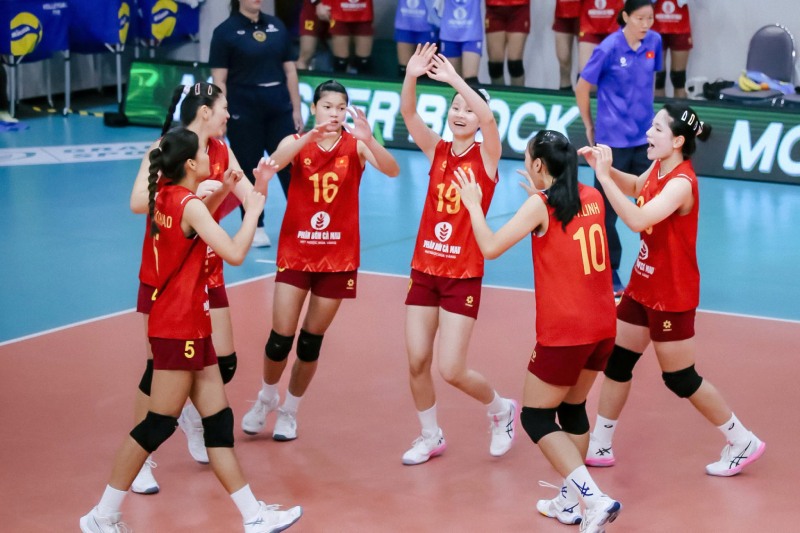
No matter which option they choose, the national team cannot avoid the big question: After SEA V.League and VTV Cup, how many players will be found capable of entering the new framework?
Vietnamese women's volleyball is in a special phase. On the one hand, the team still has pillars who have created success. On the other hand, the pressure to change forces is increasingly clear.
If too dependent on the current generation, the team can maintain achievements in the short term but will face risks when key players are no longer in the best condition. If rejuvenated too quickly, the team is at risk of losing stability.
Therefore, the most difficult problem is not choosing between achievement and transfer, but finding a balance between the two goals above.
From peak to new challenge, Vietnamese women's volleyball is entering a difficult stage, but this is a necessary step and requires patience. This could become the foundation for a new cycle of success.


