Going short to... success
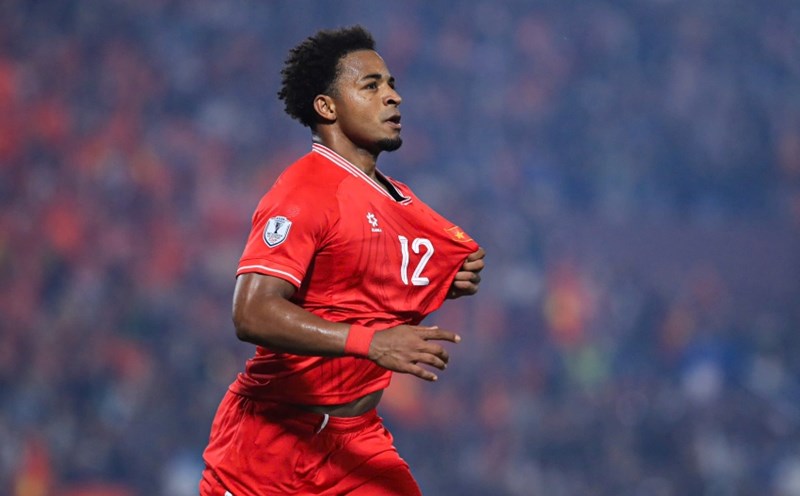
For the first time in the history of the confrontation, the Vietnam team lost heavily to Malaysia 0-4 in an official match. It is undeniable that the strength of the Vietnamese team has declined compared to the time of winning the ASEAN Cup 2024 due to injuries and the decline in performance of many key players. However, that is not necessarily the main reason for the failure of coach Kim Sang-sik and his team
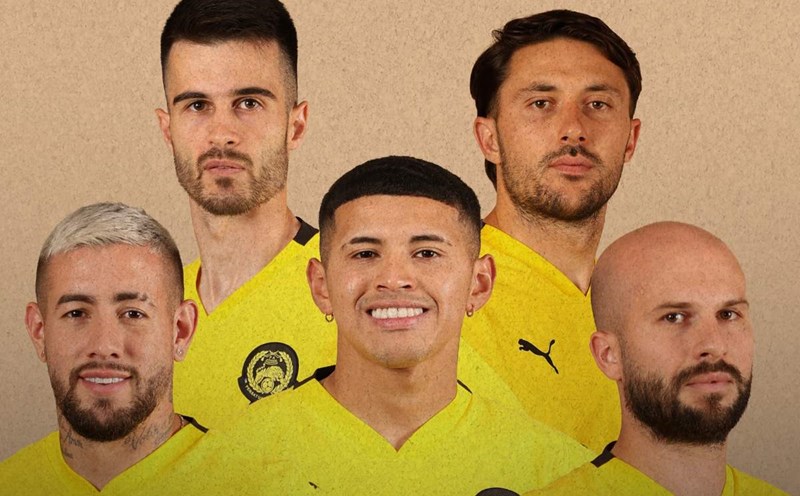
This result comes from an objective reason. The Malaysian team has increased its strength significantly thanks to the appearance of highly skilled overseas Vietnamese players - playing in South America and Spain.
With the support of resources, enthusiasm and finance of Prince Johor - Tunku Ismail Sultan Ibrahim, Malaysian football has traveled to five continents and four continents. The " hybrid" players they choose do not only have Malaysian roots but also their level.
Center back facundo Garces - a rookie of the Malaysian national team who plays for Alaves in La Liga. Joao figueiredo - the midfielder who caused Vietnam's midfield to break - is playing for the Top team in the Turkish National Championship. Jon Irazabal - the defensive player who paralyzed the right wing of the Vietnam National Team has matured from the famous Athletic Bilbao. Meanwhile, Imanol Machuca - a reserve player in the second half also played 8 matches for Velez Sarsfield in the Argentina national championship.
Malaysia has learned along the path of Indonesia. Using both money and relationships, they are looking for players who have grown up in high-level football backgrounds around the world, playing for big clubs in South America and Europe.
Immediately, the results came to these two teams. Malaysia affirmed its ambition to participate in the 2027 Asian Cup finals and further the 2030 World Cup with a convincing victory over Vietnam. Also from the lever of Vietnam, Indonesia is gradually moving towards realizing its ambition to participate in the 2026 World Cup, based on mature players in the Netherlands.
It's the same thing
On a smaller scale of the regional scale, Vietnam, the Philippines or Singapore have been successful in selecting mixed players or naturalized foreign players. Most recently, at the ASEAN Cup 2024, with the appearance of Nguyen Xuan Son, the Vietnamese team played impressively and won the Southeast Asian championship.
In fact, the Vietnam Football Federation is still actively looking for overseas Vietnamese players. Currently, this agency has a list of more than 100 faces. However, not all overseas Vietnamese players are of high level like Nguyen Filip or Cao Pendant Quang Vinh - two current players of the Vietnam national team.
The proof is that overseas Vietnamese players are playing in the V.League or concentrating in the gatherings of U17 Vietnam and U22 Vietnam. They have a strong desire to contribute to the country's football, but Maxwell, Andrej An Khanh, Thomas Mai Veeren, Kyle Colonna... are not too outstanding compared to the current Vietnamese domestic players.
The story of Singapore's collapse due to reliance too much on naturalized and hybrid resources in the past is also something that Vietnamese football needs to be cautious about. Once a force in Southeast Asian football in the 2000s thanks to naturalization factors, Singapore has started to decline since 2015. The reason is that Singapore lacks internal resources to develop youth football, plus naturalized resources and depleted resources and no longer meets the quality standards as in the previous period.
In conclusion, finding cross country players or selecting naturalized foreign players to strengthen the national team is inevitable in the trend of developing contemporary football, especially for football regions that are average quite good like Vietnam, Malaysia, Thailand or Indonesia. However, to achieve success in the short and long term, countries must still ensure a strong enough foundation for youth football, plus selecting factors from abroad that are good enough and dedicated.
This is not a simple problem. Even through a large enough financial foundation and extensive enough relationships, national teams will receive a nod from high-class child players. In essence, this is no different from a club transfer.